Archives for posts with tag: seasonal recipes
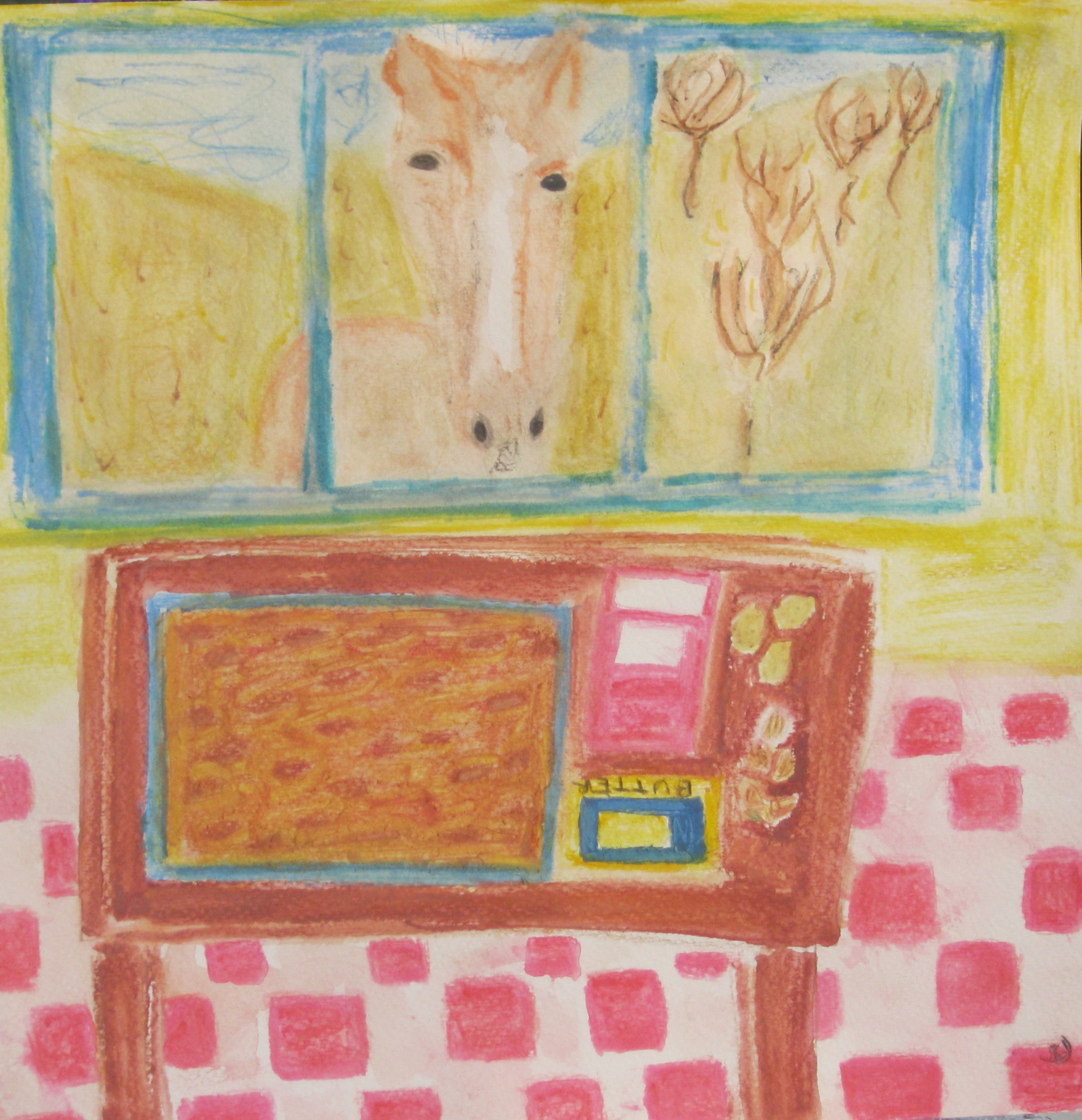
Painting shows knishes and ingredients.

The Irish Knish. 12″ x 12″ gouache. Sharyn Dimmick

Although my family is half-Irish, we are not big on St. Patrick’s Day food here. I should say I am not big on St. Patrick’s Day food, having suffered through a few childhood years of corned beef and cabbage. I lived in Ireland for a year when I was in college and remember the big food groups being potatoes, Swedes (rutabaga) as big as your head, bacon, butter and cheese with sides of oatmeal, biscuits and “puddings” covered with custard which came out of a tin. I also ate prawn sandwiches from a sandwich shop near Trinity College and gyros from carts off the street. In Dublin, I bought groceries daily and set my milk in a bowl of water on a window ledge: when the rare sun came out, the milk spoiled and it was time to make soda bread.

Yesterday, however, I came across a potato knish recipe on Smitten Kitchen (two, actually). Her knishes were so beautiful that I decided to make some, substituting the classic Irish vegetable, cabbage, where she had used kale. As I peeled and cleaned potatoes, I thought of my Irish grandmother, Grandmother Carroll, and was vigilant about removing every spot and blemish from each spud. Then, as I was sweating leeks and boiling the red potatoes, I realized that I could make the knish into a complete meal by adding some finely diced Canadian bacon to my leek mixture, giving the nod to my mother’s birthplace in Manitoba and the bacon of Ireland at the same time. Ye who eat kosher may recoil in horror here, but I imagine that many an Irish housewife in New York tried a knish or learned to make one from a neighbor and sweetened the recipe with bacon or ham in her own kitchen. I will not be offended if you leave out the Canadian bacon or if you only make knishes from your grandmother’s recipe.

I had never made a knish at all before this and I’m not even sure that I have eaten one. Certainly, no one has ever made them for me. I was up against a new dough. The filling of leeks, potatoes, cabbage and Canadian bacon was not unlike soups I have made this winter, although knishes require no broth and Deb added cream cheese to the potatoes. I followed suit with that: when I tasted the potato filling before making the knishes, the potatoes had a lovely sweet taste, coming from the cheese and the barely sauteed shredded cabbage. The tablespoon of butter in the saute pan came through, too.

I followed the unfamiliar directions: divide the dough. Roll half of it into a 12″ x 12″ rectangle (Hey! I know what those look like from painting). Put half the filling across the bottom of the dough, making it about two inches wide and roll it up like a cigar, twice around with the dough. Mark off dough at around 3 and 1/2 inches (basically cut it into three equal parts). I did not fully understand the instructions for twisting the dough, but I managed to close one end of each piece, converting that to a knish base. Nor did I trim the excess dough as suggested: I just let it wrap part-way around and “glued” it with a finger dipped in water. There never was a Dimmick that did not like extra crust or extra dough.

I even made egg wash because I had seen the beautiful browning on Deb’s knishes and coveted it: in fact it was the browning and the cunning round shape with a little filling showing that made me want to make these knishes in the first place. Brushing things with egg wash is the kind of step I am often tempted to skip because then you have that lonely egg white sitting in the fridge and have to start thinking of what to do with it (it may go into the next batch of waffles or pancakes to make them extra light). I dutifully applied egg wash with a pastry brush.

I am pleased to say that the knishes came out beautifully. They looked something like Deb’s with their browned exterior and a little window of creamy potato peeking out of the tops. The crust was thin and crisp, the filling soft and warm and savory. I served them with some warmed applesauce and a pot of Irish breakfast tea, a warming lunch on a soft gray day.

Food notes: For detailed instructions, please read Deb’s second knish recipe on Smitten Kitchen. I used olive oil for the vegetable oil she calls for and it worked fine. I substituted 1 cup of finely shredded cabbage for the kale. I folded 1/4 cup diced Canadian bacon into the leeks when they were almost done cooking, stirred, and put the lid back on. When the leeks were done, I put the cabbage in with them and cooked the mixture for two minutes more. I saved the potato water from boiling the potatoes because my grandmother taught me to use that in yeast bread. If I had been thinking, I might have cooked extra potatoes and used them to make potato bread. Next time: if you are Irish, you cannot eat too many potatoes, or too much bread either. Happy St. Patrick’s Day!

Okay, so you know that Riverdog Farm keeps me well-supplied with winter and spring citrus: if you read The Kale Chronicles frequently, you will notice that lemons, tangerines and oranges show up in a lot of my recipes from November on. I’ve given you Swedish rye bread with orange and anise, orange-sesame vinaigrette, tahini-citrus salad dressing, orange-fennel salad, orange-cumin bread, tangerine curd, orange muffins, lemon sponge pie and Shaker lemon pie, lemon bars with a coconut brown sugar crust, a recipe for home-candied citrus peel. And then there is all of the stuff I don’t blog about: the orange zest and juice stirred into French toast, the lemon squeezed onto roast vegetables and greens and stuffed into chicken cavities. And still the tangerines roll on.

original watercolor painting of clementine bundt cake

Clementine Cake. 12″ x 12″ gouache and watercolor pencil. Sharyn Dimmick

A pound of Murcott tangerines rolled in last week and coincidentally I ran across a recipe for a clementine cake on Smitten Kitchen. Now, Deb can cook, and she got the recipe from Nigella Lawson, who makes her living as a cook. Separately, they insisted that I could boil my pound of tangerines for a couple of hours and then incorporate them into a gluten-free cake. Deb voiced the doubts anyone would surely have about this recipe. Would it be bitter? Would it rise? Would anybody eat it?

I needed to try this because it would use a whole pound of tangerines at one fell swoop and because I was going to a singing party at the home of a gluten-free friend yesterday and because it was such an odd method of making a cake, particularly the part about boiling a pound of whole tangerines. Deb had suggested that this cake got better as it sat and Mom suggested that I make it on Friday afternoon for the Saturday afternoon party.

I put my pound of tangerines into a saucepan, covered them with water and brought them to a boil and then let them cook for two hours. No, I did not peel them or seed them. I didn’t even wash them since they were organically grown and I would be using the nicely acidulated cooking water for some lucky outdoor plants.

While the tangerines cooked, I had plenty of time to prepare the other ingredients. I started with whole, skin-on almonds because I needed 2 and 1/3 cups of ground almonds. I tried running them through the meat grinder, but they only gummed up the works and ground unevenly as well. Then I realized I had a large Vietnamese mortar and pestle and started pounding away — after all I had two hours to wait for the tangerines (You modern types could use your food processors or buy ground almonds at the store: I enjoy knowing I can get ground almonds and some exercise at the same time). I scooped the first batch up with a 1/3 cup measure and put them in a small mixing bowl and started another batch. When I got tired of pounding, I took a break to take six large eggs out to sit at room temperature. While the eggs warmed, I went back to my mortar and pestle. When I had measured out enough pounded almonds, I set them aside in the small mixing bowl and turned my attention to the eggs.

I made a genoise once: it took me two tries to get it right. What I learned from making genoise is that you can get eggs or egg yolks to incorporate a lot of air and triple in volume like egg whites — you just have to beat them for a long time. I turned on my electric mixer at cake-mixing speed and eventually cranked it up higher and watched the volume of the eggs increase and the color get paler. When the eggs were three-quarters of the way up the bowl I started adding sugar, about a tablespoon at a time, until I had incorporated 1 cup and 2 tablespoons of sugar. I did not even think about scanting the sugar because this cake was going to contain tangerine skin and pith — all of it.

About now, the tangerines in the pot hit the two-hour mark so I used a cooking fork to remove them from the water and set them on my cutting board. While they cooled, I added my ground almonds slowly to the egg sugar mixture with the 1 heaping teaspoon of baking powder. I then preheated the oven to 375 with a rack in the central position and took out my precious bottle of Mosaic blood orange oil to grease a bundt pan. Hedging my bets, I sprinkled a generous tablespoon full of sugar over the oiled pan.

Then, as instructed, I sliced my tangerines in half and extracted all of the seeds. You must do this because citrus seeds are excessively bitter. I then used a chef’s knife to chop all of the tangerines as finely as I could, catching the juice in a bowl (the one the almonds had been in earlier), When they were chopped pretty evenly with just a few larger pieces of peel here and there I put them into the mixer with the other ingredients and let it run for two or three minutes.

The resulting batter was a beautiful thing — foamy, pale orange, flecked with bits of bright orange and brown. I tasted it cautiously. It had a slight bitter edge, but would be edible. The recipe made enough for me to make a small test cake in a rice bowl in addition to the big bundt so I was able to sample the finished cake without disturbing the party edition.

I baked my small cake for thirty minutes, at which point a toothpick came out dry. I left the big one in for ten more minutes and it, too, passed the toothpick test. We ate the rice bowl cake warm, only noting that it had a tendency to fall apart.

Saturday I took the other cake to the party. I ran a knife around the edges (which had pulled away from the pan) and upended it on a plate: it came out cleanly. The hostess, who eats gluten-free, liked it. One man asked for the recipe. The woman who has a baking contract with me asked if I would make her one next time she was in town. They sent me home with perhaps one small serving.

What did I think? I thought it was good. Perhaps not great. You have to excuse me for not being a big cake fan in any case. Other people like cake. People who liked cake liked this. One man asked for the recipe. One woman mentioned liking the bitter marmalade-like tang, although she wondered if she would like it with a tangerine juice and powdered sugar glaze. I did find it a bit hard to slice — it was rather soft and moist. I offer it to my gluten-free friends as a possible cake, not too hard to make, not too many ingredients and another use for the rolling river of tangerines.

Food notes: if this cake interests you, be sure to check out the comments on Nigella Lawson’s site: people have done some creative things with spices, made it into a Christmas cake, etc.

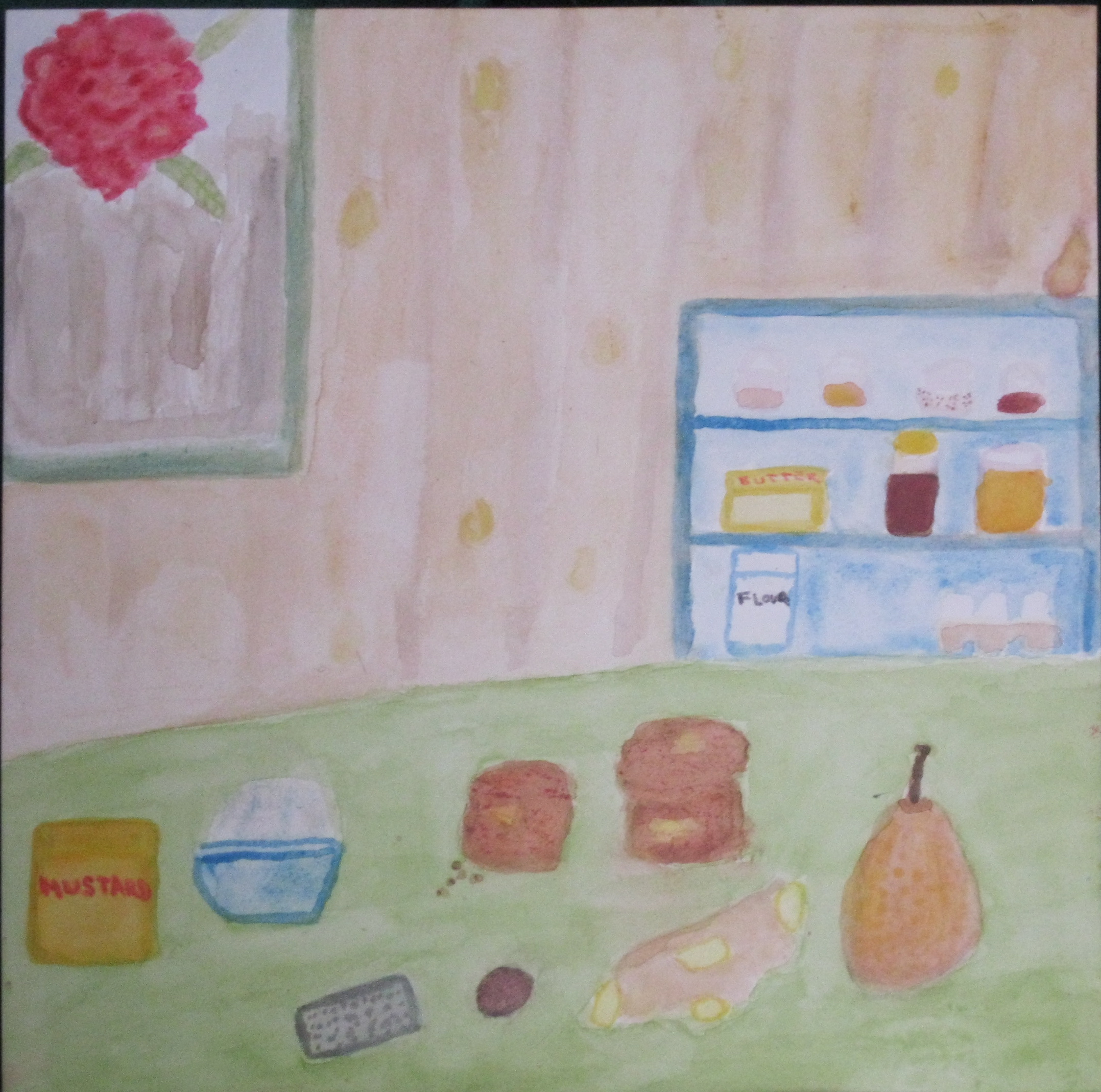
Painting shows pear-ginger muffins and ingredients

Pear Ginger Muffins aka “Brown Study” 12″ x 12″ gouache and watercolor pencil. Sharyn Dimmick

The Daring Bakers’ February 2012 host was – Lis! Lisa stepped in last minute and challenged us to create a quick bread we could call our own. She supplied us with a base recipe and shared some recipes she loves from various websites and encouraged us to build upon them and create new flavor profiles

Neither Lisa nor I had any idea just how challenging the Daring Bakers’ Challenge would be for me on my maiden voyage. The parameters were simple enough: make a quick bread, either in muffin or loaf shape. Post paragraph one above to begin the blog post.

I have cerebral palsy, which may or may not give me altered bone density. I have had all month to think about the baking challenge and to fantasize about what I would make. Should I make a coconut bread with fresh coconut and coconut milk? Should I concoct some kind of Nutella swirl thing in honor of Margit’s birthday month? Should I make something with limes, having scored a bag from the rotting rack at Canned Foods?

I mulled these choices over while I walked along Franciscan Way, going to Margit’s to feed her cats on Thursday morning. My left foot began to hurt insistently. I sat down on the verge to take off my shoe, thinking that my two-day old shoes were not fitting well. I ran my hand inside my shoe and straightened my sock, found nothing and resumed walking in some pain. Franciscan is a lonely stretch of roadway, abutting the Sunset Cemetery where my grandparents are buried. I fed the cats, cleaned their box, walked uphill to the Kensington Library, returned books, looked for job listings and went home for lunch.

My mother and I often have tea together in the afternoon in the upstairs library. She sits on the love seat and I sit on the matching dark red leather armchair with my feet on a black leather ottoman. When I removed my shoes, owing to the warm day, I saw that my little toe was blue and there was a bruise on the heavily calloused outside section of my left foot where the pain was. Uh-oh. The last time I had bruising like that I had broken my hand in two places.

By Friday I had called my foot doctor and requested an appointment and started to minimize any weight-bearing and to sit with my left foot elevated whenever possible. I brought a cutting board into the breakfast room and did all the chopping, slicing and peeling for soup that I could do sitting. By Sunday morning, I felt ready to tackle the muffin challenge. I pushed a light chair into the kitchen to encourage me to stay off my feet, maneuvered myself around as much as possible using the edges of counters and hopping carefully on my shod right foot. When I had to put my left foot down, I did my best to put my weight on the heel and avoid the front part of the foot.

I decided to make a variation on Mollie Katzen’s Spicy Gingerbread from The Enchanted Broccoli Forest, incorporating some finely diced pears with the sauteed butter and grated fresh ginger, and making the resulting batter in a standard 12-muffin tin. I began by whisking my dry ingredients together in a large mixing bowl:

1 cup unbleached flour

1/2 cup whole wheat pastry flour

1/2 cup whole wheat flour

1 and 1/2 tsp baking soda

1/2 tsp ground cloves

1/2 tsp dry mustard

1/2 tsp ground cinnamon

1/4 tsp kosher salt

generous grating of fresh nutmeg

Then I microwaved about 1 Tbsp of butter in a glass liquid measuring cup, swirling it in the cup to coat the sides to the 1/2 cup mark, before pouring it off into the muffin tin, a few drops in each cup. I then measured

1/2 cup honey

1/2 cup molasses into the pre-buttered measuring cup and poured them into a small bowl, to which I added

1/2 cup plain yogurt and

1 large egg.

I preheated my oven to 375 and put the butter-smeared tin into it to heat.

I whisked that together as I began melting 1/4 cup butter on very low heat in a small skillet. While the butter melted I peeled and chopped

2 small Bosc pears into a small dice

I then took a hand of fresh ginger from the freezer where we store it and grated three small knobs into the melted butter (about 3 Tbsp), added the diced pears and cooked it for awhile and turned off the heat while I rescued the tin from the hot oven.

I was all set to combine the ginger-butter-pear mixture with the honey, molasses, yogurt and butter and moved toward it, managing to knock both the bowl of wet ingredients, the whisk, the measuring cup and a rubber scraper onto the flour. I let out a cry, though not a swear-word, and righted the bowl to save what I could. The cry brought Mom from the upstairs to tackle the floor while I measured out another half cup of yogurt and a half cup of honey to replace what had been lost,  and added them to what remained in the bowl. I then moved my chair out of the mess, combined the pears, butter and ginger with the remaining molasses, honey, egg and yogurt, stirred the wet ingredients into the dry, swiped the now-cooled muffin tin with some Crisco that Mom got down from the cupboard for me and hoped for the best as I filled the tin and set it in the oven. I then stalked off  on my heels to make some coffee and set down morosely to let the muffins bake and the coffee water boil.

I needn’t have worried. The muffins came out gingery and delicious with small, soft chunks of pear glistening like jewels. They rose well. They browned well. I can now say that Mollie Katzen’s spicy gingerbread recipe is well-nigh indestructible, even if you drop the wet ingredients on the floor and spill half of them before incorporating your butter and ginger. Thank goodness. Now I will wait to see what the good doctor has to say this afternoon* while I consider the wisdom of taking on any further challenges than the ones I am already equipped with naturally.

* Sad to say my doctor’s visit was aborted by a sudden attack of norovirus. Today I switched to a walker until such time as I am allowed to darken his doorway. Projected visit: Friday morning.

Painting shows loaf of black bread and a few ingredients

Winter Bread. 12″ x 12″ gouache, watercolor and pencil. Sharyn DImmick

I am a water sign and a watercolor painter. I think about water. I love to swim in open water. I like to take hot baths. And I conserve water. On a blog which shall remain nameless I ran across the suggestion that leaving your sink faucet running while you chop onions will cause you to cry less. I ran to the comments field to beg all who read the post not to leave their water running. My friends in New Mexico and Colorado know not to waste water. People in Africa know not to waste water. Some of us don’t understand that potable water is a limited resource and we need to treat it as a limited resource. When you turn on the faucet, water comes out. For now. If you or your landlord or your parents or your roommates have paid the water bill. If you are lucky, you live in a place where the water is good, drinkable, not polluted. Where I live we have good water: it is soft. It tastes good right out of the tap.

Recently, I read another blog post, a wonderful round up of all the things you can do with citrus peel. You can candy it — I knew that. You can zest it. I knew that, too. You can compost it. Check. You can make it into cleaning products. But some people make citrus salts. And some people make liquor. And some people make flavored sugars. You should read the wonderful post yourself.

One of the reasons I loved this post so much is that it was full of lovely things to do with something that we often waste. And one of the reasons I like learning things people did in the past is that some people had some good ideas about how to use things fully. Citrus peel is a lovely thing, quite edible and useful. Water is a lovely thing, drinkable, useful and quite versatile. Please don’t waste it.

Now, it’s winter in the Northern hemisphere and winter has got me thinking about Northern people, perhaps some of your ancestors and mine. People who lived where it was cold. People who lived where crops were limited. Many of those people grew rye. Do you know where this is going? I am offering you some northern winter bread to go with your water. Perhaps you will make some citrus marmalade to spread on your bread where it will look like trapped sunshine. Just saying. Perhaps you will eat winter bread with summer’s blackberries or raspberries preserved in a jar, or your friend Carol’s boysenberry jam.

Anyway, this is winter bread. It is dark. It is hearty. It contains yeast and all manner of dark things: coffee, molasses, cocoa. Don’t get excited — it’s not sweet: it is winter bread and the holidays are over for now. You can eat chocolate bread on Valentine’s Day if you want to, but it is January and Heidi Swanson across the bay aka 101 Cookbooks posted a recipe for black bread, the stuff I call winter bread. Her recipe is even darker than mine because it includes the dark, bitter flavor of caraway seeds. Caraway is bitter enough that it should have made it into the bitter herbs for the Passover table. I passed on the caraway. Her recipe also has golden flecks of carrot in it. You might like that. I might like it, too, but I made winter bread without carrots or caraway this time around. You can make it, too.

Winter Bread, inspired by and adapted from Heidi Swanson’s Black Bread

Get out a 1 cup  glass liquid measuring cup. Put 3 Tbsp butter in it and microwave for about fifteen seconds. Empty butter into a large mixing bowl. It doesn’t have to be melted, but should be soft enough to slip out.

Now, measure 1/3 cup molasses into the same cup.

Pour it into the mixing bowl. It should slide right out. If it is recalcitrant, use a rubber scraper or a clean finger to help it along.

Take the greasy, sticky measuring cup and add 1/2 cup lukewarm water to it.

Dissolve 1 packet or 2 and 1/4 tsp active dry yeast in the water by whisking it with a fork. Set aside for now.

Add to your bowl of butter and molasses:

2 Tbsp unsweetened cocoa powder

1 Tbsp instant espresso powder diluted in 1/4 cup warm water

2 tsp kosher salt

Now add your proofed yeast to the bowl. Get it all: use a utensil or finger — fingers are truly useful in the kitchen.

Measure  1 and 1/3 cups rye flour. Add to your bowl

Measure 3 cups unbleached flour or bread flour into your bowl.

Have a cup of cool water at the ready, plus 1/4 cup flour for work surface, plus additional flour.

You can make this with a mixer with a dough hook. I do sometimes. But this time I hand-kneaded it: it was a new recipe. Rye flour takes a lot of kneading to make good bread and hand-kneading made it easier for me to make adjustments and keep track of how it was going.

First I stirred it. Then I mushed it with my hands. It was still pretty dry and shaggy with wet bits. Finally, I filled a cup with water like I’ve told you to do and spread 1/4 cup of flour on my bread board. Then I dumped the not-quite-bread-mass out on the board, added a little water with my fingers and started kneading. Do you know how to knead? It’s really folding the dough on itself and pushing it forward, letting the weight of the dough work on the dough, then repeating. Endlessly — it will seem that way the first time you knead a loaf of rye or whole wheat or sourdough: it can take awhile to work the proper amount of flour and water into your dough. If the dough will not pick up the flour from the board after several minutes, it is too dry — add some more water. If the dough is super-sticky and gloms onto the board, add flour by the tablespoon and work it after each addition: as you knead bread it tends to get drier and less sticky. You want it neither dry nor wet. It should feel sort of like your ear lobe. Touch it. Like that. Rye bread can take ten or twenty minutes to knead. It’s winter. Slow down. You can sing to yourself as you work: rhythmic songs are good: “I’m gonna WASH that MAN right OUTta my HAIR…”

When it’s done, butter or oil your mixing bowl, put the bread in it, cover with a warmed, dampened linen or smooth cotton dish towel and set it in a warm place to rise, for instance an oven that has been on “Warm” for a few minutes and then turned off. Or an oven with a pilot light. Or a pre-warmed clothes dryer.  Go away for at least an hour, maybe an hour and a half. When it has doubled in size, reward it by deflating it: push on it to let the air out. Form it into a rustic round and put it in a tart pan or on a baking sheet to rise again. Check it in half an hour. Preheat your oven to 425. Take a sharp knife and cut an “X” or cross in the top of your bread. Bake for 15 minutes. Reduce temperature to 350. Check again in 25 minutes. Bread is done when it makes a nice sound when you thump it. No thump? Bake it some more.

Then you have to let it cool. I know, but if you cut it hot, the middle gets icky and soggy. So wait awhile. You have my permission to cut it warm — barely warm. Eat with unsalted butter. Or jam. Or marmalade. Dunk it in your soup. Get out the cheese. You know what to do.

Food Notes: Oh yeah — I added just a touch of orange juice and zest — I had half an orange sitting on the counter. You can use brewed coffee instead of instant espresso. Use whatever salt you like and adjust accordingly. For a completely different, lighter, sweeter rye that incorporates more citrus, try Swedish Rye Bread.

Painting Note: I’ve had the blues lately, so I decided to inventory my paints. I found I had a lot of ultramarine blue. As in four tubes. I had some other blues, too, so I made a tablecloth of blue stripes with blues straight out of the tube: starting at the left, the stripes go cerulean, cobalt, ultramarine, violet and then repeat. The window frame is mostly cobalt. The glass has mauve pencil underneath the blue created by all of the pigments in the water.

painting depicts ingredients for Romanesco with Gorgonzola Over Pasta recipe

Romanesco. 12″ x 12″ gouache and watercolor pencil. Sharyn Dimmick

This week’s farm box included romanesco. Romanesco looks like cauliflower invented by Martians: it has points, spirals, triangular formations and it is often a stunning shade of neon green. You may not have eaten it: I would not have eaten it if I had not subscribed to Riverdog Farm in 2007.

Now, I’ll just tell you that I grew up eating cauliflower smothered with cheese sauce. I would have grown up not eating cauliflower smothered with cheese sauce if I could have managed it, but our family had rules, one of which is that you ate everything you were served. I did not make up this rule, but I had to live with it.

Part of my journey as a cook and as an adult has been to revisit foods I did not care for in my childhood. Some of them stay on the “Do not eat” list: avocado and asparagus have not made it to edible, much less pleasurable, and English peas require careful and judicious camouflage. I still will not eat cauliflower in pale orange cheese sauce, but I will eat it with a sauce featuring two of my favorite things: gorgonzola and cumin seeds.

The same farm that brought romanesco into my life brought me the recipe with which to cook it from the RiverNene CSA in England. I modified their ingredients list and then I modified their cooking method: what I have kept are a little butter, the cumin seeds, some milk and some gorgonzola, although not the quantities of each that I first saw. To get the most out of the creamy, cheesy sauce I like to serve it with pasta. I like whole wheat penne because the darker-colored pasta looks nice with the pale vegetable and sauce and has a nice chewy texture. That said, you could serve it on spinach pasta or tomato pasta for some color and you can eat it without pasta if you are counting carbs.

Romanesco with Gorgonzola over Pasta

Put your pasta water on to boil.

Cut or break your romanesco into florets.

Melt a little butter in a saucepan, perhaps 1 or 2 tablespoons

Fry 1 Tbsp cumin seeds in the butter until aromatic.

Stop the cooking by whisking in 2 Tbsp of flour

Then add some milk — start with 1/2 cup and have more at the ready.

Alternate stirring the sauce and breaking up some Gorgonzola to melt into the sauce. The cheese will help thicken the sauce. If it gets too thick, add a little more milk. If it is too thin, cook it down for awhile or add more cheese.

When your pasta water boils, throw in 1/2 pound of whole wheat penne.

After the pasta has cooked for ten minutes, add your broken or chopped romanesco to the pasta water. Cook for one minute and drain, letting the pasta water fall into a serving bowl to preheat it.

Transfer the sauce, pasta and romanesco to your (drained) serving bowl and stir so that everything gets coated with sauce. Eat while it is warm.

Food Notes: If you don’t have romanesco, you can make this with cauliflower, or even broccoli — it just won’t have the Martian atmosphere. Sometimes I add a few snipped sundried tomatoes into the sauce for the bright taste and the flecks of color: it is winter, after all. Regular pasta works, too. Sigh. The original recipe called for 2 Tbsp of brandy — if you are a brandy-swiller, go ahead and add it to the sauce: I’m sure it tastes delightful.

I like to serve this with a winter salad of raw spinach and sliced oranges. Sometimes I dress it with Orange-Sesame Vinaigrette. However, I had recently read about an orange-tahini dressing and wanted to see if I could put one together (I love tahini and January is a big citrus month). I started by juicing one orange, one Eureka lemon and two Meyer lemons. That yielded one half cup of juice, which I poured into my old Good Seasons cruet (Remember those? They are handy for salad dressings that don’t come in packets!) I added 3 Tbsp Tahini. I tasted it. Now what? I had on the counter some olive oil that I had used to cover roasted red bell peppers. The peppers went onto last night’s pizza, but the oil. I measured 2 Tbsp of the roasted red bell pepper oil. Mmm. That gave a nice roasty flavor. Gotta have salt: I put in 1/2 tsp Kosher salt. And garlic: I pressed 1 small clove of garlic. A little sweetness: in went 1 tsp honey. I thought about putting some cumin in it, but I kept it simple this time — there’s cumin in the romanesco sauce after all.

For a little more heft, I kneaded up a batch of black rye bread, basing it on a recipe by Heidi Swanson of 101 Cookbooks. But I left out the carrots and the caraway and threw in a little orange juice and zest. It’s rising now: I’ll report on it on Wednesday (or not, if it is not worth writing about).

It’s still January, so they are still doing citrus recipes over at #citruslove. They are worth checking out if you like citrus or have a seasonal glut of it like we do.

painting of tangerine curd and ingredients

Tangerine Curd. 12″ x 12″ gouache and watercolor pencil. Sharyn DImmick

It’s tangerine season and that means tangerine curd. Riverdog Farm delivers pounds of mandarins and oranges each week. Because I have a contract baking/barter arrangement right now with my friend C., who brought me to music camp, I offered her some curd. She wanted eight jars. Eight jars! See Sharyn scurrying around the garage, looking for empty jars of an appropriate size. See Sharyn buying three dozen eggs at Trader Joe’s. See Sharyn topping a couple of those jars with plastic wrap and rubber bands because good lids were wanting. See Sharyn making angel food cake from scratch to use those first twelve egg whites.

Now, I had on hand eight organically grown tangerines from the farm and eight tangerines of unknown provenance from Safeway. Using the blood orange curd recipe from Chez Panisse Desserts for proportions, I made my first batch with the eight organic tangerines, 18 tablespoons of butter, a dozen egg yolks, plus three whole eggs, 3/4 cup sugar and the juice of three Meyer lemons. This yielded nearly two cups of juice and five jars of tangerine curd. Then I made a second batch with Safeway tangerines. They only yielded a little over a half cup of juice. I added Meyer lemon juice to get to a cup and followed the recipe as written, except for using tangerines instead of blood oranges. The lesson? Different tangerines will yield different amounts of juice — either buy organic ones or get a few extra in case your juice is too scant. The second recipe yielded three small jars of curd.

Tangerine Curd (adapted from Chez Panisse Desserts)

Zest, then juice 4 tangerines to yield 7 Tbsp juice (have a few back-up tangerines in case yours are dry)

Add 1 Tbsp of lemon juice (I juiced 1 Meyer lemon)

Separate 4 eggs and reserve whites for another use.

Whisk 4 egg yolks and one whole egg with 1/4 cup sugar in a non-reactive sauce pan.

Add juice and zest.

Cut 6 Tbsp unsalted butter into small pieces and add to saucepan.

Bring to low-medium heat, stirring constantly with a wooden spoon. Cook until curd coats the spoon. Hint, draw a clean finger through the curd on the spoon — if the track remains clear, the curd is done.

Pour curd into clean glass jars (I washed my jars and lids and boiled them in a water bath before filling them).

This recipe will yield three small jars. Cool and store in refrigerator. The curd will keep for one-to-two weeks. It is good on rye toast or as a cake filling. Or, you might do as my friend Bob suggested and make a tangerine meringue pie. If you want to use curd as a pie filling, Lindsey Shere suggests that you mix 1/4 tsp cornstarch with the sugar before you make the curd — apparently, it helps the curd hold together under oven heat.

Now, remember I made a triple batch the first time and had a dozen egg whites leftover: the simplest thing was to use them to make an angel food cake, delicious with curd. I had not made an angel food cake from scratch since I was a teenager, but I saw no reason not to attempt it. My trusty Betty Crocker Picture Cookbook offered not one but two options for homemade angel food. I chose option two, which contained confectioner’s sugar and seemed to skirt the possibility of being grainy. I got out my whisk, tube pan, metal utensils, beaters, scrubbed and dried them all, got down the cake flour and confectioner’s sugar and set to work. The recipe said to sift the flour and sugar together three times. Uh-huh. Right. Instead, I sifted them each once into a mixing bowl and used my whisk to blend them. Then I beat egg whites, added sugar, beat them again until they nearly overflowed the mixing bowl. I then followed the instruction to sift the sugar and flour over the top of the egg whites. I found this to be quite tedious, perhaps because our sifter is sixty years old and cranky, or perhaps because I really don’t like to sift, just as my mother does not like to stir. What the recipe should have said was to sift some of the mixture on top of the egg whites, fold it in, sift some more, because if you do it all at once you then have a difficult job of folding the mixture into the egg whites because you have no room left in your bowl. I got the job done, however. The other hard part is scraping the batter into the tube pan with a metal spatula. It is much easier to scrape things with a rubber scraper, but verboten for egg whites.

The reward for all of this excess and troublesome labor was a good-tasting cake with none of the odd flavors that show up in commercial angel food cakes or mixes. The cake tastes purely of vanilla and sugar and has a moister texture than you would expect. Mom says I didn’t beat the egg whites enough, but I thought the moist texture was gorgeous.

Here is the amended recipe from Betty Crocker

Angel Food De Luxe (sic)

Preheat oven to 375 degrees.

Whisk together 1 cup sifted Softasilk cake flour and 1 and 1/2 cups sifted confectioners’ sugar.

Beat 12 egg whites with 1 scant teaspoon of cream of tartar and 1/4 tsp salt until foamy.

Add 1 cup granulated sugar, 2 Tbsp at a time, while continuing to beat egg whites.

Beat to stiff peaks and fold in 1 and 1/2 tsp vanilla.

Sift 1/4 of the flour sugar mixture over the meringue and fold in. Repeat until all flour and sugar are incorporated.

Using only clean, dry metal utensils, transfer cake to waiting ungreased, unfloured 10 x 4 tube pan. Level cake gently with metal spatula.

Bake for 30 to 35 minutes until top springs back when gently pressed with finger.

Set tube pan on top of glass or plastic bottle (I used a ketchup bottle) and cool completely before unmolding. Use table knife to loosen edges. Eat with curd or plain. Yum.

P.S. When the comments started to come in, people suggested that angel food cake was a North American dessert. I didn’t know that. Now I do. I consulted Granny Wise and she’s written up a history of angel food cake for you.

painting depicts salad, varierty of citrus fruits.

Ginger-Sesame Vinaigrette 8″ x 8″ gouache and watercolor pencil. Sharyn DImmick

What do we eat in January? The reds of the summer and late fall have given way to orange and green. Citrus is pouring in from the farm box, from the market, from my sister-in-law’s orange tree. Lemons and limes are ripening in the yard. This week’s box from Riverdog Farm featured a red Kabocha squash (which is a deep shade of reddish-orange), two pounds of oranges, one and a half pounds of mandarin oranges, a couple of leeks, rapini, spinach, two celery roots and a pound and a half of potatoes.

First up, I stir-fried the rapini in olive oil with garlic and squeezed a lemon over that. We ate it with roasted delicata squash seasoned with ginger, lime and an apple cider reduction made from the last of a bottle of cider. We had a slice of heated up ham, which Mom splashed a little maple syrup on at the last minute. We each ate a slice of homemade whole wheat bread. I peeled a tangerine for dessert and Mom cut half an orange into quarters. I watched as her face puckered and volunteered to use the other half of the orange in salad dressing tomorrow.

I first saw this vinaigrette recipe in the farm newsletter, where it was reprinted from the Sun-Times. I have adapted it to use a variety of citrus and I’ll make it from now until citrus fruits fade out in the spring to be replaced by strawberries. While the original recipe called for canola or safflower oil I like to use peanut oil, which goes well with the Asian flavors of ginger, sesame, rice vinegar and tamari.

Orange Sesame Vinaigrette

Juice and zest 1 orange or 2 tangerines or 2 blood oranges or any combination into a bowl, bottle or cruet.

Add

2 Tbsp rice vinegar

2 Tbsp tamari

2 Tbsp sesame oil

1 Tbsp honey

2 tsp grated fresh ginger

2 cloves garlic, pressed

1/2 tsp kosher salt

black pepper to taste

minced chives, scallions or green garlic, depending on what you have

Whisk in

1/4 cup peanut oil (or add it to jar and shake vigorously).

Toast

2 Tbsp sesame seeds in a skillet

Now, make a salad of winter greens: spinach, arugula, lettuce, watercress — whatever you can get. If you can’t get fresh greens, you can slice up napa cabbage on a mandoline. Add slivered carrots, cabbage, sliced fennel, radishes. Throw in roasted peanuts or almonds if you like. Segment your favorite citrus fruits. Toss the salad with the vinaigrette and reserved sesame seeds.

Food notes: You can also eat this vinaigrette on cooked greens or Brussels sprouts. If you are allergic to peanut oil, substitute another oil that you like. Tamari is a wheat-free soy sauce, not as salty as standard soy sauce.

Painting note: This painting is a little blurry because it is a photo of a photo — the original is in a private collection and is more vivid and well-defined.

January is citruslove month. Which makes sense in the Northern Hemisphere at any rate. There is a citrus love recipe posting project. The hash tag is #citruslove. More about it here.

Now, Lauren of PrinceProductions has kindly awarded me another blogging award, Food Bloggers Uncovered, just to make sure I start the New Year off right. She posted ten questions to answer:

1.   What, or who inspired you to start a blog?

After struggling mightily over how to launch a website and what would be on it, I was talking to my friend Neola and she said, “Why don’t you just write about food? You could write about what vegetables you get and what you do with them.” Neola knows I am passionate about seasonal eating, that it actually pains me to see recipes containing basil and tomatoes in January.

2.   Who is your foodie inspiration?

I have had the good fortune to eat at Greens in San Francisco, at Chez Panisse and Ajanta in Berkeley, and at Joseph’s Table and The Love Apple in Taos, New Mexico. The chefs at those restaurants, Alice Waters, Barbara Kingsolver’s “Animal, Vegetable, Miracle,” and Michael Pollan’s books have influenced me mightily. The produce from Riverdog Farm has forced me to stretch my cooking muscles, and increase my versatility and look for ways to render a variety of greens delicious.

3.   Your greasiest, batter – splattered food/drink book is?

The old Betty Crocker Picture cookbook, which is where I go when I have a question about anything basic (substitutions, cooking methods, standard dishes). I like it that it has tabbed sections for yeast breads and pies as well as main dishes, meat, poultry. Read more about the cookbooks I use the most here.

4.   Tell us all about the best thing you have ever eaten in another country, where was it, what was it?

It would have to be in Paris in the winter where I ate coquilles St. Jacques, a poached pear and the best white bordeaux I have ever tasted, perfectly matched to the food.

5.   Another food bloggers table you’d like to eat at is?

I would like to dine with Susan Nye when she is cooking lobster, dine with anyone who likes to cook lamb, sit down to an Italian meal with John of the Bartolini Kitchens. Greg of Rufus’ Food  and Spirits Guide can make the pre-dinner cocktails and perhaps the bread pudding and you can all submit selections for the dessert cart. Are you listening, Linda? Get out the cheesecake! And I want to know what Christine of Angry Cherry is baking as well. Sally can bring the bread.

 6.   What is the one kitchen gadget you would ask Santa for this year (money no object of course)?

We have a KitchenAid, but I would like the heavier-duty model, please.

7.   Who taught you how to cook?

Mom taught me the basics, including the pie crust, and then I started collecting recipes and techniques and ideas wherever I found them: learned to cook a few Indian and Thai dishes from college roommates, copied flavors I had had in restaurants, watched people cook on T.V., and read lots and lots of cookbooks.

8.   I’m coming to you for dinner what’s your signature dish?

It depends on the season. Turkey and apple stew, perhaps, or posole (without the kale!). Served with home-baked bread and a simple pudding or pie. Or green curry of anything. Or something Indian served with cucumber raita, whole wheat tortillas and chutney: chicken biryani or Indian-style black-eyed peas from the Ajanta cookbook.

9.   What is your guilty food pleasure?

My secret love of these processed foods: Cheez-Its (original flavor), barbecue chips, and Golden Grahams, which they might as well call candy.

10. Reveal something about yourself that others would be surprised to learn?

I refuse to eat a number of common foods: mayonnaise (I don’t care who makes it or if you call it “aioli”), avocado, hard-cooked eggs, most organ meats, tuna. I also refuse a number of delicacies: pate, sushi, oysters, caviar, Brie.

Finally…tag 5 other food bloggers with these questions…like a hot baked potato…pass it on.

No, no. We live in a democracy. Take it upon yourselves to answer these questions, or tell your friends about them. Alright, I nominate Granny Wise of Granny’s Parlour because I want to hear how she answers the questions. Who else? You know my favorites already. There’s Eva and Betsy and John, who doubtless have all been nominated for this before. I know, let’s give another award to Jane at ArtEpicurean. Done.

painting of kale salad

Kale Salad. 8″ x8″ gouache and watercolor pencil. Sharyn Dimmick

When I started a blog called “The Kale Chronicles,” I liked the alliteration and I felt like I was perpetually struggling with kale: Riverdog Farm put in my vegetable box frequently and I had found no truly satisfying way to eat it in three years. Then I went to Mabel Dodge Luhan House in New Mexico this November and Jane Garrett served a kale salad. I ate some. Then I went up for seconds. Then I asked for the recipe.

Jane obliged and I have made this salad twice since returning home. Every time I make it, I eat big bowls full of it and I eat it everyday until it is gone. I made it again tonight and just ate a flat soup bowl full of it.

Why do I like it so much? It could be the dressing: Meyer lemon juice, olive oil, garlic, tahini, tamari and a little bit of honey — I might eat that on shoe leather, although I doubt it. I might like it because you blanch the kale before attempting to eat it. I just like it.

I’ll give you Jane’s version as she wrote it and then I’ll explain how and why I altered it.

Jane Garrett’s Kale Salad

Blanch two bunches of kale*.

Add what you like: grated carrots, radishes, dried cherries, almonds, red potatoes, feta, mint.

Toss with the following dressing:

1/2 cup lemon juice with zest

1/3 cup olive oil

2 Tbsp tahini

2 Tbsp Braggs’  OR 1 Tbsp tamari

3 cloves garlic (I pressed mine)

1/4 tsp agave OR  1/4 tsp honey

*If you are going to eat kale, you need to remove the stems and ribs. Jane didn’t tell you this because she thinks everyone knows it. So, before you blanch the kale, remove the stems and ribs and compost them.

My alterations: I don’t have any Braggs’, which I believe is Braggs’ amino acid, or some such thing, and I haven’t been inclined to go out and get any. I deduced that it was contributing the salty flavor, so I substituted 1 Tbsp tamari for the 2 Tbsp of Braggs’. I used Meyer lemons because we have them growing in our front yard — they are sweeter and less sharp than Eureka lemons, the ones you usually find in the supermarket. I used 1/4 tsp honey for the agave because, once again, I don’t keep agave in the house — I don’t object to it or its flavor — it’s just not something I have around the house. Lastly, I don’t measure my olive oil: take Jane’s measurement if you want to be precise — I just dress the kale with some olive oil, mix together the other ingredients and toss the salad.

I haven’t been adventuresome in mixing things into this yet because I actually like the taste of the kale smothered in this dressing. I did put in half a handful of dried sour cherries tonight, but I couldn’t really taste them — the dressing is pretty powerful.

What I hope is that this salad helps some of you eat kale who have found it hard to enjoy in other preparations, especially those of you who are at your wits’ end when kale shows up in your farm box (Someone removed a bunch of kale from his box today and set it on top of the stack for someone else to take home!). It works for me.

Now, the award: Jen aka Zestybeandog kindly awarded me The Versatile Blogger Award. This pleases me because 1) Who doesn’t like an award and some recognition 2) Versatility in the kitchen is one of the hallmarks of my cooking style and 3) I get to pass the award on to several other bloggers whose blogs I enjoy. I am also to reveal seven things about myself

1) I love to sing. I sang in school choirs and church choirs. I have one CD, “Paris,” featuring traditional ballads, original songs and covers.

2) I started a ballad-singing group in Berkeley many years ago. It’s still going.

3) Besides painting food subjects I like to paint flowers, song illustrations and occasional landscapes. Animal portraits have been creeping in lately…

4) I used to work as a Recreation Leader in a program that brought together children with disabilities and able-bodied, neurotypical children.

5) I used to be a psychotherapist (MFT)

6) I love open-water swimming and swim in the Berkeley Marina, weather-permitting, from May through October.

7) I sell paintings. Just thought I’d throw that in because I do sell my original watercolors. I am happy to sell them. I am working on developing related products, including cards, trivets, canvas bags, etc. with images from “The Kale Chronicles.” If you want something, please ask.

Where to start? I have just been in the blogosphere for a little over four months, In that time I have come to enjoy the following blogs:

Bitsandbreadcrumbs by Betsy — Betsy cooks stuff I want to cook myself.

Kitchen Inspirations by Eva Taylor. Can’t tell you why exactly — that’s the nature of inspiration — I just like Eva’s blog.

Angry Cherry — the baking blog with personality and many original ideas. She makes things I want to try someday.

JustaSmidgen — lovely photos and some stunning recipes: malted milk meringues anybody? Or pomegranate salad?

From the Bartolini Kitchens — John chronicles his family’s Italian recipes, tells great stories and is one of the kindest people in the blogosphere that I have run across

Lauren is baking her way around the world, making things from every country she can think of. She is particularly honest, which makes her fun to read.

Linda, at Savoring Every Bite makes lovely cheesecakes, attends to decor as much as to food, is generous with her comments and posts a variety of recipes. Pumpkin fans must subscribe to her blog in the fall.

Bewitching Kitchen. Sally has a not-so-secret love of baking bread. In this, we are sisters. She just posted a wonderful-sounding caramelized carrot soup.

SmittenKitchen. This is a big, well-known blog. You may already read it. If you don’t, go there now: Deb has it all: recipes, photos, stories.

As you can see, those are food blogs.

I also read art blogs, or art and food blogs.

The first art and food blog I found was Jane Robinson’s Art Epicurean. Jane paints lovely abstracts and publishes a wide variety of recipes

My latest food and art blog discovery is The Hungry Artist by Melissa. I look forward to seeing more of her work (she just posted some wonderfully-shaped fig cookies on FoodBuzz)

And, somewhere in between, I found Dichotomyof. She makes colorful patchwork cushions, raises children and cooks, too.

For pure art (without food), go to

Bees ATC. Nancy posts a drawing everyday around midnight central time. They are usually colored pencil drawings.

Saltworkstudio: Suzanne has developed quite a following for her abstract acrylic work and collages. She teaches in Sonoma County, but she has gone to Rome for the holidays. I’m sure she’ll have stories to tell when she gets back

And, last, but not least, there is Donna Louise, neither a food nor art blog, but a modern serial by a funny, offbeat writer who shall remain nameless for the time being (at the writer’s request).

painting of English toffee and ingredients as seen by a horse.

Sebastian and the English Toffee. 12″ x 12″ watercolor pencil. Sharyn Dimmick

Last week Susan Darm showed up to show you how to make her delicious caramels. This week she is back with her English Toffee recipe. The basic recipe has only three ingredients — shouldn’t you be making some? Think of how nice it will be standing over a warm, fragrant pot of caramel on these cold days.

Susan says:

I did not get this recipe from a book. It may have been given to me by a neighbor, Mrs. Steel, who was from England. I never wrote it down because the recipe was simple, consisting of only three ingredients. These were cooked together carefully then poured out, cooled and broken into pieces which could be covered or dipped in chocolate and robed in chopped almonds. I made English Toffee at the holidays for years. So far I have not found any commercial toffee that tastes as good.

English Toffee

One pound granulated sugar

One pound butter (I have used salted and un-salted. Salted works better for me).

One cup raw almonds

Prepare a buttered cookie sheet. I use a buttered silicon cooking mat on a cookie sheet but it works just as well without the silicon. In a good quality saucepan about 10 inch diameter, place the sugar and butter. Melt these together stirring continuously until they are completely melted and start to bubble. Add the raw almonds. Continue to cook at a slow boil while stirring constantly never lifting the spoon from the mixture. If you are using a candy thermometer you will do this until it reads 290-300 degrees f (between soft crack and hard crack stage). If not using a thermometer, cook until the candy starts to turn a beautiful toffee color and pulls away from the sides of the pan as you stir. Remove the pan from the heat. Carefully remove the stirrer from the pan. Do not allow any candy on the stirrer to drip back in to the pan, it could taint your candy and ruin the texture. Pour the candy on to the baking sheet or silicon mat. I let it cool just a little then use a silicon spatula to smooth the surface and spread the nuts uniformly. I sometimes score the candy lightly with a knife just before it hardens so I get uniform sized pieces when I break the cooled candy. Once the candy has cooled you can do what you want, break it in to pieces to dip in chocolate, crumble it, or chocolate coat the whole big piece to give as a gift along with a little hammer. Have fun and be creative!

Food Notes (from Sharyn): We pour our candy into buttered Pyrex oblong pans. It works for us.

Painting note: Today’s painting features Susan’s horse, Sebastian, who says, “Western tack, please, but English toffee!”

Susan promises to come back next fall and teach us how to cure olives.

painting shows miniature horse looking through window at caramels.

Scamp and the Christmas Caramels 12″ x 12″ watercolor pencil. Sharyn Dimmick.

Today The Kale Chronicles presents a holiday confection from Susan Darm: at our house candy and certain cookies are seasonal foods, made only in December.  In November 2011, Susan brought some of her caramels to a writing retreat in New Mexico and we all swooned. Susan lives in Brentwood in eastern Contra Costa County, an area formerly known as the Horn of Plenty. My favorite peach farm, Frog Hollow Farm, is still out there, although much of the fertile land has been paved over for housing. When Susan is not making candy she is an equine enthusiast, physical therapist and aspiring writer. Here’s Susan:.

I have always loved candy. As a child in grade school, I figured out that if I was going to eat as many sweets as I liked, I would have to learn to make them. I started out simply with a snack of bread, butter and white sugar. This was a respectable after school snack in my mother’s eyes, something she herself ate as a child. When I got bored with this snack I began experimenting with sugar, butter and/or syrup boiled in a sauce pan, cooled then either eaten plain or poured over nuts. I got the idea of cooking sugar from my father. He made pecan rolls at Christmas and I loved the gooey topping made of brown sugar, butter and pecans.

By the time I reached high school I had graduated to more complex concoctions. The first real winner, a candy that was good enough to share with others, was English Toffee. After 10 or 15 years of English Toffee, I got burned out on making the same candy over and over. I started searching for new recipes. I experimented heavily with both caramel and fudge. I was better suited to making caramel; it has similar properties to toffee. The recipe I ended up using as a base for my caramels is common and can be found with minor variations anywhere on the internet. Once you get the knack of making basic caramels, there are endless variations as far as using nuts, chocolate, salt for salted caramels, constructing layered candies (like Turtles) or shortening the cooking time and making caramel sauce instead of candy. I have even incorporated marshmallows, walnuts and chocolate in to the caramel with sweet results kind of like a caramel rocky road. It was good for me to make these candies. Over the years I began to eat less myself and enjoyed giving it away more than eating it.

The key to caramel making is attention to these details:

  1. Once you get to the actual cooking stage (after the ingredients have melted together), the spoon must not be removed from the pot and you must stir continuously without scraping the sides of the pot. I use a bamboo paddle and envision the paddle moving the candy in a pattern around the pot so no area is left unstirred.
  2. Manage the temperature of the stove to keep the pot at a slow boil.
  3. When you pour the candy out, do not scrape the pan. You may scrape the pan later and eat the scrapings.
  4. I no longer use a candy thermometer because I am able to eyeball the proper cooking stage. I suggest you start with a candy thermometer then estimate the time it takes to achieve the desired ball stage on your stove and quit the thermometer. I find the thermometer cumbersome and by the time I read the proper temperature my candy is overcooked.
  5. Every stove is different. On my old stove, the caramel took about 18 minutes to cook. On my new stove it is always ready in 12 to 15 minutes. This is why I use my eyes.

Easy Basic Caramels

Prepare a buttered 9 by 9 inch pan. Silicon works the best. You may fill the bottom of the pan with nuts. I use raw walnuts or toasted salted almonds or pecans. I have also used macadamias and Brazil nuts. Any nut tastes great with caramel! The caramels also taste good plain.

1 cup granulated sugar

1 cup dark corn syrup

1 cup butter

Put these ingredients in to a 10 inch heavy bottomed sauce pan, melt together and while stirring constantly bring to a slow boil. Turn the heat down and maintain a slow boil uncovered for 4 minutes without stirring. Keep the bamboo spatula in a cup of warm water while the concoction is boiling. After 4 minutes of slow boil, remove the pan from the heat and add:

One can of sweetened condensed milk

Put the pan back on the stove and over low/medium heat boil the concoction while stirring constantly without removing the spoon. If you use a thermometer you will cook it to 238 degrees f. If you use your eyes, the caramel will turn a warm brown caramel color and start to pull away from the sides of the pan. Once they have reached the desired temperature or color, remove the pan from the heat. At this point you may stir in any flavoring you would like. Most people like to add vanilla. I do not. Then pour the caramel in to the 9 by 9 buttered pan. Let the pan cool completely. I refrigerate them overnight. Once you have the basic caramel you can dress it any way you like. I remove the slab of caramel from the pan and cut it into small rectangles. I dip the bottoms of the rectangles in chocolate then wrap them individually in waxed paper (like my grandma used to do). You can also press salt in a decorative pattern on to the top of each piece or mold them in to balls, push nuts around the ball and dip it in chocolate. These caramels are very forgiving. Slightly undercooked they make a soft melt in your mouth caramel. Slightly overcooked they are firmer and must be served at room temperature.

These caramels keep well for several weeks in the refrigerator.

I try to put love in to everything I make. I believe we can taste when food is cooked with love. I also try to use local ingredients as much as possible. I am trying to find healthier candy to make and share. For next year I will work on making nougat with local honey, almonds from our orchard and egg whites from my mother in law’s chickens. This will be a lower fat candy made with ingredients from close to home. Wish me luck and I hope to share my results.

Food Notes: Sharyn here.I grew up making caramels at Christmas with cream, but have never made them with condensed milk (it won’t be long now!). My mother remembers boiling cans of condensed milk as a child to make caramel, so it is a tried and true method.  I also agree with Susan about candy thermometers: I learned to make candy the old-fashioned way by dropping samples into cool water or across plates and looking for textures: soft ball, hard ball, hard crack, etc. Next week, I’ll post Susan’s English toffee recipe for you.