Archives for category: fruit syrups

I recently made homemade phyllo (or filo) for the first time, following instructions I found on YouTube. Every stage was easy until I got to dealing with the stacked sheets of thin dough rolled out to size. There was some sticking and crumpling, but I managed to use the phyllo to make eight triangles of spanakopita, following this recipe.

It is spring here in western Washington state and the local farmers market has had beautiful spinach. I was later than usual getting out the door yesterday because I had an episode of vertigo. I stopped at the health food store for feta and lemons, dreaming of the spanakopita I would eat this week.

Alas, when I got to the market, the farmer I like to patronize most had sold out of everything but dill and turnips. I scavenged around the market and loaded up on salad greens and radishes, a bunch of green onions.

On the walk home I began thinking about what I had in the house. I had andouille and chicken apple sausage and corn in the freezer. I had a small jar of sun-dried tomatoes. I had green onions, cilantro, a lime wedge and the feta I had just bought. I could make a respectable skillet of pasta with those things.

Tonight I did, and I’m eating bites of it between typing this up.

Amounts are loose when I cook pasta. I get out a big skillet with a glass top and start sautéing things in olive oil while the water heats for pasta. I cut two andouille sausages into half moons and added a few half moons of chicken-apple sausage that had been sitting in the refrigerator. I chopped up the white parts of two green onions, saving the green parts for later. When the sausage and onion were in the pan, I shook frozen corn over that layer and snipped four or five dried tomatoes into bite-sized pieces. When the pan started to get dry I poured a bit of water from my boiling pasta into it. I added crumbled feta — I had about three ounces. More pasta water, plus the al dente pasta. Then, at the end, I added the onion greens and some cilantro leaves, squeezed the lime wedge over it all and stirred.

It was a tasty dinner and there is enough left in the skillet for at least two more meals.

What else will I eat this week? Plenty of salads (I had salad for lunch). I’ve got at least one salmon fillet in the freezer. I can have that with a baked potato and some stir-fried bok choy. Or another salad. One of my students sent me her recipe for homemade granola and I made up a batch last week. That and yogurt or milk and dried fruit takes care of breakfast. I’ve got half a dozen eggs and frozen half bagels from the local shop.

I’ll make it through the week and hope to get up early enough to catch the beginning of the farmers market next weekend for more spinach. I found a couple of blocks of feta in the back of the freezer and one vendor has green onions each week right now. Fresh dill is in season and I always have radish greens (I chop them and mix them with spinach, a nod to frugality with no significant alteration in taste).

P.S. For those of you who followed the orange syrup chronicles, the latest thing I made with reserved orange syrup was baked rice pudding, using the orange syrup instead of adding sugar to the cooked rice, milk, eggs, raisins and orange peel. I seasoned it with cardamom — both fresh ground seeds and a dash of cardamom bitters to give it an Indian dessert vibe. It was utterly delicious, if a bit sweet — it’s hard to judge the sweetness before the pudding is baked. Next time I might add some chopped blanched almonds, furthering the Indian profile: for now I just toss a few raw almonds into each bowl of rice pudding. Using sugar syrup instead of granulated sugar means that the pudding takes longer to cook, perhaps twice as long. You want it to be firm before you take it out of the oven and I like to see some browning on the top.
On May Day when we were all boycotting spending and staying home I took the time to candy all of the orange peels I had saved in the freezer. I had enough to fill a stock pot.

After you blanche orange peel and scrape off the pith, you simmer it in simple syrup (equal parts sugar and water). When you remove the peel from the syrup, you have sweet, orange-flavored syrup left: I had about three pint jars full, which I stored in the fridge.

Now I get to play with orange syrup. The first thing I did was substitute orange syrup for maple syrup in my morning oatmeal. My current choice is oats cooked in milk flavored with dried cranberries, chopped candied orange peel and chopped almonds. A generous teaspoon of orange syrup sweetens a portion.

Last night I made a cup of cocoa. Instead of sweetening the cocoa powder with salt and sugar and adding milk, I covered the layer of cocoa powder with orange syrup and just a bit of milk to blend it into a paste before I filled my mug with milk. The cocoa was perfectly sweetened with just a faint taste of orange.

That got me thinking. I used to occasionally order a cafe borgia in a Taos cafe: espresso, orange and hot chocolate. What if I made eight ounces of my morning coffee and mixed it into pre-stirred cocoa powder and orange syrup? I made it for breakfast this morning and it was delicious. The proportion is eight ounces of coffee to six ounces of cocoa-orange syrup. Yum.

In the works are some sourdough scones, probably orange-rosemary. I plan to use orange syrup as at least part of the sweetener in the scones in addition to using candied orange peel and chopped fresh rosemary. I’m also going to try to titrate an orange glaze with orange syrup and powdered sugar, perhaps with sharp Eureka lemon juice added to cut the sweetness. I’m thinking a thinly drizzled glaze, rather than a coating (I don’t usually glaze or frost my scones).

When the current cut on my left middle finger heals completely and I can knead bread again, I will make some orange rolls, spread with butter and candied orange peel. I’ll put some butter and orange syrup in the bottom of the baking tray and add more syrup when the warm rolls emerge from the oven.

If I had any seltzer in the fridge, I would surely try the orange syrup in that. And if it gets hot enough for iced tea, I will sweeten glasses of it with orange syrup, rather than the plain sugar syrup I usually use. I am thinking of making iced chai tea instead of regular black tea, thinking the orange and the spices might play well together.

Do you ever candy citrus peel? If so, what is your favorite? And what is your favorite thing to do with orange syrup?

I was excited to see rhubarb at the Berkeley Farmers’ market last Saturday — I think it is the first time I have seen it there. I had seen a delicious-looking recipe for a rhubarb-cherry crumble with fresh ginger on local kitchen, one of the blogs I always enjoy reading. Kaela preserves a wonderful variety of jams, pickles and marmalades. Here was a crisp that I could tackle easily with cherries in season.

I have had few encounters with rhubarb in my life. My mother never cooked it at home, although she ate it as a child in Illinois. Neither of us like cooked strawberries, preferring to eat them raw, so strawberry-rhubarb pie is not in our pie arsenal. I once ate some rhubarb pie at a doll class potluck — the baker thought its pink color was particularly appropriate for a group of women artists. While I didn’t have to choke it down, I didn’t jump for joy and ask for the recipe either.

Now, if rhubarb grew abundantly in our yard or if a neighbor left baskets of it on our porch I would figure out how to make it palatable or resort to ferreting out all of my rhubarb-loving acquaintances and foisting it on them. Riverdog Farm has not included it in a box in the last five years either. But a couple of years ago I had had my best encounter to date with rhubarb: Toni, who grows it in her Oakland yard, smothered it with brown sugar, dried fruit, nuts and sweet spices, popped it into the oven and roasted it. The result was brown and syrupy and sweet. But when I asked her for the recipe this year she could not remember ever making it that way, a brilliant improvised recipe lost to the world.

When I bought the rhubarb last week, I tasted it cautiously at the bus stop, breaking a small piece off the end of a raw stalk. How sour would it be? I am happy to report that it didn’t lock my jaw. The taste reminded me of chewing sour grass when I was a kid, faintly reminiscent of lemon and green plants. But rhubarb is one of those things like quince — most people do not eat it raw. Cooking transforms it, but tasting it raw does not help you plan how to cook it.

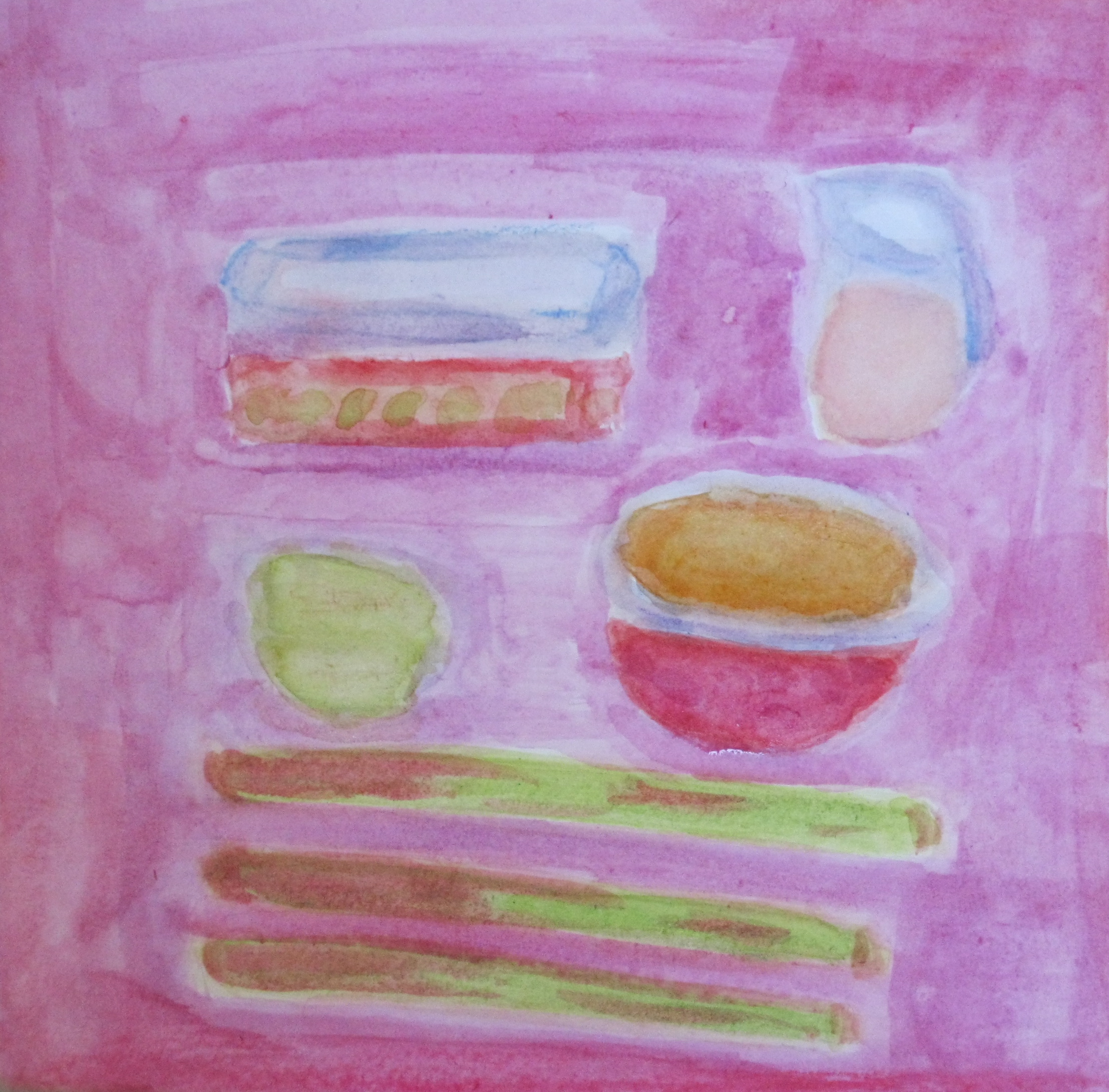
painting shows rhubarb in various preparations.

Rhubarb Experiments. 8″ x 8″ Gouache and Watercolor Pencil. Sharyn Dimmick.

This morning I turned to the guidelines of other cooks: what have they done with it? Well, they boil it with sugar, raw or white or brown. They stew it with prunes and apricots. They combine it with strawberries in pies and compotes and jam. Enterprising cooks use it in sauces for roast pork. I hunted through some cookbooks for awhile. Then I cut and measured my remaining rhubarb: I had three cups left.

Fine. Enough for three small experiments. Experiment #1, rhubarb roasted with vanilla bean and Creme de Cassis, suggested by The San Francisco Ferry Plaza Farmers’ Market Cookbook. Experiment #2, rhubarb cooked down to a syrup, a variation on Heidi Swanson’s Rhubarb and Rosewater Syrup recipe. Experiment #3, rhubarb cooked in a compote with dried fruit, adapted from the Eat Fresh, Stay Healthy cookbook, an offering from the used book sale at the Kensington Library.

Experiment #1, the roasted rhubarb, smelled wonderful, both before and after baking, from the perfume of the vanilla bean and the Creme de Cassis. This rhubarb, mostly pale green with red ends remained green after roasting. The syrup has a slight dark red tinge. I tasted the result cautiously, one piece on a small spoon. It is delicious. The white sugar, vanilla and black currant liquor have mellowed the rhubarb into something tasty: I could eat it straight from a bowl, topped with cream, milk, half and half or yogurt, or I could mix it into cereal.

Experiment #2, rhubarb syrup, essentially rhubarb simmered in a simple syrup to which I added a vanilla bean, tasted good, with just a hint of rhubarb flavor. I used 1 cup of rhubarb, 1 cup of sugar, 1 cup of water and 1/2 of a vanilla bean. I let the rhubarb marinate in the sugar for a couple of hours before I added the water and brought it to a simmer. I strained the syrup from the cooked rhubarb. It came out blush pink. I tried an ounce of it in about four ounces of sparkling water with lime. I also tried an ounce of it in some cold tea. I’ll eat the leftover sweetened rhubarb puree with some light cream for dessert some night this week, or stir it into my morning cereal. It is too early in the day to put some of the syrup in a glass of sparkling wine, but I may get to that.

Experiment #3, the compote, may be the least successful. I simmered 3/4 cup dried prunes and 1/4 cup dried apricots in a cup of water with some nutmeg, fresh ginger and 1/3 cup of sugar before adding the rhubarb for five or six minutes. The problem with this is that the rhubarb has not absorbed the flavors before it begins to break down. But it may taste better tomorrow after sitting — compotes often do. I tasted it warm.

I brought the rhubarb-cherry crumble to a singing session on Friday. Some people liked it. I was disappointed. The color was lovely: the rhubarb and cherries melded into a deep red. The fruit proved to be too sweet for my tastes (I was afraid to scant the sugar due to my inexperience with rhubarb preparations) and there was an off-putting flavor, which I believe was the taste of the rhubarb. I made a crumb topping with butter, homemade granola (not very sweet), brown sugar and a few tablespoons of flaked coconut. I thought the topping was also too sweet and will go back to using plain rolled oats in crisp topping (Local Kitchen’s recipe calls for a gluten-free topping with  brown rice flour, oats, butter, and flax seed).

Food notes: If you are a confirmed rhubarb lover and have no fear of canning, you might want to try Local Kitchen’s rhubarb prosecco jelly. It’s the sort of thing I would love to have a taste of, but would not want to commit to making it unless I had tasted it first. Disclaimer: I have been exercising a lot lately, which might be why the sweet rhubarb syrup, roasted rhubarb and puree suddenly tasted great…

P.S. I mixed rhubarb compote into my blue corn cereal this morning and it was just fine: with the heat of the cereal, the cooked rhubarb melts into the compote and what you get is a spicy syrup. And rhubarb syrup in water is nice on a hot day.