Archives for category: Uncategorized
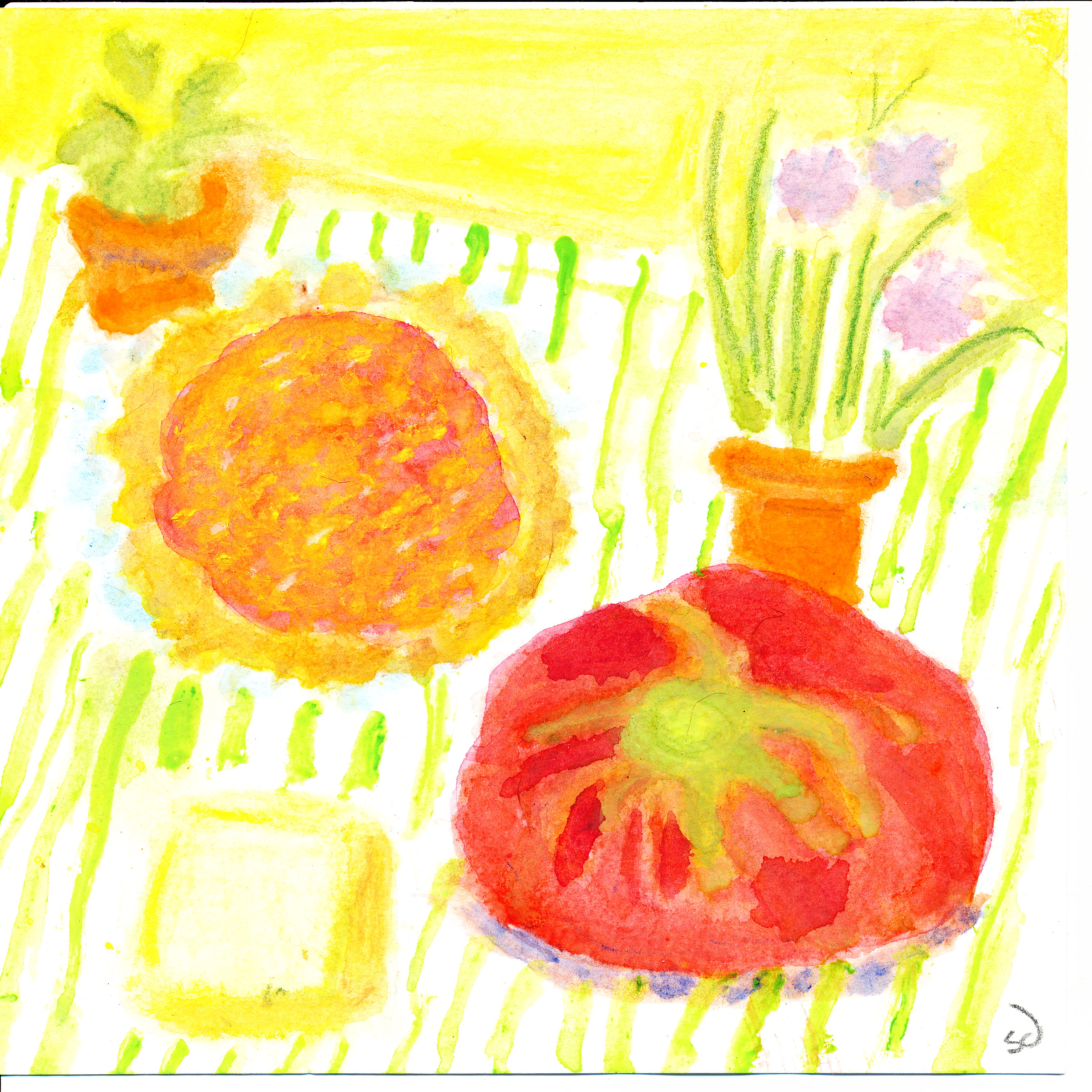
Painting of orange on plate in Mabel's dining room, Taos, New Mexico.

First Orange. 8″ x 8″ watercolor pencil and gouache. Sharyn Dimmick

I ate my first orange of the season this morning, the first one I’ve had since March. The fruit plate at breakfast In New Mexico has been full of melons: I know they can’t be seasonal — not watermelon anyway. Today I turned first to the stewed prunes. I had two, but they were cold. Then I saw oranges in the fruit bowl and went up to investigate. The first orange was large. sporting a blue and white label: I squinted and read “Australia.” I put it back, but now I wanted an orange. I found a small one with no sticker. I took it, hoping it had been trucked no further than California where I live, two states away.

Taking it back to the table I peeled it with my fingernails and then used a knife to get under the thick white pith, losing a little juice as the knife pierced the flesh. Wiping my hands on my napkin, I removed the navel and separated the first segment from the broken halves.

It tasted like sunshine: winter sunshine — a little sweet, acid, radiant in my mouth. I understood for the first time how my mother felt in Canada and Illinois when she got an orange in her Christmas stocking: how wonderful it must have tasted in the dead of winter when they were rare.

Mom has never lost her taste for oranges. We argue about them. She wants them in August and September when it is not orange season. I remind her that in January, February and March we will be inundated with citrus: I spend March making tangerine curd to eat on angel food cake, devising citrus dressings for salads, drying and candying citrus peels. We make Swedish rye bread in the winter with orange zest and fresh juice.

When Mom moved to California in 1944 she said you could buy oranges everywhere: from roadside stands, from trucks on San Pablo Avenue. She bought an orange juicer — not an electric thing, but a press with a screen and long handles: you bring the handles together and squeeze halved oranges or lemons between metal plates. The screen catches the seeds and the juice falls into a reservoir below with a pouring spout. It does not work well if you have removed the peel for zest or candying — it was designed for halved citrus, squeezed whole.

I have never been partial to the standard American trio: apples, oranges and bananas, sitting on the counter year-round and incorporated into every fruit salad and lunch box. I eat apples in season, drying them for the winter and giving them up when they come from cold storage. I like oranges when I am hiking and fresh food is scarce, or when, like this morning, I take a walk in thawing snow: I walked to town to get a coffee, walked back in time for morning meditation, craved fruit at breakfast. The orange tasted like lost gold recovered, what explorers had been looking for as they sailed around the world.

Oh, you’ll want a recipe. Alright. This is how to candy citrus peel: orange, lime, tangerine, lemon, or grapefruit. I started doing this when I got interested in using the whole fruit: if I’m not zesting citrus fruit there is all of that peel left over — why not turn it into winter sweets? Home-candied peel bears no resemblance to that nasty glaceed mixed fruit you find in the store. I chop candied peel into breakfast muffins, use it in orange French toast, or eat it straight out of the jar when there are no sweets in the house and I want a little something. Sometimes I save mixed citrus peels in a bag in the freezer: when I have a lot, I take them out and candy them all at once. It’s best to use organically-grown fruit for edible peel, but if you only have commercially-grown citrus available, be sure to wash it with dishwashing liquid and water, rinse it and dry it before peeling so that you are not ingesting any unwanted chemicals.

Here’s what you do. Peel a lot of citrus fruit or take your bag of saved peels from the freezer. You can candy several types at once — you don’t need to separate them. If you are peeling fresh fruit, score the peel into quarters with a knife: this makes it easier to peel.

Place your peels in a large saucepan of cold water: you want 2 cups of water per eight limes or lemons, six tangerines or oranges, or three grapefruit. Bring peels to rolling boil. Drain them. Start again with cold water. Repeat. The thicker the peel, the more times you should blanch it — grapefruit peel takes at least four times,

Cool the peels and scrape the white pith from them with a knife or the side of a spoon, being careful not to break the peel — if it breaks, you can’t brag about it, but it is no tragedy — you’ll just have some smaller pieces. Cut the peels into strips.

Now return the peels to your saucepan with equal amounts of sugar and water — say 2 cups each. Bring to a simmer and cook without stirring until peel is translucent. This takes about an hour. If you are a thermometer-wielding type. Alice Medrich says to get the syrup to between 220 and 222 degrees.

Remove peel with slotted spoon and cool in a single layer on a rack over a baking sheet (the peel will drip for awhile).  We set ours in our oven overnight. When peel is dry, dredge it in sugar and store it in sugar in a glass jar in your refrigerator. If you make enough it will last you until citrus comes in again the following year. It makes great gifts, too. People have been known to dip it in chocolate or caramel.

The Kale Chronicles’ Food Manifesto: Ideas I Try to Live By

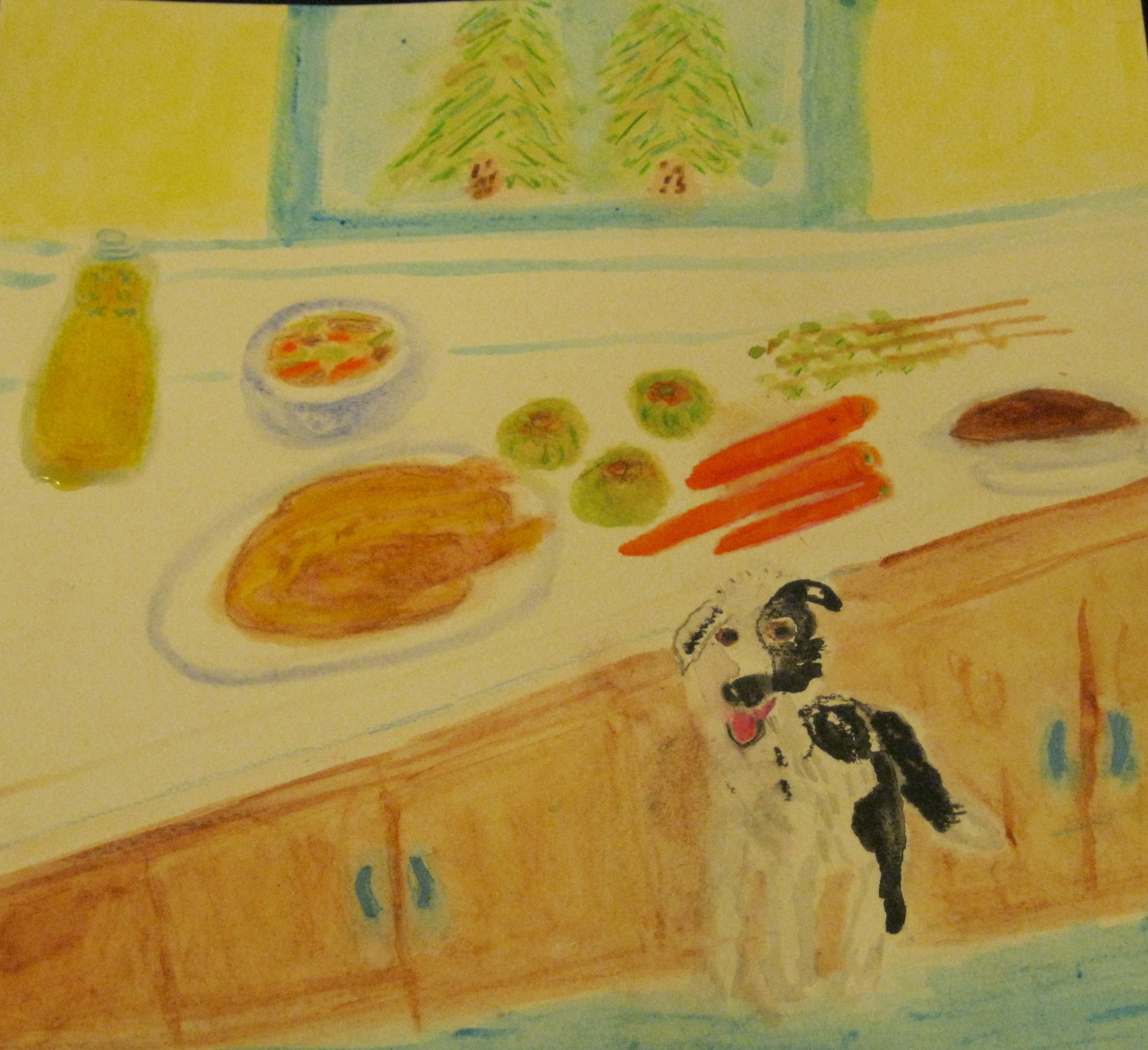
painting of foods for four seasons

Seasonal Food 6″ x 6″ gouache and watercolor pencil. Sharyn Dimmick

1)   Eat fresh, locally-grown food in season.

Fresh food tastes good. It has more vitamins and minerals in it than preserved food. If you can grow your own food, go for it. If you can’t, seek out farmers’ markets or a community-supported agricultural program. Familiarize yourself with what grows in your area when.

2)   Adapt recipes to use local resources.

For instance, pesto recipes often call for pine nuts. Here in the Bay Area of Northern California, pine nuts are currently selling for thirty or forty dollars a pound. I make my pesto with walnuts, which grow in California and can be found at my local farmers’ market in bulk. If you live in an area that produces almonds, hazelnuts, black walnuts, macadamia nuts, Brazil nuts, substitute them for pine nuts. Eat pine nuts when you go to Italy or visit New Mexico.

3)   Use what you have on hand.

Instead of running out to get ingredients, practice cooking with what you have on hand. Develop a regular routine for food shopping and stick to it. You will save time and money if you are not always running to the store and you will develop your creative cooking muscles. Mom shops for groceries once a week at a variety of places (Safeway, Grocery Outlet, Food Maxx or Country Cheese). I pick up a box of vegetables in Berkeley on Wednesday afternoons and often go to the Saturday Farmers’ Market.

4)   Do not waste food.

We spend money for food and then we throw it away when it is less than perfect or past the pull date. Many people frequently throw away food that can be eaten. A routine throw-away is sour milk (or half and half, or cream), or, worse, milk that has just passed its pull date. Sour milk, cream, etc. can be substituted for buttermilk in recipes that involve cooking or baking. Sour milk can also be “sweetened” with baking soda and then used in cooked or baked recipes meant for fresh milk.

painting shows dehydrated and canned food for winter

Food for Winter 6″ x 6″ gouache and watercolor pencil. Sharyn Dimmick

5)   Find simple ways to preserve foods for winter.

I bought a dehydrator a year and a half ago. Now I make my own dried tomatoes which I use during the winter in soups, pastas and salads. I have also dried apples and pears and I’m just getting started. With trepidation I learned how to put up dilly beans, a baby step into home canning. When I make pestos or curry pastes, I put part of the yield in the freezer for later.

6)   Develop a personal pantry based on what you like to eat and ingredients you use frequently.

For example, I am a baker as well as a cook, so I stock a baking pantry with flours, sugars, molasses, honey, maple syrup, vegetable shortening, oils, nuts, coconut, dried fruit, yeast, and leavening agents. I cook Chinese food so I keep soy sauce, peanut oil and chili paste with garlic, fresh ginger. I cook Thai food so I keep fish sauce. A pantry rich in canned tuna and white beans would do me no good because I am not going to cook with those ingredients, or canola oil, which tastes like fish to me, but I do keep lots of pasta, polenta, rolled oats, dried tomatoes, kalamata olives.

7)   Stock your pantry when you find good deals on things you use often.

We are infamous for buying canned sour pie cherries by the case. We like cherry pie. Sour cherries make the best pies. Canned cherries keep. So when Grocery Outlet features canned cherries we buy a case at a time. We keep them in the garage. We have learned the hard way that inexpensive pie cherries are hard to find, so when we see them we buy them. We also stock up on sugar, flour, butter, pastas, and miscellaneous canned goods when they are on sale.

painting shows stock pot, skillet and ingredients.

Making Stock 6″ x 6″ gouache and watercolor pencil . Sharyn Dimmick.

8)   Learn to make stocks.

You don’t have to go to cooking school for this. You don’t have to roast bones (although roasted bone stock is supposed to be good). The Greens Cookbook has wonderful recipes for vegetable stocks, which I recommend. But any old person can plunk a chicken or turkey carcass into a pot of water with some vegetables or vegetable trimmings (the ends of carrots, tough ends of celery, celery leaves, cilantro roots and stems, the skin of roasted winter squash), simmer it, strain it, skim of the fat and, voila, a base for soups, sauces, chicken pot pie, Chinese stir fries. For me, chicken stock is indispensable. We keep it in pint containers in the freezer.

9   Develop your cooking resources.

I learned to cook by cooking with my mother and asking questions about what she did, but I also learned by tasting lots of foods, watching cooking shows on PBS, reading cookbooks and having conversations with others about food, especially people whose cooking I liked. We keep an old Betty Crocker picture cookbook as our cooking Bible. I have bought the cookbooks of several of my favorite restaurants: Ajanta, Henry Chung’s Hunan, Greens, and Chez Panisse (I really like the Chez Panisse Desserts cookbook, which taught me how to make fruit caramel and variations on fruit curds and has a good section on seasonal fruit in California). I keep a large binder of recipes from the food sections of two newspapers, organized by main ingredient or type of food: Carrots, Chocolate, Cookies, Corn, Fennel, Fish, Lemons, Pancakes, Pasta, Peppers, Pumpkin, Soup, etc. I browse through it when I’m trying to remember what I cook with savoy cabbage or looking for that fabulous Polenta Pancakes recipe from Mark Bittman. I also search online when I need more ideas and subscribe to more than a couple of food blogs.

10) Don’t be afraid.

Remember, cooking is fun. It is a sensual experience standing in front of a cutting board with the smell of fresh basil wafting through the air, hearing the snap of green beans as you trim them, seeing the colors of eggplant, peppers and peaches sitting on the counter. If you are not sure how to do something, you can always consult a cookbook, watch a video online or call another cook on the phone. If you tackle a technique or dish you have never attempted you might want to follow instructions carefully the first time around, but once you learn some cooking principles and the rules of substitution you will be freer to cook what you have and turn it into what you like.

self-portrait of Sharyn Dimmick at Occupy Oakland with meditator and wolverine rolls.

Self-Portrait at Occupy Oakland with Wolverine Rolls. 8″ x 8″ gouache and watercolor penciil. Sharyn Dimmick

Last week was quite a week: I landed in Oakland, CA, for two days of vocational tests so that some poor soul can help me find a suitable day job. The testing center sat across the street and several stories above the site of “Occupy Oakland.” To get to my testing site by 9:00 AM I had to leave my house when it was barely light, loaded with reading material, pens, water, a thermos of milk and enough food for lunch and to get me through five hours of testing. I went back today for the third and final testing shift.

The first day I took sourdough bread, Cotswold cheese, an apple, two homemade spice snaps and a zucchini-gingerbread muffin. The next day I don’t remember what I took, but it was similar: apple, cheese, bread. I eat my lunch in the park where the demonstrators gather.

Monday I had off from testing and got to stay home all day. I took advantage of the hours at home to mix up some sourdough of my own, using recipes from my favorite bread book, The Cheese Board Collective Works (Read more about my most-used cookbooks here). Sourdough breads are made from wet, slow-rising doughs so it helps to have a whole day to make them.

I made a batch of wolverines, a round, part-whole wheat, sourdough bun, containing dried sour cherries, apricots and pecans (I used walnuts). The original recipe also calls for golden raisins (sultanas), but I see no reason to include them.

About now, you are either turning away in horror at the dried fruit, or you are hoping for the recipe. Alas, I must encourage you to buy your own copy of The Cheese Board Collective’s book because the instructions for making the sourdough starter alone take two full pages. Wolverines are made from a recipe called “Suburban Bread” (another full page), but they get their own page, too, and you also need to read the pages on shaping, working with sourdough and making sourdough in a non-commercial oven. Me? I’ve done this before.

Anyway, a “quick” batch of wolverines takes over nine hours if you already have your sourdough starter on hand. That I had — my “Cheese Board” starter gave up the ghost a couple of years ago, but I made a new sourdough starter from another recipe four weeks ago and have a healthy batch in the fridge that must be used weekly. I’ve been making “cowboy biscuits,” leavened with sourdough, soda and baking powder once a week, but Mom informed me on Sunday that she liked regular baking powder biscuits much better. Oh well. So I had the sourdough starter and we love wolverines. “We” love bread of all kinds (except perhaps sourdough biscuits and Irish soda bread), but we are particularly partial to crusty yeast-risen breads. I like wolverines so much that I ate two last night when they came our of the oven, had one for breakfast this morning, and took another for lunch today with some more Cotswold cheese. It is with the greatest restraint that I am not eating another as I type but am instead eating cold green beans with a bit of basil.

I ate my wolverine sitting on the ground in a sunny spot next to the bicycle lockers. The tent city was much larger than it had been on Friday afternoon and there were a lot of new booths and information tables. The Buddhist Peace Fellowship does sitting meditation there, so I sit with them after I eat my lunch while people talk, the wind blows, traffic signals send their audible walking calls, a clock tower chimes the half hour. I think about my blog and day jobs when I forget to focus on my breath or sounds or sensations. I “sit” on my backpack, pretending it is a zafu, putting it between my knees and sitting astride — it makes a pretty good substitute, although I can feel the lumps made by my water bottle and thermos.

Vocational testing doesn’t tell me much I don’t already know: I like writing, painting, singing and cooking. “About” page gives you more of the scoop on this. I’ll write for hire. I’ll teach writing practice for hire. I like to sell paintings. I sell music CDs too. I sit with the Buddhists for free and I cook for free. Long, complicated projects like wolverines don’t phase me because I like to take my time doing things and make things from scratch. Sourdough baking is a big adventure — if you love yeast baking and are up for a challenge, get yourself a good instruction book and go for it on a day when you can be home all day (or all night for you night-owls). If you don’t have sourdough starter on hand, you’ll need anywhere from three days to two weeks to mix it up and get it going vigorously. If you go for the Cheese Board book, you’ll find wonderful recipes for pizza and many quick treats such as muffins and scones in addition to the sourdough chapters.

Occupy Oakland is calling for a general strike tomorrow. I imagine the Peace Fellowship will be sitting there again. I will be “working” at home again and grateful to be there with my computer and my paints, a pot of black tea and at least one more wolverine.

Cowboy Sourdough Starter (adapted from The Cheese Board Collective Works and the “Rocky Mountain Sourdough Starter” recipe in The Book Lover’s Cookbook).

Get a glass jar with a non-rusted metal lid. Please note: this metal lid is the only metal object you will allow near the starter and you don’t want the metal to touch the starter. Big pickle jars are good. Punch several small holes in said lid, as though you want to keep something alive in the jar (You do!)

Place 1 and 1/2 cups unbleached flour or bread flour in the jar.

Add 1/2 cup whole wheat flour or rye flour

Add 1 tsp kosher salt.

With a wooden spoon, stir to mix well. Do not use metal while making or handling sourdough starter.

Dissolve 2 and 1/4 tsp  baking yeast (equivalent of one packet) in

2 cups warm water (not too hot or you’ll kill the friendly yeast)

Add dissolved yeast to jar and stir again with your wooden spoon until it is mixed well.

Place a folded linen or cotton smooth kitchen towel on top of your jar and set it in a warmish place where you can remember to stir it twice a day. You will be leaving it out for at least two or three days — remember, you want it to sour. Save the lid for later — you don’t need it at this stage. The towel allows your local yeasts that live in the air to join the yeast in the jar.

Check the starter twice a day. When it is bubbly and smells like yeast you can bake with it by taking it out cup by cup and adding it to biscuits, pancakes or yeast breads. Whenever you remove a cup of starter you need to add a cup of water and a cup of flour to the starter jar.

Sourdough starter is designed to be used once  a week or more often. You can store it in the refrigerator. Sometimes liquid separates and rises to the top. You can either pour this off or stir it back in. It will keep for months if you use it regularly. Watch out for mold (mine has never molded): if your starter develops visible mold or bad smells throw it out, wash your jar thoroughly and start again.

painting of lemon pie and blue teapot

Lemon Sponge Pie, 8″ x 8″, gouache and watercolor pencil. Sharyn Dimmick

My late older brother ate pretty much the opposite of what I eat. He ate a lot of fast food, quick food and processed food. He drank mugs of coffee laced with up to a quarter cup of sugar, minus what he spilled on the counter. He liked raw carrots and celery and fresh strawberries, but he only ate those things if someone else washed them, cut them up and put them in a bowl for him, preferably on the counter where he could see it. The only other vegetable he consumed regularly was onions, although he once ate seven jars of marinated artichokes out of the case Mom gave him on Christmas Day. In the fruit category he liked raisins, strawberry milk and blueberry pie.

In the last year of his life, Kevin had an experience that improved his diet slightly. He liked to tell the story. His then girlfriend, Barbara, who would become his wife, had a cat named Jigs. Jigs looked forward to Kevin’s visits because he nearly always brought bags of fast food with him. One day Kevin arrived with a McDonald’s bag, containing a cheeseburger and an order of Chicken McNuggets. Kevin broke  open a McNugget and gave it to Jigs. Jigs sniffed it, immediately commenced to try to bury it and walked away, insulted. Kevin said, when he told the story, that if a cat wouldn’t eat something that was supposed to be chicken he wasn’t going to eat it anymore either.

Michael Pollan has famously given us the guideline not to eat anything your grandmother wouldn’t recognize as food. We hew pretty closely to that in our household these days, although we each have our indulgences: we buy Prego spaghetti sauce because Mom made her own for years and we can honestly say we like Prego better. I particularly like the Italian sausage flavor. We use it for quick suppers. Sometimes I add fresh summer squash or mushrooms or eggplant to the sauce, but sometimes I don’t. Beyond that, my personal weaknesses are for Cheez-It crackers and Golden Grahams cereal. I know I can make cheese straws, but I love Cheez-Its  right out of the box. I don’t buy them often. Golden Grahams are even less defensible — they are tooth-achingly sweet and taste like candy: to be able to eat them at all, I mix them half and half with some healthier cereal — anything not sweetened — and eat them with almonds. I allow myself about one box a year, on sale only.

To me, scary food does not mean food that appears to be dripping blood or cupcakes accented with spiders: scary food means food that has been so processed that it does not resemble the original food it came from.  An order of Chicken McNuggets is a good example, but so is anything labeled “cheese food” or  “pasteurized processed cheese,” as well as white bread from the grocery store. There are many more examples: please feel free to tell me about your personal food horrors in the Comments. Perhaps I’ll put up a link called “The Horror Roll” and list some of your candidates there.

Halloween was Kevin’s birthday. There is nothing he liked that I cook on a regular basis and if I shared one of his “recipes” you would stop reading this blog. Seriously. Instead, I’ll share with you a favorite family recipe that my mother made yesterday with ripe Meyer lemons from our neighbor’s tree and her famous Swedish pie crust. For your convenience, I’ll give you the pie crust recipe below, but I’ll spare you the editorial commentary: for the full rant on pie crust, please visit the Gravenstein Apple Pie post. Meanwhile, get ready to make a Lemon Sponge Pie, which is much like a lemon meringue pie, except that you fold the egg whites into a lemon custard, which includes milk. If you like lemon desserts, you will want to try this.

Make the crust first:

Sift 3 cups unbleached flour with

1 tsp salt

Cut in 1 cup Crisco (or other vegetable shortening) until it is the size of peas. Add a little butter (1-2 Tbsp for flavor).

Break into a one cup measuring cup:

1 large egg. Beat it until blended.

Add to egg:

1 Tbsp white or cider vinegar

Add water until combined liquids reach 1/2 cup, plus a little.

Add liquids to flour, salt, shortening and butter. Stir together crust and form it into a flattened round. Cut 1/4  from the round — this is your crust for this lemon pie. Wrap the other 3/4 crust in waxed paper and store it in the refrigerator for your next pie or quiche (Crust recipe makes 4 single crusts or 2 double-crust pies).

Pat pie crust into a circle on a floured work surface. Roll it out, making sure to roll in all directions and roll out any thick edges. When you think you are done set a 9″ or 10″ pie plate on top of crust. Adjust as needed: you need to roll this crust very thin for best results.

Transfer your crust to your pie tin. The classic method is folding the crust into quarters and unfolding it in the tin.

Now preheat your oven to 400 degrees or 350 if using a Pyrex  pie plate. Proceed with filling.

Pie filling:

Separate 2 large eggs, whites into a small mixing bowl, yolks into a larger one.

Beat the egg whites until fairly stiff. Leave beaters in place and change to larger bowl.

Beat egg yolks with:

1 cup milk

1 cup sugar

1/4 cup flour.

Zest 3 or 4 lemons over the bowl of egg mixture. Squeeze juice from lemons into bowl — you need at least 1/3 cup of juice.

Fold egg whites gently into the other ingredients and pour filling into your prepared crust. Transfer the pie to the oven. Keep an eye on it —  you are going to bake it for about 25 minutes, but this pie burns easily. If you are worried about it, put a strip of foil over the crust. Bake until filling is not sloshy. Allow to cool to lukewarm — if you cut it too warm, the filling will run and you will have pudding with crust rather than pie.

Like it? You can bake three more with the crust you now have on hand, or you can make quiche, apple pie, pumpkin pie, chocolate pie — whatever you like best.

Food Note: I use Meyer lemons in this recipe because we grow them. Eurekas or other tart lemons are fine, but don’t go above 1/3 cup of juice with them: Meyer lemons are sweeter than other varieties.

The Horror Roll: To nominate candidates for  “The Horror Roll,” please list foods or “foods” that scare you by their apparent deviation from real food in the Comments section. I’ll start a “Horror Roll” page soon with some of the most horrendous nominees. In fact, I’ll start it now. Check it out.

Painting of a Pink Poached Pear

Dream Pears 7″ x 7″ Acrylic on Fabriano  Paper by Suzanne Edminster

Dear Readers and Cooks,

I am pleased to introduce my first guest post on “The Kale Chronicles.” My real-life best friend Suzanne Edminster is a painter who lives in Santa Rosa who teaches popular classes in acrylic painting techniques which you can find on her website, SaltworkStudio. What not everybody knows about Suzanne is that she is a talented hostess who can pull together delicious meals with skill and grace. Just for you, she painted the painting and wrote out the recipe. Enjoy.

Sonoma Pears Poached in White Wine and Blueberries

On an autumn night in Santa Rosa I was contemplating a bag of small Bartlett pears that had been carried too long in the car and were starting to bruise. I was longing for a sweet, elegant way to cook pears without messing with pie crust, cobbler or crumble. I developed this recipe as one that could, in the best of all possible worlds, be cooked with fruit from our garden, though I draw the line at keeping goats for cheese– four chickens are demanding enough.

We have two young pear trees in our urban backyard orchard, both Red D’Anjou. This was a mistake; we were given one of the two trees and was assured it was a Bartlett. Neither is bearing yet, as we’ve had to take young fruit off too-young branches to avoid breakage. Scott, my husband, planted 9 kinds of blueberry bushes in a raised bed, but between chickens, squirrels, raccoons and other poachers, we got a total of about five blueberries from the plants this year, although they are bearing well. Next year, bird netting goes over all and the humans of the house can eat the harvest. Eventually I’ll try this recipe with our own blueberries (self-frozen if need be) and our own pears.

At the end of the summer we had overbought on white wine and had not yet laid in the stock of red. My mother used to serve red warm cinnamon pears—yes, I think she used cinnamon drop candy on them and to make the sauce!– and I really wanted the pears to turn that glorious holiday crimson. What could I do to give the wine a color? We had small frozen organic blueberries that we keep on hand for cereal. I adapted Stacy Slinkard’s recipe for Red Wine Poached Pears that I found in About.com at http://wine.about.com/od/howwineismade/r/poachedpears.htm. The result was delicious, and the color of both sauce and pears, a deep red-purple, divine. Surprisingly, the blueberries held their shape through the longish poaching time. I used fresh lime juice from our lime trees rather than lemon, and I chose soft new Sonoma goat cheese to offset the brilliant sweetness of the pears in the sauce. Scott and I agreed that the white, tangy bite of goat cheese was perfection on the warm red pears. A bonus of this recipe is that the whole house smelled of pear-pourri!


Sonoma Pears Poached in White Wine and Blueberries

Ingredients:

4-6 halved, cored pears (peeling is optional and top stems can be left on)

1½ cups of white wine (your choice)

½ cup of granulated sugar

2 tablespoons of fresh lemon or lime juice, with optional zest

2 teaspoons vanilla

1 teaspoon cinnamon

½ to 1 cup fresh or frozen blueberries

Soft plain or new goat cheese

Combine all the ingredients, except pears and goat cheese, and bring to a boil. Let the sugar and wine combine, then add the pears face-down and simmer for about 15-20 minutes, turning once after about 10 minutes. Pears should be tender and easily poked through with a fork, but don’t overcook them. Remove pears and boil the wine/pear sauce until reduced by half. Serve pears warm in bowls with a small dollop of soft goat cheese in the middle of each half. Pour warm sauce over all. It’s excellent cold as well.

Painting Note: This slightly cosmic pear painting shows both the pinkish red of the sauce and the purple of the blueberries. It’s 7” x 7”, acrylic on paper. The pink-purple ranges from Alizarin Crimson to Fluorescent Magenta. You can see more of my paintings at www.saltworkstudio.net . Or visit my blog at http://saltworkstudio.wordpress.com/

Painting of a To-Do List

To-Do List. 6″ x 6″gouache, watercolor pencil and ink. Sharyn Dimmick

What if you come to visit and there is nothing new to read?

On days when I don’t post, I invite you to:

1) Read the About page (there’s a lot of information there).

2) Scroll all the way down to the bottom of the Home page and click on various links. In the links section, you can find links to other artist’s sites, food blogs, sites for writers and cool participatory events like NaNoWriMo, which will begin soon.

3) Cruise through all of the illustrations on the site. I’ve added archives at the bottom of the home page, which should make this easier to do now.

Think about which is your favorite painting. Tell me.

Even think about buying one.

Which would you like to see in a future give-away?

Or would you rather have the last copy of my homemade illustrated cookbook made before I started “The Kale Chronicles?”

4) Check out the food blog links in the Apple Cake with Caramelized Fennel and Dark Rum post — you may find a new favorite or two.

5) Visit the Go-To Cookbooks post and think about your favorite cookbooks. Leave comments if you want.

6) Learn to make your own pie crust: follow the directions given under “Gravenstein Apple Pie.”

painting shows apple cake and ingredients

Apple Cake with Fennel 8″ x 8″ gouache and watercolor pencil. Sharyn DImmick

I am not a big cake person — I would rather eat pie or yeast-risen breads like cinnamon rolls — but when I saw “Grandmothers of Sils’ Apple-Yogurt Cake” on Smitten Kitchen I knew I had to try a variation on it. Deb’s picture enticed me and I like fennel/anise/licorice flavors. I have been cruising apple cake recipes for awhile (some of my friends like cake) and this one called to me.

I was patient: I waited a month. I kept hoping to get fennel in my vegetable box. No such luck. Yesterday I went out and bought some at the Farmers’ Market.

Smitten Kitchen’s recipe doesn’t have any fennel — what was I doing? I don’t have any anisette liqueur: I was plotting to use what I had with some gentle assistance from roasted fennel to bump  up the anise flavor.

First step, prepare the fennel. While it roasted I peeled and chopped the apples — I used some of my beloved Gravensteins and a couple of miscellaneous apples from a bulk buy I made at the market. It took me four apples to get the required three cups of diced apples.

Next I made “lemon yogurt” by mincing homemade candied lemon peel  into plain yogurt and adding half a capful of lemon extract (All of the lemons on the tree are greenish this week)

I turned the well-roasted fennel into a puree by adding the dregs of a bottle of dark rum — maybe an eighth of a cup — and a little olive oil and putting it in the blender. It took quite awhile to get a puree, even after I added a capful of anise flavoring to it, but I ended up with the quarter cup of liquid that I needed. I bumped up the flavor with a little star anise ground in a mortar.

These preparations done I almost followed the recipe as written, Almost. I swapped in unbleached flour and whisked the baking powder into it rather than sifting them together — I avoid sifting things together whenever possible because the flour sifter is not fun to clean and dry. Oh, yeah, and I made the cake in a bundt pan because I don’t have a spring form pan and it seemed like a bundt pan would work just fine. The batter smelled amazing, deeply perfumed with rum and citrus.

The cake came out a little less brown than I would have liked and I baked it for some extra minutes. It was showing good color near the bottom edges, but when I unmolded it, most of it was pale. After letting it cool for awhile I gunked up my sifter with powdered sugar. The cake looks nice with the sugar sifting: although this is the kind of step I often skip, I’m glad I bothered.

We ate our first slices slightly warm with tea, which we drink British style with milk. We brew our tea from tea leaves in a pre-warmed pot with water at a rolling boil, but don’t let me get started on that rant here. Mom said she could really taste the apples. I tasted predominately citrus. We are waiting to see if the flavor changes over the next few days.*

In short, it is a pretty cake. It is an autumn cake. It might even be a quick and easy cake to make if one wasn’t caramelizing fennel and grinding star anise. Some other person might have just gone out and bought a bottle of anisette liqueur, but that is not my style.

Apple Cake with Caramelized Fennel and Dark Rum

Prepare a bundt pan by rubbing it with butter.

For the fennel:

Preheat oven to 350. The cake bakes at 350, too, so this is convenient.

Wash and trim 1 fennel bulb

Remove core and slice thinly. Place in Pyrex pan with a little butter and olive oil to keep it from sticking. Roast until done, showing some brown color and soft. Let cool. While it is roasting and cooling, you can prepare your apples:

Peel 4 cooking apples, core and dice them. Set aside

Puree fennel in blender with 1/8 cup dark rum (or other liquor to taste. Add a little olive oil if fennel resists the blender. Taste and add 1-2 tsp anise extract if desired. If you want more anise flavor still, crush some star anise in a mortar and add to fennel puree.

For lemon yogurt:

Do it the easy way and just buy 8 oz of good quality lemon yogurt, or add lemon zest, candied lemon peel or lemon juice to plain yogurt.

Once you have your apples, fennel puree and lemon yogurt ready, make your cake batter:

Whisk together in a small bowl:

1 and 1/4 tsp baking powder

2 and 1/4 cups unbleached flour

Combine in large mixing bowl and beat until pale yellow:

4 large eggs

1 and 1/4 cups white sugar

Beat in 1 cup lemon yogurt and fennel-rum puree.

Add flour mixture and 1/2 cup+ olive oil,  alternating between flour and oil and beating briefly to incorporate each addition. When combined, fold in reserved apples.

Pour batter into prepared bundt pan. Bake on middle oven rack in your 350 0ven for 60 minutes, checking to see that a toothpick comes out clean.

Cool cake on a bottle — I use a vinegar bottle — until just warm. Upend bundt pan over dinner plate. Mine came out easily — no sticking. Dust with powered sugar.

Food notes: I had some blood orange olive oil, so that’s what I used, figuring it would boost the citrus notes in the recipe. It did. But you can use any mild-flavored olive oil — or if you have lemon olive oil that would be good, too. My first powdered sugar coating sunk in. Oh well. I’ll just add more because it looks pretty. * The second day the flavors are more complex and mellow: you can’t tell exactly what you are eating, but you know that it is good. The cake is still quite moist and might be good toasted. You could easily make this cake with pears as well.

Now, could it be that I made a cake because I am celebrating? It could be. Betsy over at bitsandbreadcrumbs kindly nominated me for a Liebster Blog Award.

The Liebster Award is given to blogs with fewer than 200 subscribers by a blogger who feels they deserve more recognition.

Rules are:

  1. Thank the giver and link back to the blogger who gave it to you.
  2. Reveal your top 5 bloggers and let them know by leaving a comment on their blog.
  3. Copy and paste the award on your blog.

I am honored to receive the nomination and would nominate Betsy right back if I could: Bits and Breadcrumbs is one of my favorites.

Now it is my priviIege to nominate five more deserving blogs. I have been searching for small blogs for four days, looking for those that haven’t yet received Liebster Awards. Finding them is harder than I thought: everyday my list of wonderful blogs grows, but usually only big blogs post their stats. So, I’ll post three now and I’ll take suggestions from my readers about other small, deserving blogs they love in the Comments section. Please, only list blogs with fewer than 200 subscribers — I want to play by the rules. Here, without further ado are three of my Liebster Award nominees:

1) Jane at ArtEpicurean. A woman after my own heart Jane combines recipes with paintings inspired by food and tips to keep your creativity flowing.

2) Kat at Sensible Lessons always has something intriguing going, whether it is her new take on huevos rancheros, ancho sweet potato fries with Sriracha ketchup  or brownies with both espresso and mint.

3 ) Stephanie at Recipe Renovator helps people on restricted diets reconfigure their recipes.  Not exciting at first description? Her photographs are beautiful and her range of recipes wide. And someone with dietary restrictions may thank you. I’m excited to introduce this site to my gluten-free friends.

Now, a list of some other blogs I would have nominated but they already got the prize. You should read them anyway — they can’t help it if they are popular.

Daisy’s World: Daisy is always cooking something good to eat. Beautiful photos, too.

Krista and Jess: These women always have something surprising (“Mushroom conk,” anyone?). They make me laugh and they were the conduit for my favorite new recipe, the David Lebovitz-inspired tomato tart.

Frugal Feeding: Good food, good photos, frugality. What’s not to like? He recently posted a Thai Carrot Soup with Lemongrass — I’ll be revamping my Thai Carrot Soup soon.

Cook Eat Live Vegetarian: Seasonal, mostly vegetarian food from Andalucia, Spain.

Around the World in Eighty Bakes: How can you not love a woman who is trying to bake her way around the world with refreshing honesty?

Chutney and Spice: I love the hand-drawn header. And I can’t wait to make the Green Tomato Chutney

The Cilantropist: The name is brilliant. The photos are enticing. The recipes are things you want to cook.

Savoring Every Bite She loves pumpkin. She probably loves other stuff, too, but it’s October.

Enjoy all of it. And thanks for reading, — Sharyn

painting depicts ingredients for pasta with peanut sauce

Thai Pasta with Peanut Sauce 8″x8″ gouache on paper Sharyn Dimmick

The other day I started to think about what I had in common with kale:

1) I am not always sweet — sometimes I am quite bitter.

2) I am not to everybody’s taste: a little of me can go a long way.

3) I am rough around the edges

4) I am somewhat green.

5) I am tough.

Some people like kale in its raw state. Others like it lightly steamed or sauteed in minimalist preparations. For me to enjoy kale, it requires tender care and the presence of other ingredients that I like. Kale will never make the top of my favorite foods list, so I often resort to what I call camouflage cooking, a technique known to mothers everywhere, where you bury a vegetable in so many other flavors that it no longer calls attention to itself. You still get the nutritional value of the mean green vegetable which is very good for you: what you eliminate is what my Dad called “that nasty vitamin taste.”

Two weeks ago I met my friend Cathy at the Farmers’ Market in Berkeley and we began to discuss kale. She told me that she cooks it in a little oil with a little water and throws in walnuts and raisins at the end of the cooking. The raisins sweeten the kale, ameliorating the bitterness and the walnuts add richness and give the bitterness a different edge: it is like forgoing outright cruelty and making use of well-placed sarcasm instead.

Another way to camouflage kale is to turn up the heat: I have chopped kale leaves finely, after removing the ribs and stems, and thrown them into posole — hominy cooked with chiles or salsa, in chicken broth or pork stock, seasoned with lime. Canned Foods Grocery Outlet, Food Maxx and Mexican groceries sell posole in number ten cans: I usually open one, decant half of it into a big jar for the freezer, and throw the other half in a pot. I like to make posole with about half a jar of green salsa (maybe twelve ounces), a pint of chicken stock and the juice of one lime. If I want a sweeter flavor, I add chopped sundried tomatoes to it. The longer you cook the posole the better the kale blends with the other ingredients, melting into harmonious flavor.

The big guns of camouflage cooking with kale are peanut sauce and coconut milk. If you like peanut sauce, you know you can eat it on anything because what you will taste is peanut sauce. I make an instant peanut sauce that I eat on pasta in the following manner:

Put your pasta water on to boil. I like to use short pastas because they catch the peanut sauce (penne, fusilli, farfalle, — also known as twisties and butterflies). I usually use wheat pasta, but you can go authentic and use rice noodles if you want. Get out the bowl in which you plan to eat your pasta. Put into that bowl between two and three tablespoons of peanut butter (Please use natural peanut butter without added shortening). Squeeze one lime into the peanut butter. Add something hot — my favorite addition is Chinese chili paste with garlic, a teaspoon if you like heat, a quarter to an eighth teaspoon for just a hint. Get down your fish sauce or tamari and add a tablespoon. You now have hot, sour, peanut-y and salty. Add some brown sugar: start with a teaspoon and trade up — this will be a matter of taste and opinion about how much sugar you want to consume. We like it sweet. If you want it even sweeter, add some coconut milk from a can — a few tablespoons should be sufficient. To get it right for you, you will have to stir and taste the raw sauce. It isn’t going to hurt you — just don’t eat it all in the tasting phase or you may have to start over.

Before it is time to drain the pasta, I have usually had enough time to julienne some carrots and/or radishes, chop some broccoli or green beans or cucumber. Carrots, radishes and cucumber go directly into your bowl with the peanut sauce. Broccoli or green beans go into the pasta water for the last minute of cooking, after which you drain the pasta and vegetable and add it directly to your pasta bowl. Garnish with basil, Thai basil, cilantro, or chopped fresh mint. Toss madly.

I developed this recipe when I lived and cooked alone. It is an ideal one-person pasta. If I make it for two, I generally stir up two individual bowls of sauce. If I want to make a lot, I start with a big serving bowl rather than individual bowls, use larger amounts of sauce ingredients and might pop it in the microwave for a minute to make sure the peanut butter softens. If you like, make extra: it reheats well if you leave out the cucumber, or it can be eaten cold.

Thai Pasta with Peanut Sauce:

Boil water for one serving of pasta

While water comes to a boil, stir together in pasta bowl:

2 Tbsp peanut butter

1 Tbsp fish sauce

Juice of 1 lime

1 tsp chili paste with garlic

1 Tbsp brown sugar (or more or less to taste)

Julienne 1 carrot and/or three radishes. Chop some cucumber if you want. Add vegetables to bowl of sauce. By now, your pasta water should be ready. Start cooking pasta.

Cut up some broccoli or green beans. Add to pasta water in last minute of cooking.

Drain pasta and vegetables and add to sauce in bowl. Garnish with basil, Thai basil, cilantro or fresh mint. Stir it thoroughly with your fork. Enjoy.

Painting Note: For information about “Thai Pasta with Peanut Sauce” or any other original painting, please contact me here.

Painting depicts apple pie ingredients: flour, butter, apples, cinnamon, nutmeg.

Gravenstein Apple Pie 8″x8″ gouache and watercolor pencil Sharyn Dimmick

2023 Recipe Update: Some years ago the manufacturers changed the formula for Crisco, which changed the texture. Now I use 1/3 cup butter, 1/3 cup Crisco and 1/3 cup lard for the shortening in pie crust.

Sometime in August Gravenstein apples come to the Berkeley Farmers’ Market. By early September they are gone. As soon as I see them I start buying them, buying no fewer than ten pounds at a time and stashing them at the back of our very cold refrigerator to make Gravenstein apple pie.

Gravensteins are an early apple here. They come in before Pippins, before Pink Ladies. They are perfect pie apples, tart and crisp with an intensely apple flavor. I grew up eating green Gravensteins from my grandmother’s tree in El Cerrito, climbing into the crotch to pick them, picking up windfalls to trim for pies and apple sauce. When the crop was bountiful, Mom would peel and quarter apples and save them in the freezer for later in the year.

Gravenstein apple pie initiates apple pie season at our house. The season will finish when we pick the last apples from the dwarf tree in our backyard, when the market moves to winter citrus, when I can no longer scavenge fallen apples in the streets of Berkeley (It’s amazing to me how many people have apple trees and let the fruit fall where it is smushed under the wheels of cars — we seem to have forgotten what food is and where we can get it as well as how to cook).

To make apple pie you need two things: good cooking apples and flaky, tender pie crust. If you do not live where Gravensteins grow, consult farmers at your local farmers’ market for recommendations for local apples. Let them know you will be making pies with them. Pippins also make fine apple pies.

To make pie crust, follow my mother’s recipe, given below. Do not deviate from it if you want good results. It may look a little different than other recipes you have seen or tried: for one thing, it does not start with two sticks of butter and does not include ice water. It is a Swedish pie crust and includes an egg and vinegar — don’t ask me why, just trust me on this one.

What does it use instead of butter? Vegetable shortening — you know that stuff that comes in a can. You are worried about transfats. I know. You have never had Crisco in your house. Well, you need it to make Madge’s pie crust. The only acceptable substitute is lard: if you use butter instead you will get a heavy, greasy pie crust, so don’t do it — just follow the recipe. You don’t eat pie everyday and a little vegetable shortening isn’t going to kill you, so use Crisco or use lard and get on with it.

Measure into a large mixing bowl:

3 cups unbleached flour
1 tsp salt

Cut in :

1 cup shortening, comprised of 1/3 cup butter, 1/3 cup Crisco vegetable shortening and 1/3 cup lard

Stop when the shortening is in pieces the size of small peas.

Into a one-cup measuring cup, break

1  large egg

Whisk it with a fork until blended. Then add:

1 Tbsp cider vinegar and
Water until mixture measures a little more than 1/2 cup.

Whisk liquids to blend. Add to flour-shortening mixture. Stir just until blended, then work with your hands to shape crust into a large patty. Wrap the patty in waxed paper and refrigerate it while you make the filling. Do not wash the mixing bowl yet — you are not done with it.

For a standard two-crust apple pie, peel and core 4-5 large apples, cutting them into quarters and slicing them crosswise. If you want your apples to stay white, keep a cut lemon handy and squeeze it periodically onto your sliced apples. Taste your apples though — if they are quite tart you may not want to add lemon: just let them darken.

Put the sliced apples in your mixing bowl (the one that you didn’t wash). Toss them with:

1/3 to 1/2 cup sugar, depending on sweetness of apples.
1 tsp cinnamon
1 tsp nutmeg.

Preheat your oven to 375 ( 350 if using Pyrex).

Now roll out your crusts. Remove pie dough from the refrigerator and cut it into quarters. Wrap two quarters back up and store them in the refrigerator for another pie (They’ll keep more than a week if wrapped well).

Flour a bread board, table, or other work surface, or place a thin linen or cotton kitchen towel on a surface and flour that. Or flour a new-fangled Silicone mat, which makes rolling out thin crust a lot easier. Flour a rolling pin.

Take your first quarter of dough and round it into a circle with your hands, smashing it slightly. Now pick it up and turn it over. Take the rolling pin to it, rolling in all directions, trying to keep it circular and making sure to roll out any thick edges. Do not be afraid — use a firm, light hand. Roll it thin. When you think it is large enough, take out your pie tin and set it on top of the dough: the bottom crust has to be larger than the pie plate because it has to cover the sides and make the edge crust. When you are satisfied, fold the crust in half and again into quarters. Pick it up, plunk it in the pie tin and unfold it again. If it tears, don’t worry you can patch it with more crust glued in place with a little water. If you guessed wrong, you can patch in crust above where yours ends and roll out a rim crust with your fingers by rolling scraps into a rope.

Now add the apple mixture to your bottom crust. Dot apples with a little butter. Roll out the top crust and place on top of the apples. Make sure to attach the top crust at the edge of the pan. Slash the top several times with a knife, prick holes with a fork or channel Martha Stewart and make cut-outs (Guess which of these things I don’t do?).

Bake pie for 45  minutes. Serve warm. Top with ice cream if desired.

Food notes: this recipe makes a tart pie. We like them that way: the taste of the fruit comes through. We scant the sugar in every pie we make and we always taste the fruit as a guide to how much sugar to add. Our pies do not have the gluey sweetness and texture of commercial pies you may have eaten.

Madge’s recipe makes four crusts: we have never cut it down. We either make two pies at once, or save the crust for another day and another pie — lemon? Quiche? Chicken pot pie? Tomato tart!

While you are enjoying your apple pie I will be traveling to New Mexico on September 4 for a writing retreat with Natalie Goldberg. I will be in silence for five days, unable to check my email or read and respond to your comments. I will attempt setting my blog robot to send you a recipe while I am gone and I will respond to all questions and comments upon my return on September 12. I’ll miss you, believe it or not. I leave you with an unfair question for pie fans: What is your favorite pie?

— Sharyn

Painting Note: For information on “Gravenstein Apple Pie” or any other original painting, please contact me here.

Painting depicts ingredients for recipe polenta with peaches

Summer Breakfast. 8″x8″ gouache and watercolor pencil Sharyn Dimmick

My mother went to Reno for a few days, leaving me in the house with our three cats, so I had three days to observe how I cooked for myself while she was gone. When I lived alone I developed a fondness for one-bowl cooking, complete meals that fit in a single bowl. Friday morning I made one of my favorite summer breakfasts, polenta cooked in milk, seasoned with vanilla extract and stirred into a bowl of diced peaches. It was so good that I made it again on Saturday — in fact, it is what I eat for breakfast any time we have fresh peaches in the house, usually from late May through early October.

The secret to this recipe is a fresh, tree-ripened peach. I buy most of my peaches from Frog Hollow Farm at the Berkeley Farmers’ Market. In formerly flush years I would buy them by the flat and we would eat peach waffles, peach bread pudding, peach cobbler. I would freeze peach puree to make waffles in the winter or spring. Now I buy them a few at a time: I bought four last Saturday, two Cal Reds and two O’Henry’s, enough for four breakfasts.

The other secret is cooking polenta in milk, which makes it lovely and creamy. I began cooking grains in milk when I broke my first bone five years ago, started cooking oatmeal in a cup of milk to make sure I would get daily calcium in the food I ate.

To make this dish, go out and pick a peach from your tree or buy a soft, sweet peach from your farmers’ market. Slice it and then chop the slices into smaller chunks. Put this into your cereal bowl. Then film the bottom of a saucepan with a little water, add a cup of milk, a dash of salt and a quarter-cup of polenta. Cook over medium high heat until it starts to bubble, then reduce heat to a simmer until it thickens enough to your liking. It’s a good idea to stir it frequently so that it won’t stick to the pan. When it’s done, remove it from the heat and stir in a capful of vanilla extract. Pour it over your peaches in your bowl, stir and dig in. The polenta warms the peaches. The juice from the peach sweetens the polenta. The yellows and oranges look like summer in a bowl.

 Depicts ingredients for whole wheat pasta with cilantro pesto and green beans

Cilantro Pesto with Green Beans. 8″x8″ gouache and watercolor pencil Sharyn DImmick

At lunch-time on Friday, I looked at the cilantro that I had bought a week before and stuck in a glass on the counter — I needed to use it. Cutting off the stems, I broke each leaf from its stem and tossed it into my blender. I went out and picked a Meyer lemon from the front yard, cut it, and squeezed it into the cilantro. I diced a red onion and minced half a clove of garlic. I added some chopped walnuts from our freezer (new crop has not come in yet). I moistened the mixture with some olive oil and started blending it while I got out some rinds of Parmesan, which I grated with my microplane. You can get a microplane, otherwise known as a rasp, at any hardware store — don’t bother with expensive versions from cooking stores: it is the best tool I know for grating hard cheeses and zesting citrus. I gave the blender a stir and added the cheese and a tiny pinch of salt.

Pesto done, I put on some water to boil and got down a package of whole wheat penne, taking out about a quarter pound (four ounces). While the water heated, I topped and tailed a large handful of fresh green beans and snapped them in half. I cooked the pasta for seven minutes or so, then added the green beans to the pasta water, cooking them for one minute more. I drained the pasta, scooped some cilantro pesto into a pasta bowl and stirred like mad to distribute it. It made a little more than I could eat — measurement is not my forte when I am not following a recipe — so I had a small serving leftover for Saturday’s lunch, which I ate cold — equally delicious. The lemon and onion in the pesto and the bitterness of the walnuts play off the sweetness of the green beans and whole wheat.

For dinner, I ate leftover Greek salad on Thursday and made a sandwich of leftover roasted pork loin with leftover apple coleslaw on Friday

Whole Wheat Pasta with Cilantro Pesto:

Combine in jar of blender for pesto

1 bunch cilantro, stems removed.
1 lemon or lime, zested, than juiced or squeezed
1 small red onion
1/2 clove garlic
2 Tbsp freshly grated Parmesan cheese
Olive oil to moisten

Salt to taste

3 to 4 oz whole wheat pasta per person.

1 large handful of fresh green beans, trimmed and cut in half.

Blend pesto. Cook pasta until almost done: about a minute out, add green beans to pasta water. Drain pasta and beans into a pasta bowl. Add some pesto and stir or toss to mix. If you have leftover pesto, it will keep in the refrigerator for a week, or you can freeze it.

When Mom got back Saturday afternoon she asked if there was any cooked food on hand. Nope. I told her I had eaten all of the leftovers. We ate bread, cheese, grapes (me) and tomatoes (her).

Painting Note: For more information on “Summer Breakfast” or “Cilantro Pesto with Green Beans” or any other original painting, please contact me here.