Archives for category: home cooking

I walked to the farmers market this morning, seeking salad ingredients and possibly other vegetables for the week. I still have carrots, beets, potatoes and onions at home from last week (Don’t worry, I’ll have uses for them). Today I bought a bag of curly kale and a bag of Brussels sprouts: I can turn each of them into winter salads. Total outlay: $12.00, as opposed to last week’s $32.40 on fresh vegetables. Because my costs were so low, I felt fine about purchasing a treat, a small cherry-almond danish for $4.25. The vendor gives me $.25 off because I bring my own cloth bag, so I always bring my bag: I keep it in my kitchen and grab it whenever I go shopping. Market total: $16.25.

On the way home I stop at Safeway. My list has three items: Kleenex, malted milk powder and marshmallows (for cocoa). I couldn’t find the marshmallows, so I bought tissues: $7.99 for a four-pack and malted milk powder for $6.49. Yikes! But it’s February and I like to have a variety of drinks in chilly weather. There is no waste to malted milk powder. So I buy it. Safeway total: $15.19.

When I got home, the first thing I did was start stripping curly kale from its stems, putting small pieces into a glass salad bowl. Three-quarters of my kale filled the bowl with a little room to toss it. Then I went to work on dressing. Into a small bowl I placed a generous tablespoon of tahini, the juice of three small lemons — smaller than your average lime — a dash of tamari and one finely minced clove of garlic. I tossed all of that with the kale, covered it and refrigerated it to soften in the dressing. Next I quartered a blood orange and peeled it, separating the segments. I put the peels in a baggie in the freezer: I candy my own orange rinds — all it takes is water, sugar, rinds and patience — and I like them straight up and in baked goods (bread pudding, French toast, muffins).

While my kale marinated, I spied some whole wheat sourdough that I had let age too long. While I could still get a knife through it, I sliced all of it. I selected two half slices, spread them with mustard and turned on my oven to 350 F. I sliced three pieces of cheddar, topped the bread with them and popped it into the oven to melt — the oven heat will soften the middle of the bread and turn the chewy edges crunchy. When the cheese toast was done, I put one slice of salami over the melted cheese.

Next I dished a bowl of tahini-dressed kale, added three-quarters of the orange segments and a small handful of roasted almonds and sat down to eat. One hour of prep and I’m eating salad and a hot sandwich. Plus, I have a few prepped orange segments, sliced bread and kale salad for other meals.

Sunday morning I made the beet root-tahini muffins, adding dried sour cherries and substituting two small grated beets for the carrots. They came out a beautiful rose color on top, perfect for post-Valentine’s Day weekend. Next time I might try a mixture of carrots and beets, just because, but these are fine. While they baked I cleaned up, chopped potatoes for a fresh batch of home fries and put them to boil and made my morning coffee. Sunday afternoon I varied my toasted cheese sandwich by spreading the bread with pesto and skipping the salami. I had some more kale salad, a pot of black tea and half of my danish. Sweet potato, salsa and sour cream for dinner.

Monday breakfast: muffin, home fries, coffee. I popped six of the muffins into the freezer to see if that preserves them better than leaving them out all week (They do dry out a bit, but nuking them to warm them makes them soft again). Monday lunch: kale salad with blood oranges, cheese toasts and cheese and salami toasts. Snack: homemade hot cocoa with marshmallows (marshmallows a gift from my landlady). Monday dinner: more cheese toasts.

Tuesday breakfast: muffin, home fries, coffee. Tuesday lunch: kale salad with oranges, homemade pizza with pesto, roasted peppers, mushrooms. Tuesday dinner: sweet potato with salsa and sour cream. Snacks: handful of Cheeze-Its, muffin. Spending: $4.00 for organic half and half (I drink half and half in my coffee. Straus organic tastes better and lasts longer than other brands. When I can’t get half and half or run out at a bad time, I use evaporated milk).

Wednesday breakfast: muffin, home fries, coffee. Lunch: kale salad with oranges, homemade pizza. Snack: cocoa. Dinner: Yummy homemade burrito — refried beans, shredded greens, salsa, and sour cream; carrot sticks.

Thursday breakfast: muffin, home fries, coffee. Lunch: kale salad, homemade pizza. Snack: too many Cheez-Its (I had a fuck-it-all kind of day). Very late dinner: another muffin.

Friday breakfast: muffin, home fries, coffee. Lunch: homemade burrito. Snack: homemade cocoa with marshmallows. Dinner: I’m still recovering from yesterday, so I steamed a bowl of Brussels sprouts, added a spoonful of pesto, ate the last slice of homemade pizza and finished dinner with a muffin.

Week 3 begins tomorrow with a farmers market trip.
Dear Readers,

We are in a scary time in the U.S.A. The current administration has fired some federal workers and put others on leave. The current administration has frozen funds that had already been allocated by Congress for a number of state programs, triggering more layoffs and potential layoffs. Billionaire Elon Musk, who will not want for anything, likes to talk about how “pain” is necessary for the rest of us. He also likes to talk about cutting Social Security, Medicare and Medicaid.

I have been living through a frugal period because, right now, I have extraordinary expenses that my income does not cover. I thought I would try to do some good by telling you how I am managing to grocery shop and eat on a limited budget. Perhaps it will give you some ideas that you will find helpful.

The background: I had been living in my elderly mother’s house serving as her primary caretaker 24/7 until she died of cancer in March 2024. In July 2024 I finished packing all of my things and putting them in storage in Washington State. After a period of house-sitting, traveling and bunking with friends, I rented a furnished cottage in Washington in October 2024 while I waited for my brother to sell my mother’s house and distribute to me my share of my mother’s estate.

I teach writing practice and meditation, but my income is not sufficient to pay for rent, storage, legal fees and basic living expenses. First I used some inherited money. Then I used what savings I had. Every month I cut spending where I could.

Food. When I got to Washington, I had no food. And I had Covid. You are not allowed to store any food — even canned goods or foods in sealed packages — in some storage units — so I brought no stored food with me: I was starting from scratch. Fortunately, while I was making my way to my temporary home on the bus, my landlady offered to pick up some basic foods for me. I checked the weekly local Safeway ad for specials and asked her for the following:

Two boxes of chicken broth. Two boxes of red pepper/tomato soup. A dozen eggs. A pound of butter. Five pounds of flour. A package of rolled oats. A pound of sugar. Honey. Baking powder. Baking soda. A gallon of whole milk. A box of Constant Comment tea bags. Frozen raspberries and blueberries. Salt. A hand of ginger. A head of garlic. Carrots. Broccoli. Four pounds of pasta (a weekly special). Whole wheat tortillas. She added two jars of marinara that I did not ask for. And she left me a container of lentil soup thawing on the counter in the cottage kitchen.

These basic groceries allowed me to cook and eat simple meals while I was sick: Oats cooked in milk with berries or carrots. Tortillas and cheese. Broth-based soups with garlic, ginger, vegetables and pasta. I ate the lentil soup the night I arrived, with gratitude, and climbed into my new (temporary) bed.

When I tested negative for Covid nine days later and finished my quarantine I went to Crab Fest where I bought a bottle of blood orange-infused olive oil and three containers of dark chocolate coated English toffee. I gave two of the toffee containers away as hostess gifts for people who put me up in California in November and kept the third one — I dip into it occasionally: it sits on a high shelf in my kitchen.

The blood orange oil is about half-gone. I use it in salad dressings often, along with lime or lemon juice for a citrus punch. This week I put nearly half a cup of it in some carrot-tahini muffins that I have been eating for breakfast, which gave the muffins a wonderful, fruity perfume. I also added some cut-up pitted dates and four crushed cardamom pods to the muffins. I have been eating one for breakfast every day, along with a serving of homemade home fries.

Last week, on my weekly trip to the farmers market, I bought a roasting bag of root vegetables. It costs sixteen dollars and provides enough vegetables for one person for a week with some left for the next week. This assortment contained red potatoes, carrots, Brussels sprouts and a red beet or two. I also bought a couple of onions and some orange-fleshed sweet potatoes. I described the salad I made from thinly-sliced Brussels sprouts last week. I’ve made it twice. I ate two helpings at dinner tonight and it is gone, but I’m going back to the farmers market tomorrow. Sweet potatoes became by go-to dinner this week: I roasted a bunch of them in the oven and then nuked them with red salsa from a jar and ate them with sour cream. For lunches, I mostly ate turkey chili that I had made with onions, garlic, chili powder, dried pinto beans and leftover Thanksgiving turkey breast from the freezer.

The sweet potatoes, onions, Brussels sprouts and root vegetables cost me a total of $32.40. I made the chili last week from ingredients I had on hand except for chili powder, which I bought at the grocery store. If you haven’t moved recently, you probably have some spices and herbs you like on hand. One of the last things I did before I left California was buy a Penzey’s gift card on special ($50 worth of spices for $35): that allowed me to start building up a new collection of spices. I started with sweet spices: cinnamon, nutmeg, crystallized ginger, vanilla because I like to bake.

Monday, because I was running out of milk, eggs, toilet paper, paper towels and sponges, I begged a ride to Grocery Outlet. I brought a list and tried to stick to $100.00 limit. I actually spent $105.00 (pretty close), but that included the paper towels, sponges and toilet paper. I bought mostly protein foods, including cheeses and dry salami, plus pizza crusts (four for $3.79) because I like to make pizza: I can make my own crust, but this is one easy shortcut I’m willing to pay for right now because I can assemble a pizza in ten minutes. I still have mushrooms and sausages at home and I bought cherry peppers to liven things up. I also stocked up on citrus: blood oranges, lemons and limes. And I bought myself two treats: a family-sized box of Cheez-Its (on sale) and a large container of chocolate pudding from a reliable brand. Once again, I can make cheese straws and I can make chocolate pudding, but sometimes I like to give myself a break from constant meal production from scratch.

Here’s a menu of what I ate this week:

Breakfast: decaf coffee with half and half, home fries, carrot-tahini muffin; Lunch: turkey chili, Brussels sprout salad, corn tortillas or homemade bread; Snacks: homemade hot cocoa with marshmallows, toast, butter and jam, carrot-tahini muffin, tea and shortbread finger, Cheez-Its; Dinner: roasted sweet potato with salsa and sour cream OR bread, cheese, salami and cherry peppers.

You don’t have to eat what I eat or like what I like. It does help to save money on groceries if you like to cook, but even people who like to cook don’t like to cook all of the time. My tips for making things better: 1) When you can invest in seasonings that you like. For me, investing in vanilla, nutmeg, cardamom, tahini, tamari, Tabasco and blood orange olive oil has paid off in flavorful meals, which keep me from getting bored. 2) Allow yourself a few treats. Technically, I didn’t “need” chocolate pudding and Cheez-Its, but when you are living frugally an occasional treat helps you not feel deprived or doomed. 3) Try to include some fresh, seasonal vegetables and/or fruit AND make use of dried, canned and frozen alternatives (Right now there is no local fruit here). 4) If you or your family like something, make a lot of it. I don’t mind eating the same things day after day because I like my cooking and I balance my meals, but you can always freeze some of what you make if you don’t like to eat the same thing over and over.

Stay tuned for another installment of frugal eating next week. I already know I’m going to make a beet variation on the carrot muffins. And please feel free to use the comment section to share your own tips and discoveries.

Dear Readers,

In July 2024 I left my beloved California, the state I was born in and resided in most of my life. In early October I moved to a small city in Washington state (I am now hoping for the opportunity to buy a house in another, smaller city).

I am an economic refugee from California. I loved the Golden State and had a large community of friends in the Bay Area and elsewhere, but housing costs were too high even with an expected inheritance, so I moved to the Evergreen State to stay on the West Coast.

I am living in a 700 sq foot furnished rental cottage while I wait for my inheritance. 95% of my belongings are in a local storage facility. I have some winter clothes and three kitchen items of my own: a bamboo cutting board, a Pyrex pie plate and a one-cup liquid measuring cup. All of my cookbooks are in storage.

There are compensations to living here. I live between mountains and water up on a bluff above downtown. When I came here, turning trees greeted me with a fall display. And last weekend I had the pleasure of watching falling snow. The seasons here have neither the mild changes of California nor the severe weather of the upper Midwest.

For decades, I have been an habitué of farmers markets where the available food (and sometimes the vendors) changes with the seasons. I like to eat what is fresh, local and plentiful.

I also love to eat salads. My favorite salads are big bowls of crunchy romaine and Greek salads full of tomatoes, peppers, cucumbers, Kalamata olives and feta cheese. None of these things are local and available, although fresh corn lasted here well into October. So I’m getting really good at figuring out how to make delicious cold weather salads.

In fall I ate salads of radicchio, chopped dates and feta dressed with blood orange oil and lime juice, inspired by this recipe from Smitten Kitchen: https://smittenkitchen.com/2015/11/date-feta-and-red-cabbage-salad/ When spinach and mixed baby greens made brief appearances in December I bought bags of them each week and mixed them with chopped oranges, nuts, and a strong, garlicky red wine vinaigrette. When I lived in California I got bored with citrus. Here, I crave it, so I watch for specials on limes, lemons and oranges and incorporate them in salads or salad dressings. I bought a bottle of blood orange olive oil on my first local expedition in October: it is delicious and a little imparts a lot of flavor (Turns out the oil, which I bought from a vendor here, comes from California….).

When spinach and baby greens disappeared, I bought kale. Now the reason that I called my blog The Kale Chronicles wasn’t because I love kale, but because I am challenged by it. Last week I chopped the kale finely, mixed it with said blood orange oil and said vinaigrette, which consists of red wine vinegar, minced garlic, salt, black pepper and prepared mustard (I use the cheap, bright yellow stuff because I like sharp flavors). I let the kale sit overnight in the refrigerator before adding radishes, oranges and roasted almonds. It still tasted like kale, but a mellower, acceptable kale. This is a raw kale salad: if you want a cooked one, go here :https://thekalechronicles.com/2011/12/21/kale-conquered-the-kale-salad-i-love-and-the-versatile-blogging-award/

I was going to try marinating chopped kale in lemon juice and garlic, but today’s farmers had no kale: the only green vegetable available was Brussels sprouts.

Here’s what I did:

I removed the stem ends and sliced the sprouts finely into a large glass bowl. I added a tiny drizzle of olive oil (I’m running low) and the juice of half a lemon and tossed that mixture with my hands. Then I added two handfuls of dried cranberries. I slivered a Granny Smith apple from the refrigerator and re-tossed the salad. Then I added a dollop of yellow mustard and a sprinkling of chopped, roasted cashews and tossed the salad one final time. Then I dished myself a big bowl while I reheated a bowl of chili.

I could not stop eating this salad: I ate a full bowl and half a bowl more, resolutely putting the rest away for future meals. One thing about winter salads is that, like stews and soups, they keep well, and the flavors improve with time.

My take on constructing salads of strongly-flavored vegetables is to dress them first and let them absorb dressing before you add other ingredients. Add flavorful ingredients: I like dried fruit, citrus and nuts in winter salads, and sometimes feta cheese, but also pomegranate arils. If you skew more savory, you could add anchovies, olives, or Parmesan and skip the fruit — I won’t tell.

I’m not back in the habit of painting yet, although I painted during my travels in late summer and early fall, but these salads are colorful. If I do resume painting I’ll add illustrations to this post later.

Thanks for reading. And happy salad-making with whatever your market offers.

While we were out buying melons on Sauvie Island I asked Carol if we could stop at a grocery store for train food: I bought a sourdough baguette to make a sandwich with and a couple of yogurts.

Back at Carol’s farmhouse we got out the slow cooker and I proceeded to chop the leaf lard into small pieces. I usually buy lard already rendered, but a homesteading website said to chop it up and cook it slowly for two hours.

“Shall I read all of the instructions, or shall we wing it?”

“Let’s wing it,” said the genuine Washington-born farm girl.

She thought we should use a basket to hold the lard above the melted lard, so we did. This resulted in the project taking four hours instead of two and gratuitously greasing up her steamer basket. You want the pieces of lard cooking in the rendered fat, which causes them to render faster. We didn’t know. I pulled the pieces out and chopped them more finely.

We also didn’t know I should have trimmed off the few visible bits of meat before rendering. Oh well. I hoped the lard wouldn’t taste porky.

Hours later, Carol got out a large and a small mason jar for me and I poured the rendered lard into them to cool. While it cooled, I talked politics with Spike, Carol showed me some of her recent artwork and we watched a few episodes of a home-buying show because, you know, real estate.

“Look at how beautiful it is. It’s so white,” Carol said.

I read about how you could fry the unrendered bits for cracklings.

Meanwhile I had been in correspondence with one of my Zoom writing students who lived on the Oregon Coast a couple of hours from Carol’s house. We invited her to come to class in person the next morning. We would supply coffee and snacks if she would arrive by 8:45 for a 9:00 o’clock class.

On Monday morning I got up and packed my luggage. I dressed and poured a cup of coffee: Carol sets it up before she goes to bed so that all I had to do was push a button. I ate something — leftovers? fruit salad? — before making a salami and cheese sandwich for the train with lettuce, mustard and Carol’s homemade bread and butter pickles. The sandwich, the yogurts and two jars of lard fit perfectly into my frozen lunch box.

Mary Bess arrived early and she and Carol hit it off, immediately finding an acquaintance in common. Carol poured coffee and offered fruit and cookies before it was time to pop into my Zoom frame to show the rest of the class that we were actually in the same physical location. We then separated to avoid multi-device-induced feedback. Mary Bess took the back porch. Carol went upstairs to her office and I conducted class from the dining room table while Spike rested in the bedroom.

After class Carol shooed me out to talk with Mary Bess. We sat at the table on the back deck and discussed real estate, my reasons for my eventual move, M.B.’s life in Seaside running a health clinic. Mary Bess invited me to stay in Seaside if I came through Oregon again and asked if she could take my picture

Then it was time to say goodbye. Spike carried my bags to the car. Carol drove to Portland. I checked in at the historic Portland train depot, all high ceilings, marble and wooden benches with high backs.

I spent another 22 hours on the train, eating my sandwich for dinner, my yogurts for breakfast and trying to sleep in the uncomfortable chairs. When I got back to the Bay Area we had WiFi so I spent the last leg of my train journey chatting with a writing buddy about my adventures before catching a bus from Emeryville to Kensington and resuming my regular life, which is not so regular anymore, but that is another story.

The plan for Sunday morning in Port Angeles was to pack up to leave, to try the second breakfast place that I had been tracking from afar, and to visit the year-round Port Angeles farmers market, one of the reasons I chose Port Angeles as a potential place to live. While packing I kept dealing with annoying texts from a Port Townsend realtor: I had been trying to book an appointment to see a Victorian cottage there. Carol and I would be able to stop in Port Townsend on our way to her home in St Helens, Oregon, if we could get an appointment in the early afternoon.

The texts asked me to declare things like was I planning to buy a house. Yes. Then they wanted to know if I planned to buy it immediately, in two months, six months, or more than a year. My honest answer, “more than a year” was the kiss of death: the next flurry of texts concerned when an agent could speak with me. I kept texting “Pls no texts” because texting is difficult for me (flip phone meets dexterity deficits due to cerebral palsy).

Carol and I did make it to breakfast. After my elaborate French toast the previous day and our gourmet dinner at the lake, I decided to go with basics: scrambled eggs, breakfast potatoes and toast. I took particular care to ask about the breakfast potatoes because I do not care for hash browns.

The restaurant was a long narrow room with tables against the wall and a long counter. One server seemed to be doing most of the work: taking orders, carrying food to customers, serving people at the bar. She took our order, returned in a few minutes with our plates and was at the other end of the restaurant before I could tell her I had been given the wrong plate: there, next to the eggs, sat a slab of hash browns. Also, neither Carol nor I had received water, although we had asked for it.

While Carol tucked into her salmon I tried to signal our server. When she approached I said, “I think I was given someone else’s order.”

She consulted her pad. “Oh, they just gave you hash browns instead of breakfast potatoes.”

She swept the plate away and brought it back moments later sans hash browns. On another pass through the room she set down a second plate containing breakfast potatoes and several packets of jam. I lucked out here: my first plate had had Smuckers strawberry, which I do not like, but the new installment included blackberry.

It’s hard to mess up scrambled eggs and toast, but the potatoes were nothing to write home about.

We returned to Carol’s car and scored a parking spot across the street from the farmers market. While we waited for it to open, I received another text, asking if the real estate agent could call me at a later time.

“Yes,” I texted, getting tired of this.

We crossed the street and entered the farmers market. Carol had been talking about wishing she could buy a share of a butchered pig and, next to a bakery stall, we walked past a stall advertising beef shares and pork shares. Continuing on, we stopped at a produce stand with glowing golden beets: Carol bought some to take home.

We browsed a mushroom stall. Across the way I saw a beautiful wool hat on a stand. “That would look good on you,” Carol said.

“Try it on if you want” said the owner of the booth, who was spinning as she spoke.

“Your work is beautiful,” I said, pausing to look at bundles of roving. “Is this purple or indigo?”

“I would say it is a dark blue.”

That was the wrong answer: had it been purple I would have bought it for a friend.

“Have we seen everything?” I asked Carol.

“I think so,” she said.

On our way out she stopped by the pork shares guy and bought something. I had a sudden inspiration: “Do you have leaf lard?”

The vendor dug through a cooler and brought out a one pound package. Leaf lard is the fat around a pig’s kidneys: it is the best kind of lard for baking. I use lard as part of the shortening in pie crust — it adds flakiness.

“Do you know how to render it?” he asked. “Put it in a slow cooker for a couple of hours.”

“I have a slow cooker,” Carol said.

“Do you mind doing a kitchen project?”

I knew Carol wouldn’t mind: she puts up her own pickles and jams.

In the mean time, the real estate agent hadn’t called back, so we decided to drive to Port Townsend ourselves, figuring we could get a look at the outside of the house and be around if an agent could show it to us.

As we were approaching Port Townsend a real estate agent called to say he could show us the house at 3:00 PM.

“Can we see it at 3:00?” I asked Carol.

“No, that’s too late,” she said.

“That’s too late,” I said. “I’m only here one day from California and we have to get back to St. Helens tonight.”

“I don’t have anyone who can show you the house.”

Fine. Carol and I drove around Port Townsend until we found the small house on a corner lot. The backyard was full of deer scat and the exterior had not been painted in some time. There was a lock box on the red-painted front door and plenty of cars on the street but no sign of real estate agents or house tours.

“I’m going to look around,” I said.

I walked all around the house, peering in windows. I could get a good view of the living room that way. I hesitated before walking up onto the back porch to peer in the kitchen window. I couldn’t see the layout of the kitchen.

I wanted to jimmy a window, but I didn’t want to get arrested in Port Townsend. All I wanted was a three-minute walk-through of the house to see what the rooms felt like: I like Victorian cottages, but this was 692 square feet. I needed to know whether I could live in a place this small.

Because I was unwilling to commit a property crime, I did not see the house, which is now pending inspection. C’est la vie. Carol and I commenced our road trip back to St Helens, making a stop at a diner en route outside of Olympia, where I had a plate of sweet potato fries and Carol had half a club sandwich. Our server kindly filled both of my water bottles for me and we were on our way again.

The next morning in St Helens, Carol made the kind of breakfast potatoes I would have made, frying up the spicy sausage she had bought in Port Angeles with potatoes, corn, fennel and onion. Carol, Spike and I ate them with an egg apiece before Carol and I drove out to the Sauvie Island farm stand for more produce.

Summer of 2015 was all about tomatoes for me: the forty-some volunteer tomato plants sprang from seeds of fallen tomatoes I planted last spring. They grew, blossomed, played host to myriad aphids and, in spite of that, produced more tomatoes than I have ever had to work with, mostly cherry tomatoes and a drying variety called Principe Borghese. All July and August I picked them, washed them, dried them, put up vats of pasta sauce in the freezer. I made experimental tomato sugar plums. I considered making tomato caramel. We ate them in Greek salad and BLTs. I developed two versions of a pasta using pan-roasted cherry tomatoes and fresh corn with either andouille or chicken chorizo (The Mexican version is my favorite).

The only thing I didn’t do is can them — we don’t have a dishwasher and I don’t have a canning kettle or a living grandmother to show me all of the old-fashioned tricks for canning in a simple kitchen.

The summer ended with a week-long heat wave. I watered the plants on the first day and then they were on their own because it was too hot to venture into our unshaded yard.

Last weekend I cut the abundant dry weeds from the side yard, probably twelve or sixteen grocery bags of them. Some of them were taller than I was. That felt like a fall chore. Then, yesterday, I sang at the Farmers’ Market in Berkeley. It was a fall market all of a sudden. There were strawberries, but not enough for everyone who wanted to take them home. There were a few peaches left, but more pears. And there were apples everywhere — I bought fifteen pounds of mixed varieties for ten dollars and cut down a cardboard box so that I could shove them in my refrigerator to join the bowl of Gravensteins I bought for pies a few weeks ago (It has been too hot to turn on the oven). I do not know the names of all of the apples I got, or the flavors and textures: lunch today may be a hunk of bread, pieces of cheese and slices of different apples. My new favorite, identified by the farmer who sold me the mix, is a Royal Empire, a mid-season apple: they taste exotic, spicy, and have plenty of juice and crunch.

The tomatoes are still producing fruit and blossoms. I begin to think of drying more of them, running the dehydrator at night. I also begin to think of soup, perhaps a corn chowder with the last of the sweet corn, or a butternut squash soup from last year’s squash — I still have a few in the garage. Perhaps I will cook them all and store the puree in the freezer for easy fall and winter soups. I freeze the seeds and skins, too, for stock.

I am not assured of cool weather. The weather is the wild card in California. Four years of drought. Record heat. There are clouds in the sky this morning, which means it will not get as hot as it otherwise could, but it has been a crap shoot whether to turn on the oven for months — as soon as I make pie crust, it turns too hot to bake. Make iced tea and we will have a cool day and I will get out the tea pot and drink hot tea instead. I have taken to watching the news on TV just to hear what they are saying about the weather.

It is dark later in the mornings: soon I will begin my walk to BART in the dark. It is dark when I get up now and the light fades early. I don’t remember dark mornings coming in early September, but I guess they do every year.

I do remember the food transitions. Right now I have lemons, peaches, Armenian cucumbers and red bell peppers, plus all of those apples.  I did not cook last week, living on milkshakes, smoothies, the occasional Greek salad and canned re-fried beans. Yes, I stock those for emergencies, hot weather and days when I am too tired to make my own from dried pintos. I think I should make some roasted strawberries for Johnny for the winter if I see strawberries next week.

When I was writing this post last, it was becoming fall 2015. Now it is spring 2016 and volunteer tomatoes are up in the yard, along with lots and lots of chard and kale that re-seeded themselves (I don’t mind at all — they compete with the weeds). I have three butternut squash plants — I threw a rotting squash from 2014 into a heavily mulched area and, voila, new squash plants.

We are eating fresh strawberries again and lots of fresh salads, which helps us both in our efforts to lose pounds we accumulated over 2015. I am baking sourdough bread once more. My latest quest is to eat “clean food” — i.e. food not touched by the industrial food system. For now we have given up white sugar and most white flour. We use maple syrup and dried fruit in our oats. We eat polenta. I use commercial whole wheat and rye flours in bread, with just a little bread flour, but I am on the track of a freshly-milled whole wheat flour. Although I miss cheese and pasta, I do buy some organic milk and yogurt from a dairy farmer. We eat a lot of legumes, too, and wild-caught shrimp and fish.

Eating less sugar was the big surprise. My skin improved. My gums improved. I still daydream about good desserts, but fresh fruit tastes really good when it is ripe, local and seasonal, whether it is strawberries or blood oranges. Dried fruit offers other options. Sometimes I will have yogurt with fruit and honey. Right now I am enjoying the freshness of a lot of things we eat: today my lunch was a salad of watercress, lettuce, cilantro, roasted beets, raw carrots, walnuts, feta and blood oranges in a balsamic vinaigrette.

I have had a left knee injury since December 2015, which is slowing me down and keeping me from things I like to do, but I found this draft post and thought I would send it out to all my patient readers to say that I am alive, still feeding us and growing things, still playing music, not painting much or writing much, watching the seasons turn through the plants in the yard and the food on our plates.

Hello. It is the last day of March and I have moved again: on March 21 I moved out of my mother’s house and back to San Leandro. I am still unpacking things and rearranging them — I can’t remember where everything went last time around, although I remembered the locations of all of the pieces of furniture. As I settle into the house and take up routines of cleaning and cooking I find myself thinking a lot.

These are the kinds of things I think. “I want to make some bread. I don’t have any whole wheat flour. I have oats and cornmeal and molasses and white flour. I can make anadama bread. If I make double amounts of the cornmeal mush we can have cornmeal pancakes for breakfast tomorrow. If the oven is on to bake bread, I should roast a butternut squash from the cache that I grew last year. We can have that tonight with baked beans and fresh bread.” Then I bake bread and roast squash, saving the squash innards in the freezer for some future batch of butternut squash soup. Using the oven to prepare more than one dish at a time is something I learned from my mother in her kitchen.

I think about the garden. Because I am going on a short trip to New Mexico in late April I do not want to start seedlings or plant anything new outside until I get back. The garden, however, had plans of its own. Forty tomato plants have started themselves from the smushed remains of last year’s tomatoes, tomatoes that fell off the huge Sun Gold vine. Many of them decided to grow between the tiles of the only paved area in the yard, although some have reasserted themselves in the soil by the fence where I planted them last year. The largest of the patio tomatoes is now in flower. We will have to wait to see what we get because Sun Gold tomatoes are hybrid tomatoes. I had also planted Amish paste tomatoes and Principe Borghese. It remains to be seen if any of them have come up in the tomato forest. The chard asserted itself as well and formed two healthy clumps in a boggy area near the shed. So far my gardening activities have been limited to weeding, cutting down dandelions and thistles and teasing out oxalis from the stems of the chard. I cut chard everyday to eat, adding it to pasta with sun-dried tomatoes, kalamata olives and feta or scrambling it into eggs with scallions. I think, eating from the garden, that I would like to plant some lettuce soon, maybe some radishes for variety, and then I remember that I am going away in less than a month and it would be better not to plant anything until I can be here to tend the garden.

I think about what I need and what I don’t need. At certain points in unpacking I declare “I don’t need any more stuff.” Then I realize I haven’t seen my set of biscuit cutters (“Maybe they are in the cookie-cutter tins by the kitchen bookshelf”) or my dough cutter. Because two of my bookshelves sit in the kitchen as a makeshift pantry and china cabinet respectively I have to edit the books that I display on the bedroom shelves. Last time around I consigned the short story collections to the shed. This time I have them out, but I am thinking they will be boxed up once again so that I have room for music books and volumes of poetry. Another strategy is to place books I have bought but have not yet read on a high shelf and to ask Johnny, who is tall, to get them down as I need them. Tomorrow, my “day off” I will face the book-sorting issue: last time I rearranged the books three times before I was satisfied.

When I spill water on the floor I am full of desire for a new, more effective mop and a large batch of cotton rags. When I think of making soup I covet an immersion blender, or, at least, a working regular blender. When I bake bread in conjoined loaf pans I remember the nice set of bread pans I saw at a thrift store in Berkeley and wonder if they are rust-proof and if they are still there. I make mental lists of groceries: whole wheat flour, lemons, sour cream, cinnamon sticks. Whenever I put something away in some inconvenient place I think, “Is there a better place for that in the kitchen?” (or the bedroom, or the bathroom).

As per the last time I moved I cannot find my camera battery on the evening that I write this blog post. If I find it soon I will perhaps add some pictures of the tomato forest.

Anadama Bread

In a saucepan combine:

1 and 1/2 cups water

1 tsp salt

1/3 cup cornmeal

Stir constantly until cornmeal thickens and bubbles. Pour into mixing bowl.

In a glass measuring cup, measure 1 and 1/2 Tbsp of corn oil or soft shortening. Add to cornmeal mixture.

In that same greasy measuring cup, pour 1/3 cup molasses. Add molasses to cornmeal.

DO NOT WASH THAT CUP YET. Into that molasses-smeared cup, put 1/4 cup water. Pop it in the microwave for a few seconds until lukewarm and add 4 and 1/2 tsp yeast. Stir with a fork until the yeast dissolves.

In another bowl measure 4 cups sifted flour.

Either go away and leave cornmeal mixture to cool to lukewarm and then add dissolved yeast OR start adding flour to the cornmeal mixture, which will help cool it. When the mixture is lukewarm add the rest of the flour and the dissolved yeast and begin to knead the dough. You may have to add more flour to overcome the stickiness of the molasses. I like to turn the dough out of the bowl and knead it on a lightly-floured  wooden surface.

When the bread is smooth and no longer sticky, add 1 Tbsp butter or oil or shortening to the mixing bowl and place the dough in it again. Cover with a dampened and warmed linen or cotton towel and leave to rise in a warm place until doubled (over an hour). Punch down. Let rise again (about half an hour).

Grease a bread pan or pans and shape dough. This recipe makes a good-sized round loaf or four small loaves. Preheat oven to 375 Bake for forty to forty-five minutes until nicely browned. Remove loaves from pans and let cool before slicing.

Painting of Christmas cookies on green and red tablecloth.

Christmas Eve. 8″ x 8″ watercolor pencil and white gouache. Sharyn Dimmick

My mother will turn 85 on New Year’s Day 2015. She has begun announcing that this is our last traditional Christmas celebration, complete with tree, wrapped presents, homemade festive meal, assorted guests and family members, cookie-baking marathon, cut boughs of holly, etc. It is time for a change, she says.

I had always assumed that I would step in and take over the family Christmas traditions. For many years I have increased my contributions to the Christmas labor. But, this year, I had an unexpected number of music gigs in the weeks leading up to Christmas, and a wild week where I both attended concerts and played them. I went north to sing on the radio and to visit my best friend. I went to a local party. And amidst all that I stood by to receive shipment of my new “Clueless” CD.

Clueless  CD  CoverThe CD was shipped December 10 from Oasis Disc Manufacturing via UPS with two-day shipping. The first notification I got said it would be delivered on Monday December 15 (NOT two-day shipping). Many emails and phone calls later I got a notification today on December 19 that it was on a delivery truck. Lo and behold it got here this evening and is available for purchase at long last. here this evening. In the meantime, Oasis offered to re-manufacture the CDs at no cost to me and to ship them this coming Monday. This means that I will eventually receive 600 CDs instead of 300, but it also means that I cannot get them to anyone but locals by Christmas or Chanukah: Now that the CDs  have arrived I will carry a number of them around in my guitar case and backpack. I will also offer them for sale at Down Home Music and at CD Baby where you can get my 2009 release “Paris” and hear full-length versions of most songs, plus clips of the cover songs. Soon I will begin the process of getting full versions of the songs from “Clueless” up on CD Baby as well. For now you can hear a couple of the songs for free on Reverbnation.

What I have learned from this is that Oasis comes through for its customers, even in situations where they are not at fault and UPS — well, let’s just say that my brother who worked in shipping for a number of years recommends Fed Ex for deliveries.

Anyway, as Christmas approaches, my participation has been limited to buying a few gifts (in October and November), and making ginger cookie dough (yesterday). When I feel better I will be making my famous cocoa shortbread and possibly a new cookie. Mom beat me to making pfefferneusse, Russian tea cakes, dream bars, apricot bars and sugar cookie dough, but I might make up a batch of Smitten Kitchen’s maple butter cookies anyway because my brother and I fell in love with them the first time I made them. I will put some Christmas music on as I lounge about today, awaiting the arrival of the “Clueless” CDs and hoping to put in a brief appearance at a music party this evening.

painting of pomegranates, limes and December sunrise.

December Still Life. 8″ x 8″ gouache and watercolor pencil. Sharyn Dimmick

Saturday morning I have one more gig at the Berkeley Farmers’ Market, if it does not get rained out. Saturday afternoon and Sunday morning I will be assisting my friend Elaine in preparing for her annual Chanukah party. I will spend Christmas Eve Day with Johnny, eating salad and tamales from Trader Joes, after serenading the morning commuters with Christmas carols. I return home in the evening to rest before assisting Mom with the last Dimmick Christmas feast marathon the next morning. All traditions come to an end, changing in subtle ways before they become part of the ghostly past of memory. No one can remember what year I started buying Straus whipping cream or what year we stopped making homemade caramels or what year I put candied ginger in the pfefferneusse or what year I invented the shortbread.

Whatever you celebrate and wherever you are, I wish you the happiest of holidays. Happy Solstice, Yule, Christmas, Chanukah, Kwanzaa. Happy holidays I have never heard of or can’t keep straight in my head. May you know the joy of feasting, of companionship, of bright light in a dark time, of joyful music. Best wishes to all who read The Kale Chronicles, whether you have been here from the very beginning or whether you just popped in today. May you enjoy your winter festivities and the love of all beings dear to you. Love, Sharyn

Formerly green tomato.

Formerly green tomato.

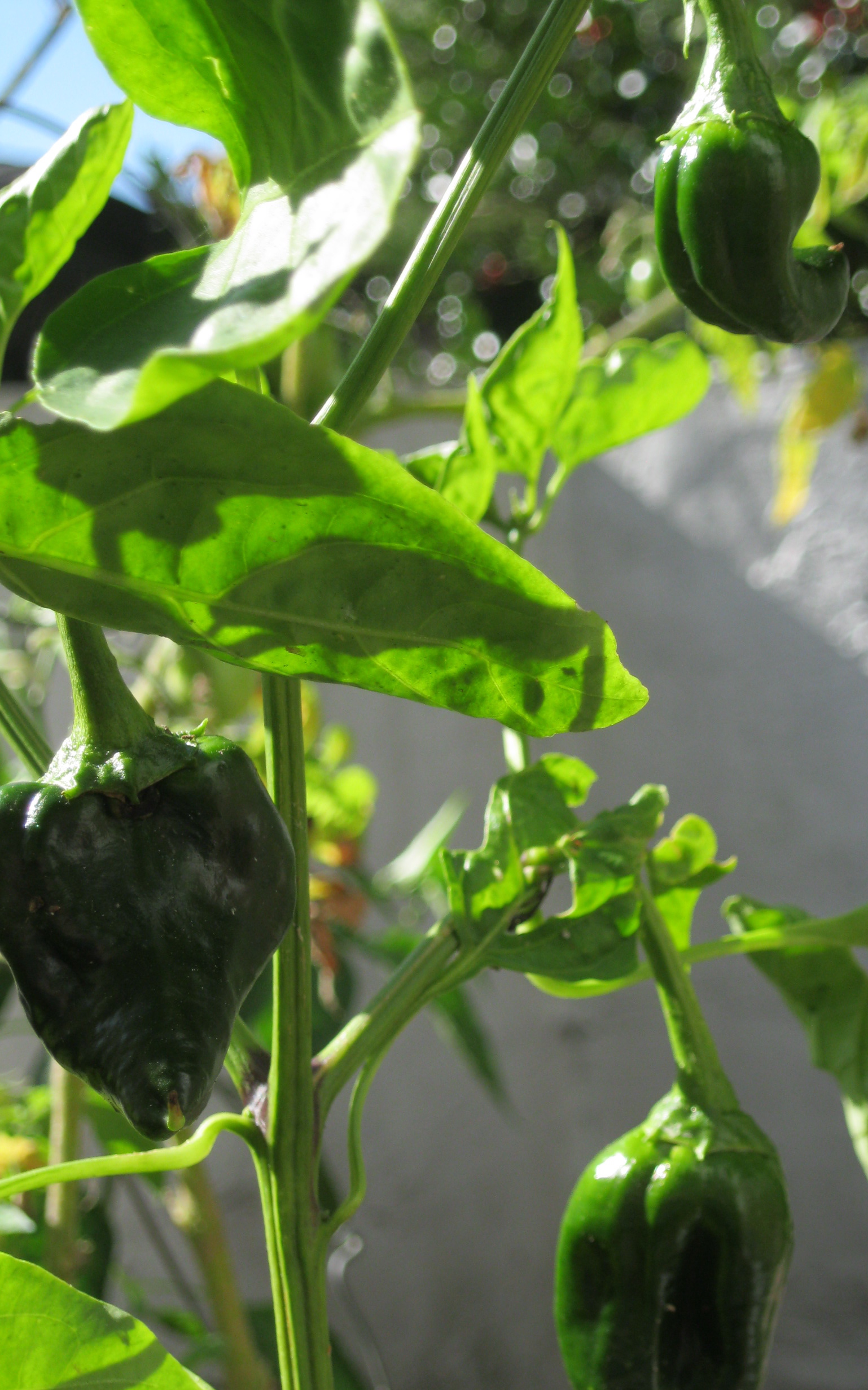
I began writing this month’s Kale Chronicles on an October afternoon, following a morning of rain showers. The rain is a major blessing in drought-stricken California. My thirsty vegetable and mint plants drink in the rain, as they have drunk in the abundant sunshine of October. The two-tone green tomatoes have unexpectedly turned orange and are on their way to red. The poblano peppers on one plant continue to grow, while the other plant is forming fruit as its blossoms die. A few tomatoes that fell before they were fully ripe are ripening on a windowsill in the breakfast room. I will have a small harvest from my seed-grown vegetables.

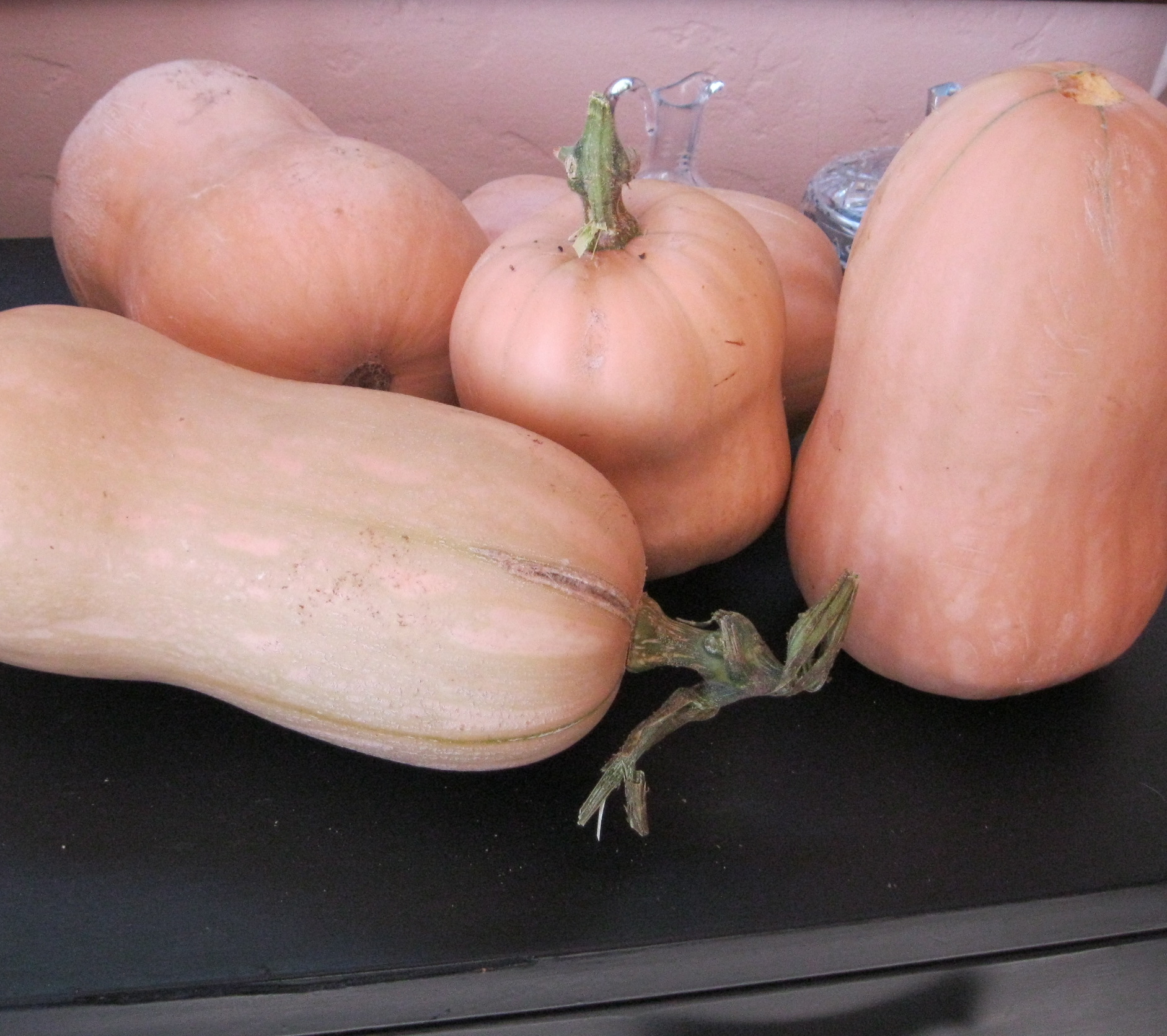
With the return of damp weather to punctuate a bright autumn, my thoughts turn to butternut squash soup. I originally published this recipe for kabocha squash soup in 2011, an adaptation of the soup I usually make from butternut squash, my absolute favorite of the winter squashes. I start making this soup each year when the weather gets cool and continue to make it until spring warmth returns. Butternut squash keep a long time on the counter or in a cool garage or cellar and one large or two small ones will make a lot of soup. All you need else is water, onions, fresh ginger, tamari, a bit of thyme and dairy or non-dairy milk to suit.

Poblano and flower.

Poblano and flower.

My personal lesson for the summer and fall parallels the experience my friend Saundra wrote about in her Wonder Woman blog post: that in times of trouble I must make self-care a priority, whatever form it takes. In my case, I must meditate, seek conversations with friends, practice music, attend 12-step meetings, do spiritual reading, attempt to get reasonable amounts of exercise and sleep. A surprising outcome of taking better care of myself is that I draw all kinds of gifts into my orbit: a friend offers to make a performance video that I can put up on YouTube (Stay tuned! I’ll tell you when it is done). Another friend sends me a music CD that I want in exchange for feedback on the CD. Even the passers-by at my busking gigs buy more CDs and increase their tips to me. And I hatch an idea for a new short-term music project: next month I will go into the studio to make a three-song E.P. (short CD), recording the songs I wrote in 2012. It will be called “Clueless” and I hope to have it for sale by the end of next month. I am only manufacturing three hundred copies to start so be sure to let me know in the comments field if you would like one for yourself or for a Christmas or Chanukah gift (Manufacturing a small run makes it possible for me to make new music available without incurring the large costs of a full-length project). I continue to busk and offer full-length “Paris” CDs for sale at CDBaby, Down Home Music and via email.

My daily experience continues to be that people are kind to me and supportive of my projects and of my efforts to improve my life and relationships. Oh, sometimes there is push-back, but there is often a way to step out of the conflict by focusing on what I need and not what the other person is doing.

I am continuing to seek what Buddhists call “right livelihood,” ways to earn money that are consistent with my gifts and ethical stance. For inspiration I am currently taking an expanded version of Maia Duerr’s course, Fall in Love with Your Work. In the spirit of generosity, I have created a new page on The Kale Chronicles called “Writing Prompts.” Look for the page link up in the left-hand corner at the top of the blog post. Each month I will feature some of the prompts or writing topics I learned to use in fifteen years of work with Natalie, plus prompts inspired by the current season (sort of like your serving of writing fruits and vegetables for basic nutrition). I will be glad to answer questions about writing practice and grateful to have referrals to students in the East Bay who desire to learn Natalie’s deep teachings.


This September there have been a couple of sightings of my old vegetable garden in San Leandro. First I heard that butternut squash had taken over the entire yard. I asked about the beans, but my informant hadn’t seen any beans. Then I got an email from someone else, explaining that my garden had fed her all summer, that she had eaten green beans and tomatoes and butternut squash and given beans and squash away to neighbors of hers. I am happy that people were able to eat the produce I grew since I could not eat it myself. I still longed for some of those butternut squash and put in a call to my former landlord to ask if I could pick some squash (Johnny is away for the time being).

Poblano peppers.

Poblano peppers.

Meanwhile in my new container garden here in foggy Kensington one of the poblano pepper plants has finally fruited and a single principe borghese tomato is slowly turning red in the sunny days of September. The other tomato plants are full of pale pink and green Amish paste tomatoes and more borgheses and a mystery tomato from my sister-in-law’s Vallejo garden, currently a two-tone green job. Will the tomatoes ripen before the plants die? Before it rains? Will I bring the green tomatoes inside to ripen? Will I make a green tomato chutney? Stay tuned for the October tomato and pepper report.

The landlord called back. He said, “I know who planted that garden” and granted me access to pick produce there. When my friend M. and I drove out we found the wildest of gardens: all of the hard surfaces had been obscured by foliage. Squash vines snaked everywhere: from where I had planted them along the back fence line they had crossed the entire yard and begun to climb up the back stair. All paths and spaces between rows had vanished and I had to step carefully through unripe squash to remove ripe squash from the vines that also bore squash blossoms, tiny green squash and full-sized green squash.

Buried beneath green leaves ripe principe borghese tomatoes crept along the ground close to the house while ripe Sun Gold cherry tomatoes lurked in the understory and green ones grew through the side fence. Some of the weeds I had worked to eradicate found new openings where the green beans had been. I cut the three small heads of purple cabbage that I had planted in February, but left chard and kale growing by the back fence. I did not find any Amish paste tomatoes or basil or pepper plants in the tangle, but I could not reach large portions of the yard in the amount of time I had. I did find some dried bean and pea pods, picked what I could and shelled about half a cup of mixed black-eyed peas and pinto beans while I waited on the BART platform to go home. M. hauled most of the butternut squash we picked in the trunk of her car, but I carried a token specimen in my backpack. along with a Tupperware container of tomatoes and the shelling beans.

Butternut squash.

Butternut squash.

As I write this, I am roasting principe borghese tomatoes in the oven with olive oil and a little garden mint*. Pinto beans and black-eyed peas are soaking together in a big pot. Small slices of peeled butternut squash share the oven with the tomatoes. I propose to make a soup to honor my gardens, here and there, the honorable labor I did, the lovely San Leandro sun and fertile soil, the strong heirloom seeds that survived my inexpert care and the lack of rain,  the compost of coffee grounds, egg shells, tea bags and the occasional chicken head. I will flavor the soup with chiles to honor the poblano plant and its late-borne fruit.

The local library has recently yielded up treasures, including The Art of Practicing: A Guide to Making Music from the Heart and The Heart of Zen: Enlightenment, Emotional Maturity, and What It Really Takes for Spiritual Liberation. I read them and write about them and work at becoming aware of my habits and my reactive emotional patterns, watering my life with sitting meditation and compassion meditation in the hope of bearing sweeter fruits from new seeds while extracting learning from the old bitter ones. I begin to advertise writing practice classes again — perhaps this time I will find more students. I continue to practice music and to busk in the BART station and Farmers’ Market, practicing gratitude and patience, saying with Leonard Cohen each day, “And even though it all went wrong, I’ll stand before The Lord of Song with nothing on my tongue but ‘Hallelujah.'” I wish you all a fine fall.

Principe Borghese tomatoes.

Principe Borghese tomatoes.

* This is the first year I have raised this variety: they are very pretty, about the size of cherry peppers, but I don’t especially care for their flavor, either eaten raw or oven roasted — they are not sweet enough to suit me, but they are a drying tomato so I will dry some and report back about that next month. It may be that I just have not discovered their secret(s). I had wanted a paste tomato, a drying tomato and tomatoes to eat raw and chose accordingly from recommended heirlooms. Plus, I had to have the Sun Gold hybrid cherry, the most delicious tomato I have ever tasted (Those I grow every year).