Archives for category: seasonal recipes

No one makes Christmas cookies like we do.

My mother baked a lot of cookies when I was growing up: Toll House chocolate chip cookies with walnuts, oatmeal cookies with raisins or coconut, peanut butter cookies marked by the criss-cross tines of a fork, snickerdoodles, butterscotch refrigerator cookies, brownies. She had a cookie press and I remember a few experiments with spritz.

When November came each year she chopped pounds of dried and candied fruit and nuts for homemade fruitcake, soaking the baked loaves in brandy. And in December she began holiday cookie production. Her specialty was thin, crisp cookies, rolled, cut and decorated with colored sugar. She made Moravian ginger cookies. She made butter cookies flavored with lemon and vanilla. She rolled her cookies out on flour-sack dishtowels on a wooden cutting board with a wooden rolling pin. The recipes made at least six dozen each.

I don’t know how she did it. I began apprenticing with her as a Christmas cookie baker when I was perhaps twelve years old. The floured cloth would wrinkle. The dough would stick to the rolling pin and tear. Some of the cookie cutters would not pick up the cut cookies and if I forgot to flour a cutter between each use the dough would crumple. The thin cookies had to be watched in the oven, pulled at the first sign of browning. Moravians burned really fast.

My first efforts were lackluster. I would use too much flour to try to control the sticky dough. The room would be too warm. I would not roll the dough thinly enough — usually Mom would take another pass or two with the rolling pin, or even take over, stretching the dough further than I could.

When I was in my thirties, I bought Mom a marble slab and a marble rolling pin to make cookie-making easier. I had read somewhere that working on chilled marble helped keep cookie dough at the correct temperature. She didn’t use the marble much, not liking to pick up the heavy slab. I used it at her house, clearing a shelf in the refrigerator to hold it, putting the metal bowls of cookie dough on top of it. I found it easier to roll cookie dough on marble than on cloth and when a construction crew was demolishing the old Cogswell College building in San Francisco I carted home a piece of marble from the walls. My boyfriend at the time cut it into a baking slab for me.

By the time Mom was eighty, she had ceded thin, crisp Christmas cookies to me. She still made dream bars and Russian teacakes, Rice Krispie candy, poppy seed bread baked in old coffee cans, and fudge. I spent long hours in the breakfast room rolling, cutting, decorating with colored sugar, ferrying finished trays to the oven and then to cooling racks.

One Christmas a friend gave me a silicone baking mat, a tool which made it possible for me to master Mom’s thin, crisp pie crust (Mine had always been too thick). A floured silicone mat will not stick, allowing you to roll thin sheets of pie dough, cookie dough, noodles. I acquired a bench scraper, which I had seen on some cooking show, and a microplane zester. My baking life got easier, although Christmas cookies still required long hours of work.

Somewhere along the line, I invented a third rolled and cut cookie: cocoa shortbread. I had the thought to swap one half cup of cocoa powder for one half cup of flour in a classic shortbread cookie. Those joined the roll and cut Christmas cookie line-up, but did not have to be rolled as thinly as butter cookies and Moravians. Then I read about Deb Perelman’s butter cookies made with maple syrup and nutmeg. I made them one year instead of our traditional butter cookies. My brother and I preferred them, so I swapped the maple recipe for the older one and never looked back.

I added one more cookie to our permanent Christmas cookie repertoire. One day twenty-some years ago, my mother was reminiscing about pfefferneuesse, a cookie they bought from the store during her childhood. Pfefferneusse are traditionally made with ginger, cloves, mace, cinnamon and allspice and candied orange peel. I remembered those tubs of commercial candied mixed peels from the days of fruitcake and shuddered. But both of us like candied ginger, so I decided to substitute that for the candied peel. Later, I started candying my own orange peel and made the cookies with a combination of the two ingredients.

The first time we made pfefferneusse they lacked something. Mom thumbed through some old cookbooks and discovered that the cookies used to contain ground white pepper. I threw some white peppercorns in the coffee grinder and added the fragrant powder to my next batch of dough. That was it — the “pfeffer” in “pfefferneusse.”

Most of our cookies are plain, not frosted, topped only with a sprinkle of colored sugar, but pfefferneusse require a coat of royal icing flavored with anise. I still struggle with getting the icing to set properly and watch for a dry day to make it.


* * *

Fast forward to 2023. My mother is ninety-three and has severe dementia and terminal cancer. I became her primary caretaker some months ago and do not have the time to bake Christmas cookies. I bought some chocolate stars she wanted from Trader Joe’s. We’ve eaten a few, but we don’t really like them: we miss our traditional cookies.

I put out a plea on Facebook, describing our Christmas cookie traditions. A friend offered to send us some cookies, to order them from a local bakery. I began to look at bakery menus. No one made the right things: there was too much chocolate, too many year-round cookies. My friend Kate offered to bake us some cookies if I could come up with something simple. I assigned her Russian teacakes, sending her the recipe that Mom had used for years. She brought them by a few days before Christmas with a small bag of her traditional homemade Christmas cookies. The teacakes were almost right, but a bit underdone and sporting only a thin and mottled powdered sugar coating (What we would consider the first of two required coats). Someone else dropped off first a bag of gingerbread cookies and then a bag of cut out cookies and rocky road fudge. A third friend, an experienced baker, volunteered to bake a batch of cookies for us. I sent her the pfefferneusse recipe and the maple sugar cookie recipe. When no one chose the pfefferneusse, I candied a batch of orange peel, hoping to make just that one cookie before Christmas Day (That is as far as I got with that project, but several of the twelve days of Christmas remain).

Alice chose the maple cookies and brought them by on the evening of Boxing Day, along with lemon biscotti, anise biscotti and stamped gingerbread that she had made. After she had gone, I opened the boxes to look. I found small maple stars, at least a quarter-inch thick, bearing marks of flour, sans decorative sugar. You could stack four of our cookies in the space of one of hers.

The flavor of the maple cookies was good, but, alas, they were not our cookies, rolled so thin as to be almost translucent. The lemon biscotti, however, were delicious. I might ask Alice for the recipe.

After sampling Alice’s cookies and Peg’s cookies and Kate’s cookies, I realized that our Christmas cookies, which I have always loved, are truly special. Other people make thick cookies, doughy cookies, under-baked cookies, when they make cookies with cookie cutters. Some of them apply white icing. I have not tasted a single cookie this season like our cookies.

In the past, only two people have come to bake Christmas cookies with me. The woman who is now my brother’s wife came to learn to bake them, spent a long afternoon with me in San Leandro cutting and decorating one year. She never came again. And an old friend came to take part in the holiday cookie marathon. She enjoyed decorating cookies with colored sugar, but soon suggested we abandon the project and walk to the mall instead. “This is a lot of work,” she said.

Indeed. A more recent friend suggested that I develop a sideline in baking cookies. “I would buy them,” she said.

“Too much work,” I responded, “I would never do production baking.”

At my current age of sixty-five, it probably takes me two days to make the four main cookie doughs and perhaps another two or three days to roll, cut, decorate and bake three kinds of cookies, plus a half-day to ice the pfefferneusse. It is a lot of work, special to the Christmas season: I only make these cookies once a year in a year when I have time to bake. I enjoy baking them and baking them tires me: once a year is enough, but I miss them in years when I don’t make them. Sometimes I pack up tins of them to send to friends or send them home with Christmas dinner guests.

I don’t know whether I’ll get even the pfefferneusse made this year. Yesterday I made homemade noodles and cloverleaf yeast rolls. I have not made any Christmas pie yet (twelve days remember) and I still have to bake my Mom an elaborate lemon-filled coconut cake for her 94th birthday. I’ll make Christmas cookies again though in some less busy year because their absence has taught me how unique and wonderful they are.

Summer of 2015 was all about tomatoes for me: the forty-some volunteer tomato plants sprang from seeds of fallen tomatoes I planted last spring. They grew, blossomed, played host to myriad aphids and, in spite of that, produced more tomatoes than I have ever had to work with, mostly cherry tomatoes and a drying variety called Principe Borghese. All July and August I picked them, washed them, dried them, put up vats of pasta sauce in the freezer. I made experimental tomato sugar plums. I considered making tomato caramel. We ate them in Greek salad and BLTs. I developed two versions of a pasta using pan-roasted cherry tomatoes and fresh corn with either andouille or chicken chorizo (The Mexican version is my favorite).

The only thing I didn’t do is can them — we don’t have a dishwasher and I don’t have a canning kettle or a living grandmother to show me all of the old-fashioned tricks for canning in a simple kitchen.

The summer ended with a week-long heat wave. I watered the plants on the first day and then they were on their own because it was too hot to venture into our unshaded yard.

Last weekend I cut the abundant dry weeds from the side yard, probably twelve or sixteen grocery bags of them. Some of them were taller than I was. That felt like a fall chore. Then, yesterday, I sang at the Farmers’ Market in Berkeley. It was a fall market all of a sudden. There were strawberries, but not enough for everyone who wanted to take them home. There were a few peaches left, but more pears. And there were apples everywhere — I bought fifteen pounds of mixed varieties for ten dollars and cut down a cardboard box so that I could shove them in my refrigerator to join the bowl of Gravensteins I bought for pies a few weeks ago (It has been too hot to turn on the oven). I do not know the names of all of the apples I got, or the flavors and textures: lunch today may be a hunk of bread, pieces of cheese and slices of different apples. My new favorite, identified by the farmer who sold me the mix, is a Royal Empire, a mid-season apple: they taste exotic, spicy, and have plenty of juice and crunch.

The tomatoes are still producing fruit and blossoms. I begin to think of drying more of them, running the dehydrator at night. I also begin to think of soup, perhaps a corn chowder with the last of the sweet corn, or a butternut squash soup from last year’s squash — I still have a few in the garage. Perhaps I will cook them all and store the puree in the freezer for easy fall and winter soups. I freeze the seeds and skins, too, for stock.

I am not assured of cool weather. The weather is the wild card in California. Four years of drought. Record heat. There are clouds in the sky this morning, which means it will not get as hot as it otherwise could, but it has been a crap shoot whether to turn on the oven for months — as soon as I make pie crust, it turns too hot to bake. Make iced tea and we will have a cool day and I will get out the tea pot and drink hot tea instead. I have taken to watching the news on TV just to hear what they are saying about the weather.

It is dark later in the mornings: soon I will begin my walk to BART in the dark. It is dark when I get up now and the light fades early. I don’t remember dark mornings coming in early September, but I guess they do every year.

I do remember the food transitions. Right now I have lemons, peaches, Armenian cucumbers and red bell peppers, plus all of those apples.  I did not cook last week, living on milkshakes, smoothies, the occasional Greek salad and canned re-fried beans. Yes, I stock those for emergencies, hot weather and days when I am too tired to make my own from dried pintos. I think I should make some roasted strawberries for Johnny for the winter if I see strawberries next week.

When I was writing this post last, it was becoming fall 2015. Now it is spring 2016 and volunteer tomatoes are up in the yard, along with lots and lots of chard and kale that re-seeded themselves (I don’t mind at all — they compete with the weeds). I have three butternut squash plants — I threw a rotting squash from 2014 into a heavily mulched area and, voila, new squash plants.

We are eating fresh strawberries again and lots of fresh salads, which helps us both in our efforts to lose pounds we accumulated over 2015. I am baking sourdough bread once more. My latest quest is to eat “clean food” — i.e. food not touched by the industrial food system. For now we have given up white sugar and most white flour. We use maple syrup and dried fruit in our oats. We eat polenta. I use commercial whole wheat and rye flours in bread, with just a little bread flour, but I am on the track of a freshly-milled whole wheat flour. Although I miss cheese and pasta, I do buy some organic milk and yogurt from a dairy farmer. We eat a lot of legumes, too, and wild-caught shrimp and fish.

Eating less sugar was the big surprise. My skin improved. My gums improved. I still daydream about good desserts, but fresh fruit tastes really good when it is ripe, local and seasonal, whether it is strawberries or blood oranges. Dried fruit offers other options. Sometimes I will have yogurt with fruit and honey. Right now I am enjoying the freshness of a lot of things we eat: today my lunch was a salad of watercress, lettuce, cilantro, roasted beets, raw carrots, walnuts, feta and blood oranges in a balsamic vinaigrette.

I have had a left knee injury since December 2015, which is slowing me down and keeping me from things I like to do, but I found this draft post and thought I would send it out to all my patient readers to say that I am alive, still feeding us and growing things, still playing music, not painting much or writing much, watching the seasons turn through the plants in the yard and the food on our plates.

Hello. It is the last day of March and I have moved again: on March 21 I moved out of my mother’s house and back to San Leandro. I am still unpacking things and rearranging them — I can’t remember where everything went last time around, although I remembered the locations of all of the pieces of furniture. As I settle into the house and take up routines of cleaning and cooking I find myself thinking a lot.

These are the kinds of things I think. “I want to make some bread. I don’t have any whole wheat flour. I have oats and cornmeal and molasses and white flour. I can make anadama bread. If I make double amounts of the cornmeal mush we can have cornmeal pancakes for breakfast tomorrow. If the oven is on to bake bread, I should roast a butternut squash from the cache that I grew last year. We can have that tonight with baked beans and fresh bread.” Then I bake bread and roast squash, saving the squash innards in the freezer for some future batch of butternut squash soup. Using the oven to prepare more than one dish at a time is something I learned from my mother in her kitchen.

I think about the garden. Because I am going on a short trip to New Mexico in late April I do not want to start seedlings or plant anything new outside until I get back. The garden, however, had plans of its own. Forty tomato plants have started themselves from the smushed remains of last year’s tomatoes, tomatoes that fell off the huge Sun Gold vine. Many of them decided to grow between the tiles of the only paved area in the yard, although some have reasserted themselves in the soil by the fence where I planted them last year. The largest of the patio tomatoes is now in flower. We will have to wait to see what we get because Sun Gold tomatoes are hybrid tomatoes. I had also planted Amish paste tomatoes and Principe Borghese. It remains to be seen if any of them have come up in the tomato forest. The chard asserted itself as well and formed two healthy clumps in a boggy area near the shed. So far my gardening activities have been limited to weeding, cutting down dandelions and thistles and teasing out oxalis from the stems of the chard. I cut chard everyday to eat, adding it to pasta with sun-dried tomatoes, kalamata olives and feta or scrambling it into eggs with scallions. I think, eating from the garden, that I would like to plant some lettuce soon, maybe some radishes for variety, and then I remember that I am going away in less than a month and it would be better not to plant anything until I can be here to tend the garden.

I think about what I need and what I don’t need. At certain points in unpacking I declare “I don’t need any more stuff.” Then I realize I haven’t seen my set of biscuit cutters (“Maybe they are in the cookie-cutter tins by the kitchen bookshelf”) or my dough cutter. Because two of my bookshelves sit in the kitchen as a makeshift pantry and china cabinet respectively I have to edit the books that I display on the bedroom shelves. Last time around I consigned the short story collections to the shed. This time I have them out, but I am thinking they will be boxed up once again so that I have room for music books and volumes of poetry. Another strategy is to place books I have bought but have not yet read on a high shelf and to ask Johnny, who is tall, to get them down as I need them. Tomorrow, my “day off” I will face the book-sorting issue: last time I rearranged the books three times before I was satisfied.

When I spill water on the floor I am full of desire for a new, more effective mop and a large batch of cotton rags. When I think of making soup I covet an immersion blender, or, at least, a working regular blender. When I bake bread in conjoined loaf pans I remember the nice set of bread pans I saw at a thrift store in Berkeley and wonder if they are rust-proof and if they are still there. I make mental lists of groceries: whole wheat flour, lemons, sour cream, cinnamon sticks. Whenever I put something away in some inconvenient place I think, “Is there a better place for that in the kitchen?” (or the bedroom, or the bathroom).

As per the last time I moved I cannot find my camera battery on the evening that I write this blog post. If I find it soon I will perhaps add some pictures of the tomato forest.

Anadama Bread

In a saucepan combine:

1 and 1/2 cups water

1 tsp salt

1/3 cup cornmeal

Stir constantly until cornmeal thickens and bubbles. Pour into mixing bowl.

In a glass measuring cup, measure 1 and 1/2 Tbsp of corn oil or soft shortening. Add to cornmeal mixture.

In that same greasy measuring cup, pour 1/3 cup molasses. Add molasses to cornmeal.

DO NOT WASH THAT CUP YET. Into that molasses-smeared cup, put 1/4 cup water. Pop it in the microwave for a few seconds until lukewarm and add 4 and 1/2 tsp yeast. Stir with a fork until the yeast dissolves.

In another bowl measure 4 cups sifted flour.

Either go away and leave cornmeal mixture to cool to lukewarm and then add dissolved yeast OR start adding flour to the cornmeal mixture, which will help cool it. When the mixture is lukewarm add the rest of the flour and the dissolved yeast and begin to knead the dough. You may have to add more flour to overcome the stickiness of the molasses. I like to turn the dough out of the bowl and knead it on a lightly-floured  wooden surface.

When the bread is smooth and no longer sticky, add 1 Tbsp butter or oil or shortening to the mixing bowl and place the dough in it again. Cover with a dampened and warmed linen or cotton towel and leave to rise in a warm place until doubled (over an hour). Punch down. Let rise again (about half an hour).

Grease a bread pan or pans and shape dough. This recipe makes a good-sized round loaf or four small loaves. Preheat oven to 375 Bake for forty to forty-five minutes until nicely browned. Remove loaves from pans and let cool before slicing.

Painting of Christmas cookies on green and red tablecloth.

Christmas Eve. 8″ x 8″ watercolor pencil and white gouache. Sharyn Dimmick

My mother will turn 85 on New Year’s Day 2015. She has begun announcing that this is our last traditional Christmas celebration, complete with tree, wrapped presents, homemade festive meal, assorted guests and family members, cookie-baking marathon, cut boughs of holly, etc. It is time for a change, she says.

I had always assumed that I would step in and take over the family Christmas traditions. For many years I have increased my contributions to the Christmas labor. But, this year, I had an unexpected number of music gigs in the weeks leading up to Christmas, and a wild week where I both attended concerts and played them. I went north to sing on the radio and to visit my best friend. I went to a local party. And amidst all that I stood by to receive shipment of my new “Clueless” CD.

Clueless  CD  CoverThe CD was shipped December 10 from Oasis Disc Manufacturing via UPS with two-day shipping. The first notification I got said it would be delivered on Monday December 15 (NOT two-day shipping). Many emails and phone calls later I got a notification today on December 19 that it was on a delivery truck. Lo and behold it got here this evening and is available for purchase at long last. here this evening. In the meantime, Oasis offered to re-manufacture the CDs at no cost to me and to ship them this coming Monday. This means that I will eventually receive 600 CDs instead of 300, but it also means that I cannot get them to anyone but locals by Christmas or Chanukah: Now that the CDs  have arrived I will carry a number of them around in my guitar case and backpack. I will also offer them for sale at Down Home Music and at CD Baby where you can get my 2009 release “Paris” and hear full-length versions of most songs, plus clips of the cover songs. Soon I will begin the process of getting full versions of the songs from “Clueless” up on CD Baby as well. For now you can hear a couple of the songs for free on Reverbnation.

What I have learned from this is that Oasis comes through for its customers, even in situations where they are not at fault and UPS — well, let’s just say that my brother who worked in shipping for a number of years recommends Fed Ex for deliveries.

Anyway, as Christmas approaches, my participation has been limited to buying a few gifts (in October and November), and making ginger cookie dough (yesterday). When I feel better I will be making my famous cocoa shortbread and possibly a new cookie. Mom beat me to making pfefferneusse, Russian tea cakes, dream bars, apricot bars and sugar cookie dough, but I might make up a batch of Smitten Kitchen’s maple butter cookies anyway because my brother and I fell in love with them the first time I made them. I will put some Christmas music on as I lounge about today, awaiting the arrival of the “Clueless” CDs and hoping to put in a brief appearance at a music party this evening.

painting of pomegranates, limes and December sunrise.

December Still Life. 8″ x 8″ gouache and watercolor pencil. Sharyn Dimmick

Saturday morning I have one more gig at the Berkeley Farmers’ Market, if it does not get rained out. Saturday afternoon and Sunday morning I will be assisting my friend Elaine in preparing for her annual Chanukah party. I will spend Christmas Eve Day with Johnny, eating salad and tamales from Trader Joes, after serenading the morning commuters with Christmas carols. I return home in the evening to rest before assisting Mom with the last Dimmick Christmas feast marathon the next morning. All traditions come to an end, changing in subtle ways before they become part of the ghostly past of memory. No one can remember what year I started buying Straus whipping cream or what year we stopped making homemade caramels or what year I put candied ginger in the pfefferneusse or what year I invented the shortbread.

Whatever you celebrate and wherever you are, I wish you the happiest of holidays. Happy Solstice, Yule, Christmas, Chanukah, Kwanzaa. Happy holidays I have never heard of or can’t keep straight in my head. May you know the joy of feasting, of companionship, of bright light in a dark time, of joyful music. Best wishes to all who read The Kale Chronicles, whether you have been here from the very beginning or whether you just popped in today. May you enjoy your winter festivities and the love of all beings dear to you. Love, Sharyn

Formerly green tomato.

Formerly green tomato.

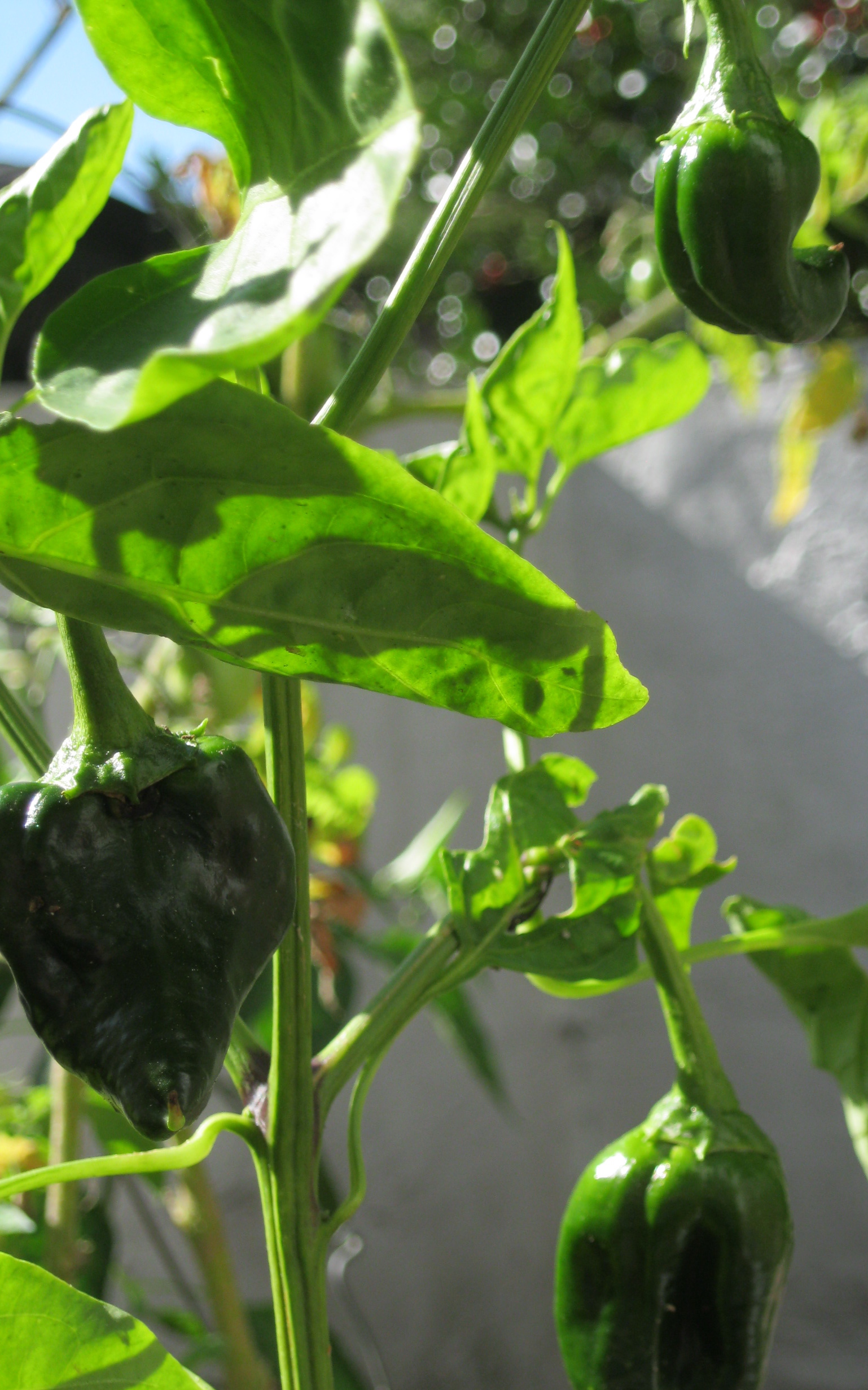
I began writing this month’s Kale Chronicles on an October afternoon, following a morning of rain showers. The rain is a major blessing in drought-stricken California. My thirsty vegetable and mint plants drink in the rain, as they have drunk in the abundant sunshine of October. The two-tone green tomatoes have unexpectedly turned orange and are on their way to red. The poblano peppers on one plant continue to grow, while the other plant is forming fruit as its blossoms die. A few tomatoes that fell before they were fully ripe are ripening on a windowsill in the breakfast room. I will have a small harvest from my seed-grown vegetables.

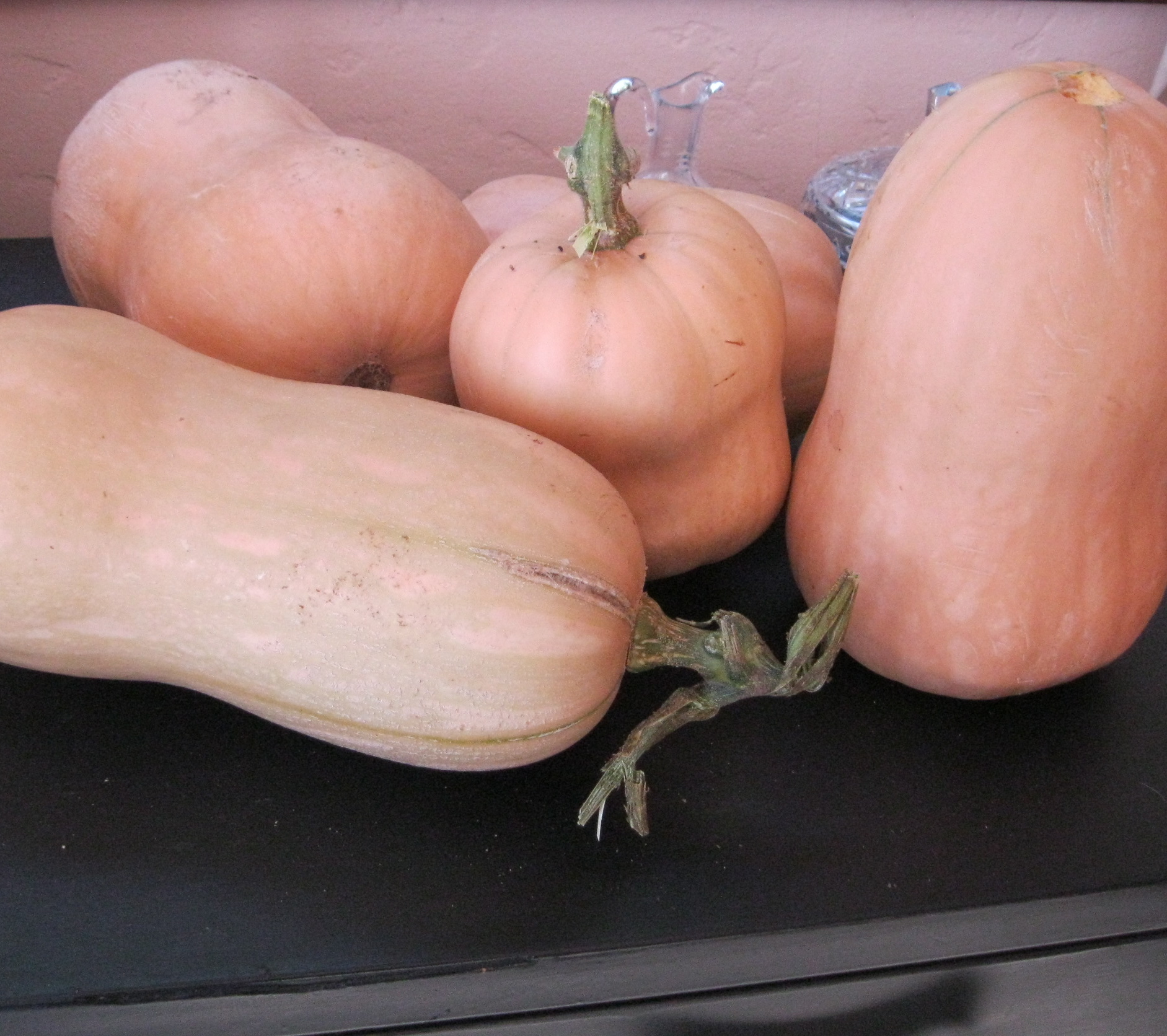
With the return of damp weather to punctuate a bright autumn, my thoughts turn to butternut squash soup. I originally published this recipe for kabocha squash soup in 2011, an adaptation of the soup I usually make from butternut squash, my absolute favorite of the winter squashes. I start making this soup each year when the weather gets cool and continue to make it until spring warmth returns. Butternut squash keep a long time on the counter or in a cool garage or cellar and one large or two small ones will make a lot of soup. All you need else is water, onions, fresh ginger, tamari, a bit of thyme and dairy or non-dairy milk to suit.

Poblano and flower.

Poblano and flower.

My personal lesson for the summer and fall parallels the experience my friend Saundra wrote about in her Wonder Woman blog post: that in times of trouble I must make self-care a priority, whatever form it takes. In my case, I must meditate, seek conversations with friends, practice music, attend 12-step meetings, do spiritual reading, attempt to get reasonable amounts of exercise and sleep. A surprising outcome of taking better care of myself is that I draw all kinds of gifts into my orbit: a friend offers to make a performance video that I can put up on YouTube (Stay tuned! I’ll tell you when it is done). Another friend sends me a music CD that I want in exchange for feedback on the CD. Even the passers-by at my busking gigs buy more CDs and increase their tips to me. And I hatch an idea for a new short-term music project: next month I will go into the studio to make a three-song E.P. (short CD), recording the songs I wrote in 2012. It will be called “Clueless” and I hope to have it for sale by the end of next month. I am only manufacturing three hundred copies to start so be sure to let me know in the comments field if you would like one for yourself or for a Christmas or Chanukah gift (Manufacturing a small run makes it possible for me to make new music available without incurring the large costs of a full-length project). I continue to busk and offer full-length “Paris” CDs for sale at CDBaby, Down Home Music and via email.

My daily experience continues to be that people are kind to me and supportive of my projects and of my efforts to improve my life and relationships. Oh, sometimes there is push-back, but there is often a way to step out of the conflict by focusing on what I need and not what the other person is doing.

I am continuing to seek what Buddhists call “right livelihood,” ways to earn money that are consistent with my gifts and ethical stance. For inspiration I am currently taking an expanded version of Maia Duerr’s course, Fall in Love with Your Work. In the spirit of generosity, I have created a new page on The Kale Chronicles called “Writing Prompts.” Look for the page link up in the left-hand corner at the top of the blog post. Each month I will feature some of the prompts or writing topics I learned to use in fifteen years of work with Natalie, plus prompts inspired by the current season (sort of like your serving of writing fruits and vegetables for basic nutrition). I will be glad to answer questions about writing practice and grateful to have referrals to students in the East Bay who desire to learn Natalie’s deep teachings.


This September there have been a couple of sightings of my old vegetable garden in San Leandro. First I heard that butternut squash had taken over the entire yard. I asked about the beans, but my informant hadn’t seen any beans. Then I got an email from someone else, explaining that my garden had fed her all summer, that she had eaten green beans and tomatoes and butternut squash and given beans and squash away to neighbors of hers. I am happy that people were able to eat the produce I grew since I could not eat it myself. I still longed for some of those butternut squash and put in a call to my former landlord to ask if I could pick some squash (Johnny is away for the time being).

Poblano peppers.

Poblano peppers.

Meanwhile in my new container garden here in foggy Kensington one of the poblano pepper plants has finally fruited and a single principe borghese tomato is slowly turning red in the sunny days of September. The other tomato plants are full of pale pink and green Amish paste tomatoes and more borgheses and a mystery tomato from my sister-in-law’s Vallejo garden, currently a two-tone green job. Will the tomatoes ripen before the plants die? Before it rains? Will I bring the green tomatoes inside to ripen? Will I make a green tomato chutney? Stay tuned for the October tomato and pepper report.

The landlord called back. He said, “I know who planted that garden” and granted me access to pick produce there. When my friend M. and I drove out we found the wildest of gardens: all of the hard surfaces had been obscured by foliage. Squash vines snaked everywhere: from where I had planted them along the back fence line they had crossed the entire yard and begun to climb up the back stair. All paths and spaces between rows had vanished and I had to step carefully through unripe squash to remove ripe squash from the vines that also bore squash blossoms, tiny green squash and full-sized green squash.

Buried beneath green leaves ripe principe borghese tomatoes crept along the ground close to the house while ripe Sun Gold cherry tomatoes lurked in the understory and green ones grew through the side fence. Some of the weeds I had worked to eradicate found new openings where the green beans had been. I cut the three small heads of purple cabbage that I had planted in February, but left chard and kale growing by the back fence. I did not find any Amish paste tomatoes or basil or pepper plants in the tangle, but I could not reach large portions of the yard in the amount of time I had. I did find some dried bean and pea pods, picked what I could and shelled about half a cup of mixed black-eyed peas and pinto beans while I waited on the BART platform to go home. M. hauled most of the butternut squash we picked in the trunk of her car, but I carried a token specimen in my backpack. along with a Tupperware container of tomatoes and the shelling beans.

Butternut squash.

Butternut squash.

As I write this, I am roasting principe borghese tomatoes in the oven with olive oil and a little garden mint*. Pinto beans and black-eyed peas are soaking together in a big pot. Small slices of peeled butternut squash share the oven with the tomatoes. I propose to make a soup to honor my gardens, here and there, the honorable labor I did, the lovely San Leandro sun and fertile soil, the strong heirloom seeds that survived my inexpert care and the lack of rain,  the compost of coffee grounds, egg shells, tea bags and the occasional chicken head. I will flavor the soup with chiles to honor the poblano plant and its late-borne fruit.

The local library has recently yielded up treasures, including The Art of Practicing: A Guide to Making Music from the Heart and The Heart of Zen: Enlightenment, Emotional Maturity, and What It Really Takes for Spiritual Liberation. I read them and write about them and work at becoming aware of my habits and my reactive emotional patterns, watering my life with sitting meditation and compassion meditation in the hope of bearing sweeter fruits from new seeds while extracting learning from the old bitter ones. I begin to advertise writing practice classes again — perhaps this time I will find more students. I continue to practice music and to busk in the BART station and Farmers’ Market, practicing gratitude and patience, saying with Leonard Cohen each day, “And even though it all went wrong, I’ll stand before The Lord of Song with nothing on my tongue but ‘Hallelujah.'” I wish you all a fine fall.

Principe Borghese tomatoes.

Principe Borghese tomatoes.

* This is the first year I have raised this variety: they are very pretty, about the size of cherry peppers, but I don’t especially care for their flavor, either eaten raw or oven roasted — they are not sweet enough to suit me, but they are a drying tomato so I will dry some and report back about that next month. It may be that I just have not discovered their secret(s). I had wanted a paste tomato, a drying tomato and tomatoes to eat raw and chose accordingly from recommended heirlooms. Plus, I had to have the Sun Gold hybrid cherry, the most delicious tomato I have ever tasted (Those I grow every year).

Those of you who are kind enough to follow The Kale Chronicles as it morphs from a twice weekly blog to a monthly blog will have noticed that it did not make its May deadline. It was inevitable, given some things that are going on and it may be rocky here for awhile. I have not had time to take pictures, much less paint them in the last week or so — I have barely been able to attend to the garden (I just spent an hour on my hands and knees, pulling out burr clover).

But I harvested at least half a basket of Sun Gold cherry tomatoes tonight from the plant that has dynastic ambitions — having taken over as much of the fence line as possible (I think), it has shifted its focus to growing out over the patio. Johnny said it had to be cut back, but I am not going to do that. Perhaps I should have put in more stakes or a tomato cage, but it is too late for that now. It swallows up and shades everything in its path with abundant foliage and hundreds of yellow blossoms. It is the biggest tomato plant I have ever seen and I fear to think of what my Amish paste tomatoes and my Principe Borghese plants are going to look like — both of them have larger tomatoes than the Sun Gold.

I have pepper plants hardening off and chard that is bolting. We can eat lettuce from the garden now, as well as chard and kale and tomatoes. I set out some new Thai basil seeds because the Thai basil I planted before is underneath the giant tomato. In the process of digging to enrich the soil for the basil I discovered concrete about a foot down at the end of one of the bean rows. Uh-oh. I have not yet determined how far the concrete extends (I’m not that fond of digging).

My green bean plants have little tiny green beans and the Scarlet Runners do too. My pinto beans and black-eyed peas seem to have hybridized in a giant tangle: when they started out they looked like bush beans, but then the bush beans grew tangled vines that refuse to take to the supports I gave them. Meanwhile some of the butternut squash plants are growing through a row of green beans and I can no longer walk on what was a path in that part of the garden. I think that I saw some tiny butternut squash tonight, although I have seen no squash blossoms, which makes no sense — the only things in blossom are the tomatoes and various beans.

I need to know a lot of things. I need to know how to confine indeterminate tomatoes (and perhaps how to prune the non-bearing branches). I need to know how to encourage the butternut squash to fruit and how to protect the squash as they grow. I need an advanced placement course in staking and supporting plants because muddling through it on my own was not adequate (I have raised indeterminate tomatoes before, thank you very much, but only in ten gallon buckets, where they stay put, where, in fact, they were spindly and only produced a few handfuls of tomatoes. I love the abundance, but I am afraid we will not be able to walk in our yard by August and I feel sorry for the other plants that have no chance and no space to grow. I need to know what particular horrible garden pests or diseases have been plaguing my red cabbage plants, which may not be long for this world, although I have not had a single cabbage.

I sort it out as best I can. The garden is my refuge from other difficulties and I love going out and picking or cutting things to eat. Last night I made a chicken salad that incorporated cherry tomatoes and lettuce from the garden. I also used plain Greek yogurt, Madras curry powder, lemon juice (lime is better), celery and golden raisins.

May highlights included a visit from my best friend and her husband on the day that twenty-six mph winds blew the tomato trellis down and ripped stakes through the ground and my guest appearance with Johnny’s band, Johnny Harper and Carnival, in Sebastopol. I sang “Evangeline” by Robbie Robertson, which Emmy Lou Harris sang in “The Last Waltz.” The band has been doing a special series of shows featuring the music of The Band, while incorporating some of Johnny’s original compositions. Johnny is hard at work on a CD, to be released in October if all goes according to plan.

I hope you all are enjoying your late spring/early summer.

Sharyn (aka The Kale Chronicler)

Spring crops are in! Fresh Batavia lettuce rosettes at the Berkeley Farmers’ Market. Last Saturday I stood in line for a three-pack of strawberries and a couple of large artichokes, food that hardly needs preparing: I sliced the strawberries over homemade waffles made with spelt flour and sour half and half and steamed the artichokes to eat with lemon butter. This easy cooking joins the long-cooked stews on the cooler days and keeps me from heating up the kitchen on the warmer days. We have had some of each in March, eighty-degree afternoons, fifty-one degree sunrises. Sheeting rain yesterday morning kept me from singing at the Berkeley market but allowed me to walk through the Bay Fair market with Johnny instead. I bought more artichokes, some sugar snap peas, cilantro, new potatoes. Johnny bought onions, scallions, red peppers (where did they come from?). The other day a man walked down our street with strawberries from Salinas and I bought half a flat for two dollars a basket. Johnny says they aren’t as good as the farmers’ market strawberries, but it was an impulsive buy to cheer up my sweetie who has been working hard on his first album.

I have been working hard, too. I played a private St. Patrick’s Day party on Saturday March 15, in addition to my usual busking. For that I had to practice up several Turlough O’Carolan tunes on the Celtic harp and refresh my memory of some “Irish” standards of the type that one only sings on St. Patrick’s Day (I was heard to grumble through the house, “I never will play ‘The Wild Rover’ no more”).

Photo of seed packets

Heirloom seed packets.

The day after the gig I whisked myself off to Santa Rosa to visit my friends Suzanne and Scott. Suzanne and I had a date with the Seed Bank in Petaluma, a haven for heirloom seeds. Suzanne staked me to a portion of them as a late birthday present and I quickly doubled the stake to get an English trowel and more seeds. It’s hard to describe the bounty of seed packets at the Seed Bank, over 1200 possibilities. I carefully chose varieties of basil and tarragon, snapped up some black garbanzo beans from Afghanistan, bought Blue Lake green bean seeds and Scarlet Runner beans. I deliberated over kinds of sunflowers and bought a blue and white sweet pea mix. I chose a French variety of lettuce and an Amish paste tomato. I could not get sugar snap peas or Genovese basil — apparently everyone in Northern California is planting those at the moment. But the peppers were nearly my undoing: an entire rack of peppers stood before me and I wanted them all, habaneros and jalapenos, cherry peppers, Thai peppers. I limited myself to poblano seeds and a packet with a beautiful illustration of a red bell pepper.

Much of this bounty is still sitting in packets in the breakfast nook because every time I have had time to plant things outdoors I have needed stakes or there has been rain. I lie awake nights thinking where to put things. I did manage to plant a couple of half rows of black-eyed peas and pinto beans and put together a small A-frame of scavenged pine boughs and bamboo for the scarlet runner beans. I planted some runner beans today, plus Blue Lake green beans, butternut squash and two varieties of basil (Thai and Ararat).

Tomato and tarragon seedlings

First seedlings

Last week I started seeds of two kinds of tomatoes and Russian tarragon in cardboard egg cartons. I started a second set when anything failed to germinate after six days and was jubilant an hour later when the sun came out and the first green bits poked up out my potting soil in tray number one. I have never started seeds indoors before and this small victory feels like magic. This morning I squeezed three new egg cups into my tray, each containing a poblano pepper seed.

The in-ground crops look good. We cut a few leaves of chard one night to go with a dinner of sweet potatoes and sour milk cornbread. The kale and two of the red cabbages are growing large. The Sun Gold tomato is a leggy green monster now with four sets of yellow blossoms already — perhaps we will have home-grown tomatoes by May. I am anxious to have tomatoes, tarragon and pepper plants to add to the garden, to plant lettuce and herbs and flowers, but I have to wait for drier weather. Not that we don’t need the rain in California. We do.  I wait impatiently for the intersection of a free day and a dry day and I hack a three-foot high sheaf of flowering weeds out of the side yard so that they do not invade my vegetable patch.

It excites me to grow some of our food. I prepared the ground of my mind for this by subscribing to a farm box and converting myself to seasonal eating several years ago. Then I managed a small organic garden in an after school recreation program where we successfully grew beans, peas and tomatoes. We planted cleome and borage and lemon verbena, a true geranium, pumpkins: I watched a visiting child snap the one small pumpkin off its vine during a Hallowe’en party and I was let go before everything bloomed.

Hills and trees from Bay Fair platform.

Bay Fair Landscape #1. 5″ x 7″ ink and watercolor. Sharyn Dimmick.

I started some garden sketches for this post but the rain has interrupted my garden sketching as well. Instead I sketch strangers on BART trains and the view of hills and trees from the bench on the platform. The sketching exercises come from the new edition of Natalie Goldberg’s Living Color, a beautiful book with a gallery of paintings as well as lots of fun things to do. I feel happy with my life when the days contain music and sketching and cooking and gardening and writing. Sketching calms me and engages me, a meditation of the moving hand and eye, tethering my restless mind to the paper and the scene in front of me, just as busking tethers my mind to chords and lyrics, my hands to the fingerboard, my feet to the floor, while my voice rides the breath. In kitchen work, the anchor is my chopping knife, my whisk, the spoon in my hand, in gardening it is the trowel or fingers twisting weed stems as I thank them for breaking up the soil.

Dear Kale Chronicles’ Readers and Friends,

It has been a long time since I sent you an update, much less a painting or a recipe. As Christmas Eve turned to Christmas Day I was standing in the kitchen at my mother’s house, baking a last batch of Russian teacakes, a traditional holiday cookie for us, consisting of butter, finely chopped walnuts, powdered sugar and enough flour to hold it all together. I had bought fresh walnuts in the shell from the Berkeley Farmers’ Market on Saturday morning and shelled them earlier on Monday evening while listening to Christmas carols on public television. Unfortunately, I had not consulted the recipe for amounts and had shelled just 1/2 cup when I needed 3/4 cup: as soon as I looked at the cookbook I went back to shelling nuts and wielding my chef’s knife.

It was an all-cookie Christmas this year, supplemented only with batches of Betsy’s delicious Italian Glazed Almonds. I did not have funds available for purchasing gifts in 2012, so I made them, Cocoa Shortbread and Pfefferneusse, Smitten Kitchen’s maple butter cookies, thin Moravian ginger cookies. For several days I busked in the Berkeley BART station in the morning and baked in the afternoon and evening, preparing a silver tray of cookies for my friend Elaine’s Chanukah party, packing a waxed cardboard box with almonds for another. When I wasn’t baking I was borrowing a guitar from Fat Dog at Subway Guitars who kindly lent me a Johnson to play while my beloved Harmony went to the guitar doctor, who treated her for a couple of serious cracks, rehearsing with Johnny for a gig at Arlington Cafe in my home town or giving my annual Christmas music party for which I prepared butternut squash soup, Mexican corn soup, Swedish rye bread and Finnish cardamom bread.

I remember standing at the bread board chopping resinous walnuts, seeing the chopped nuts in the metal measuring cup, the knife blade against the wood, thinking “This is not so bad a way to spend the evening.” True, it was late and I was behind on Christmas preparations, but I focused on the pleasure that a fresh tin of powder-sugar dusted cookies would bring my mother, Johnny (they are his favorite) and my sister-in-law who threatened to kill Johnny on Christmas Day if he had eaten them all. As the knife flashed through the nut meats, as the butter and sugar whirled in the mixer, as I rolled the cookie dough into small balls in the quiet night kitchen I thought how lucky I am:

1) My mother and brother are healthy and here to celebrate Christmas with this year.

2) I have a pleasant and safe home to live in.

3) I have found someone to love who loves me back.

4) I, too, am healthy.

5) My lone guitar has been safely repaired

6) Johnny and I played a gig together in my hometown to generally favorable responses and both ended the evening in the black financially.

7) Friends came to hear us play.

8) My song about our courtship, “Clueless,” continues to be a runaway hit and fun to play.

Honestly, I can’t remember more of those midnight thoughts now. Suffice it to say that I thought of my patient readers who have put up with my long absence from the blogosphere.

Just in case anyone has not had enough cookies over the past month or has never made Russian teacakes at home, I’ll share the recipe with you, slightly modified from that presented in our Betty Crocker Picture Cookbook.

Russian Teacakes

Soften 1 cup (two sticks) of butter — I use one stick salted butter and one stick unsalted.

Shell and finely chop 3/4 cup fresh walnuts

Combine butter with 1/2 cup sifted confectioner’s sugar and 1 tsp vanilla extract in electric mixer until creamy.

Slowly add 2 and 1/4 cups sifted flour, about 1/2 cup at a time, incorporating flour completely before each addition.

Mix in chopped nuts.

Chill dough as necessary. If you work late at night in a cold kitchen you will not need this step (or want to wait for the dough to chill either). Before baking, preheat oven to 400.  Bake cookies for 10 to 12 minutes until some color shows on the bottom edges. Roll warm cookies carefully in powdered sugar — they are delicate and will develop mangy-looking spots where the butter comes through. Let cool and roll again, or sift or sprinkle more powdered sugar to cover each cookie. Store in airtight tins for up to a week or two. (Mom recommends providing other cookies for the family to eat if you want to keep Russian teacakes on hand very long).

Food notes: the fresher the walnuts, the better the cookie. ‘Nough said. If you live in the South you could try making them with local pecans. If you prefer to bake exclusively with unsalted butter you will want to add 1/4 tsp of salt to your sifted flour. I use unbleached flour in these. Mom likes all-purpose. I have never tried them with a whole-grain flour — part of their attraction is that they are snowy white and ethereal. We only eat them once a year….

Painting notes: The reign of the emperor’s new clothes is long. You’ll know I am painting again the day you see a new painting here. Also, it has been so long since I’ve taken a photo that I cannot find the charger for my camera battery. Oops.

Writing classes: I will be teaching a six-week writing practice group on Tuesday nights in the East Bay starting January 8, 2012. My teacher Natalie Goldberg developed writing practice as a way to help people get their real thoughts on paper. For more information, see my ad on craigslist.

Happy New Year to everybody! See you again in 2013. –Sharyn

So, you know I’ve been on a “Work With What You Got” kick for October at The Kale Chronicles. You know that I have been eating rye flakes, rolled oats and granola cooked with dried apples and milk, and then with Tropical Traditions Coconut Oil and peanut butter: when we ran out of peanut butter I substituted cashew butter and somehow breakfast keeps rolling along. So does dinner: Mom bought some black cod at Trader Joe’s on Wednesday and with Johnny coming over for dinner on Friday night (Yay!) I prepared the fish by baking it in a foil packet (similar to the baked salmon I made here) with roasted red bell peppers and kalamata olives from jars, fresh basil from the basil plant on the breakfast room table and a squeeze of Meyer lemon from our front yard tree. I made another round of my version of Shira’s Brussels sprout salad with toasted hazelnuts and dried cranberries, put some red potatoes in the oven to bake with the fish and spent some time in the kitchen with my mother concocting a family favorite dessert, a baked lemon pudding.

Original watercolor painting shows baked lemon pudding and ingredients.

Lemon Pudding. 8″ x 8″ Gouache and Watercolor Pencil on Paper, Sharyn Dimmick.

The lemon pudding began, as things often do at our house, with substitutions: the classic recipe, culled from an index card in one of my mother’s recipe files calls for Wheaties (“Breakfast of Champions”) cereal in the topping. Mom’s search of our high storage cupboards revealed that the orange boxes she thought contained Wheaties were in fact Bran Flakes. Oh. She decided to combine Bran Flakes and Corn Flakes to approximate the missing Wheaties.

I went out to the yard to gather lemons from the tree, bringing in four of the ripest ones I could reach. I asked Mom about quantity. She said, “The recipe calls for the juice of two lemons, but these are bland — maybe add an extra one.”

I zested and juiced three lemons, squeezing each half through my hand. This resulted in just a quarter-cup of juice.

“That’s only a quarter-cup,” I said.

“Maybe do the other one,” she replied.

I juiced the fourth lemon, but did not zest it, mainly because I had absentmindedly cut it in half to squeeze instead of picking up the microplane. Life is imperfect and I one of its imperfect creatures.

I reminded Mom that the topping for this pudding is usually tooth-ache-ingly sweet. I was working on the lemon filling while she worked on the topping and we agreed to scant the sugar in our respective parts. She reduced the brown sugar in the recipe that doubles for crust and topping and I scanted the 3/4 cup white sugar in the filling. The result of the combined sugar reduction was a more delicious pudding than usual, which we ate with the leftover sweetened mascarpone from last week’s strawberry shortcake. I present to you the modified recipe with additional observations in the Food Notes.

Homey Lemon Pudding

For lemon filling:

Juice and zest 2 ordinary Eureka lemons or 4 Meyer lemons. Set aside.

Place in saucepan:

Scant 3/4 cup sugar

2 Tbsp flour

1/8 tsp kosher salt

Stir in gradually:

1 cup very hot water

Bring sugar-flour-water mixture to boil over direct heat, stirring constantly for ten minutes.

Remove from heat.

Beat 2 eggs until smooth.

Temper the eggs by drizzling a little of the liquid into the eggs and whisking with a fork. Drizzle a little more liquid and whisk again. Repeat two or three more times until the eggs are perceptively warm before adding the eggs to the filling and whisking to combine. Tempering the eggs prevents having bits of cooked eggs in your lemon filling.

Add reserved lemon juice and zest to filling and stir to combine. Let filling cool while you make the topping (which also serves as the pudding’s base). At this time, also preheat your oven to 325.

In a mixing bowl combine:

1 cup flour

3/4 cup brown sugar

1/2 tsp baking soda

a pinch of salt (unless using salted butter)

Cut in 1/3 cup shortening (Mom uses part margarine and part unsalted butter)

Add:

3/4 cup lightly crushed Corn Flakes

3/4 cup lightly crushed Bran Flakes (OR 1 cup Wheaties*)

1/2 cup shredded coconut

Press 2/3 of brown sugar mixture into the bottom of a square pan.

Pour cooled lemon filling over topping

Top with remaining 1/3 topping.

Bake for 40 minutes.

Serve with barely sweetened whipped cream (creme chantilly) or sweetened whipped mascarpone. If you use Cool Whip or whipped nonfat dried milk I don’t want to hear about it, although I am not in your kitchens to supervise what you do.

Food Notes: If you have Wheaties on hand you only need a cup of them: they are thicker and crunchier than the other cereals we substituted here. On the other hand, the recipe was formulated for “old Wheaties,” which had less sugar than the current product, so substituting Corn Flakes and Bran Flakes may more closely resemble the original recipe. Bran Flakes on their own lack the necessary crunch, which is why Mom opted to mix them with Corn Flakes here. If you use salted butter in the topping you can skip the pinch of salt — it will provide all of the salt you need. Mom uses commercial sweetened shredded coconut — you can use unsweetened if you like: the topping ingredients provide plenty of sugar! We like tart lemon fillings — if you like yours sweeter either don’t scant the sugar in the filling or use one fewer lemon than we did.

Johnny and I liked the pudding so much that we had another square apiece after breakfasting on scrambled eggs with roasted peppers and cheddar cheese and sourdough toast on Saturday morning…