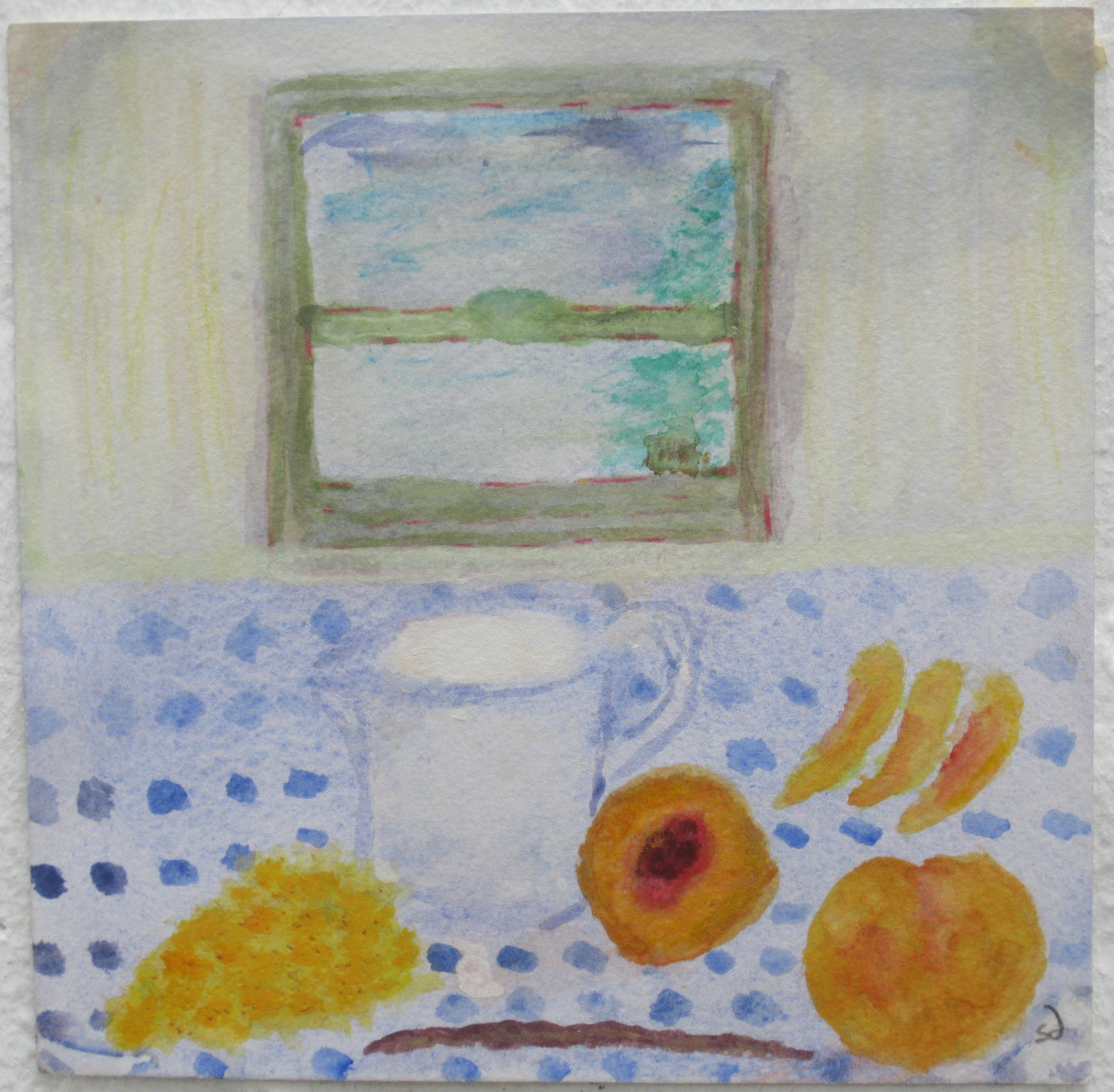
Archives for category: cooking

It’s Saturday, March 1, 2025, which means it’s farmers market day. Before I left the house, I had a helping of breakfast bread pudding with frozen blueberries and my standard cup of freshly ground dark roast decaf coffee with half and half. I brought with me some water, some roasted almonds and an orange because I planned to join a march after my jaunt to the market.

On the way to the market I mailed a gift grocery check for $200.00 from a friend to my credit union and stopped at the bank to get $40.00. I still had $13.59 in cash left from last Saturday. I didn’t expect the $200 check and was grateful to get it: it means I could pay my storage charges today and still buy food to supplement what I already have in the house.

Today I bought two bags of kale for $10.00 and a mixed bag of potatoes, beets, carrots and Brussels sprouts for $16.00. I also bought a thick slab of vegetarian focaccia to eat at the demonstration for $4.00 — this turned out to be a great value, full of tomatoes, artichoke hearts and kalamata olives, Mediterranean flavors that I have missed this winter. Total spent: $30.00.

I spent two hours on the street, holding my sign, singing lustily, and walking from the downtown assembly point to the courthouse with hundreds of people who gathered in support of our National Parks Service. The best sign I saw played off the “Fire Danger” indicator: It said “Being Fired Danger” with the needle in the red for “extreme danger.”

When I got home I put my groceries away and ran a hot bath with Epsom salts: my hips and feet ached from too much standing, but I like being out in the streets with like-minded people and I will be there whenever I can.

Cooking tip of the week: on the days and times you have energy, do some food prep or cooking so that you will have food ready for when you are tired or busy. Right now I have one more serving salad, one serving of bread pudding and a bowl of cooked ziti waiting in the fridge. And Sunday morning, right after breakfast I grated carrots and one beet that will go into the next batch of carrot-tahini muffins (I really like them — can you tell?), and then I continued grating beets, carrots and Brussels sprouts that will go into a pot of borscht. And then I mixed up some whole wheat bread dough and put it in the fridge for a slow rise: when I get back into the kitchen I will coordinate making the muffins, making a pizza for lunch, baking the bread and assembling the soup.

Saturday lunch: part one, on the go: focaccia; part two: Brussels sprout salad (at 4 PM). Snack: black tea with milk, dark chocolate almond. Dinner: baked potato with sour cream and black pepper, pan-fried and steamed Italian sausage and Brussels sprouts. I finished the potato, but only half of the sausage and sprouts — I’ll recycle them as pizza toppings later this week.

Sunday cooking, part two: when I went back to the kitchen I took the bread dough out of the fridge, and began preheating the oven to 425 F while I assembled the soup: crumbled up mushrooms, chicken broth, salt, pepper, garlic, grated vegetables and water. While that simmered, I made the muffin batter. I popped the muffins into the oven and ate soup and leftover salad while they baked, plus put on a kettle for tea. When the muffins came out, I made the tea and let it steep while I put together a quick pizza. While the pizza baked I ate a muffin and drank my tea.

Reducing the oven to 400 F, I transferred the muffins from the muffin tin to a bowl and re-greased the muffin tin for clover leaf rolls. You shape them by rolling three small balls of dough for each muffin cup. I also greased a pie tin to hold a round loaf made from the remaining dough.

Next I needed something to do while the rolls rose in the pans. I grabbed a bag of kale and pulled the leaves into pieces, discarding the stems. When that was done, the rolls were ready for the oven, so I put them in, leaving the loaf to rise on top of the stove. While the rolls baked I made salad dressing out of my remaining tahini — in the tahini jar. When the rolls came out, I put the loaf in the oven and went upstairs to rest.

So, in part of one day I produced most of what I will eat this week: soup, salad, pizza, muffins, rolls, bread, salad dressing. And then I came along after dinner and made what I’m calling “Mounds bar pudding” for dessert: I combined half a can of coconut milk with vanilla and about two tablespoons of powdered sugar, whipped it to blend it and poured some over a bowl of chocolate pudding. If I had had coconut flakes, I would have sprinkled them on top.

Monday breakfast: muffin, home fries, coffee; lunch: borscht, kale salad, whole wheat roll; dinner: Brussels sprout salad, pizza, whole wheat roll, muffin; snacks: whole wheat roll, chocolate, Bengal Spice tea. Spending: $10.03 for tahini and half and half.

Tuesday breakfast: muffin, home fries, coffee; lunch: pizza, kale salad, whole wheat roll; snack: hot cocoa, whole wheat roll, chocolate-covered nuts; dinner: pasta with chicken meatballs, marinara and shredded kale.

Wednesday breakfast: muffin, home fries, homemade mocha; lunch: kale salad, pasta, whole wheat roll; snack: chocolate, shortbread, tea; dinner: borscht, whole wheat roll. Spending: $3.99 one gallon of whole milk.

Thursday breakfast: muffin, home fries, coffee; lunch: kale salad, pasta, whole wheat roll; dinner: pizza, orange segments; snacks: tea, shortbread, roasted almonds, “Mounds bar pudding.”

Friday breakfast: muffin, home fries, coffee; lunch: borscht, kale salad, whole wheat roll; snacks: black tea, chocolate, muffin; dinner: pasta with meat balls, “Mounds bar pudding” with raw almonds.

Total food spending this week: $44.02

Next week, in addition to telling you what I eat and spend on food, I’ll write a bit about creativity.

Dear Readers,

We are in a scary time in the U.S.A. The current administration has fired some federal workers and put others on leave. The current administration has frozen funds that had already been allocated by Congress for a number of state programs, triggering more layoffs and potential layoffs. Billionaire Elon Musk, who will not want for anything, likes to talk about how “pain” is necessary for the rest of us. He also likes to talk about cutting Social Security, Medicare and Medicaid.

I have been living through a frugal period because, right now, I have extraordinary expenses that my income does not cover. I thought I would try to do some good by telling you how I am managing to grocery shop and eat on a limited budget. Perhaps it will give you some ideas that you will find helpful.

The background: I had been living in my elderly mother’s house serving as her primary caretaker 24/7 until she died of cancer in March 2024. In July 2024 I finished packing all of my things and putting them in storage in Washington State. After a period of house-sitting, traveling and bunking with friends, I rented a furnished cottage in Washington in October 2024 while I waited for my brother to sell my mother’s house and distribute to me my share of my mother’s estate.

I teach writing practice and meditation, but my income is not sufficient to pay for rent, storage, legal fees and basic living expenses. First I used some inherited money. Then I used what savings I had. Every month I cut spending where I could.

Food. When I got to Washington, I had no food. And I had Covid. You are not allowed to store any food — even canned goods or foods in sealed packages — in some storage units — so I brought no stored food with me: I was starting from scratch. Fortunately, while I was making my way to my temporary home on the bus, my landlady offered to pick up some basic foods for me. I checked the weekly local Safeway ad for specials and asked her for the following:

Two boxes of chicken broth. Two boxes of red pepper/tomato soup. A dozen eggs. A pound of butter. Five pounds of flour. A package of rolled oats. A pound of sugar. Honey. Baking powder. Baking soda. A gallon of whole milk. A box of Constant Comment tea bags. Frozen raspberries and blueberries. Salt. A hand of ginger. A head of garlic. Carrots. Broccoli. Four pounds of pasta (a weekly special). Whole wheat tortillas. She added two jars of marinara that I did not ask for. And she left me a container of lentil soup thawing on the counter in the cottage kitchen.

These basic groceries allowed me to cook and eat simple meals while I was sick: Oats cooked in milk with berries or carrots. Tortillas and cheese. Broth-based soups with garlic, ginger, vegetables and pasta. I ate the lentil soup the night I arrived, with gratitude, and climbed into my new (temporary) bed.

When I tested negative for Covid nine days later and finished my quarantine I went to Crab Fest where I bought a bottle of blood orange-infused olive oil and three containers of dark chocolate coated English toffee. I gave two of the toffee containers away as hostess gifts for people who put me up in California in November and kept the third one — I dip into it occasionally: it sits on a high shelf in my kitchen.

The blood orange oil is about half-gone. I use it in salad dressings often, along with lime or lemon juice for a citrus punch. This week I put nearly half a cup of it in some carrot-tahini muffins that I have been eating for breakfast, which gave the muffins a wonderful, fruity perfume. I also added some cut-up pitted dates and four crushed cardamom pods to the muffins. I have been eating one for breakfast every day, along with a serving of homemade home fries.

Last week, on my weekly trip to the farmers market, I bought a roasting bag of root vegetables. It costs sixteen dollars and provides enough vegetables for one person for a week with some left for the next week. This assortment contained red potatoes, carrots, Brussels sprouts and a red beet or two. I also bought a couple of onions and some orange-fleshed sweet potatoes. I described the salad I made from thinly-sliced Brussels sprouts last week. I’ve made it twice. I ate two helpings at dinner tonight and it is gone, but I’m going back to the farmers market tomorrow. Sweet potatoes became by go-to dinner this week: I roasted a bunch of them in the oven and then nuked them with red salsa from a jar and ate them with sour cream. For lunches, I mostly ate turkey chili that I had made with onions, garlic, chili powder, dried pinto beans and leftover Thanksgiving turkey breast from the freezer.

The sweet potatoes, onions, Brussels sprouts and root vegetables cost me a total of $32.40. I made the chili last week from ingredients I had on hand except for chili powder, which I bought at the grocery store. If you haven’t moved recently, you probably have some spices and herbs you like on hand. One of the last things I did before I left California was buy a Penzey’s gift card on special ($50 worth of spices for $35): that allowed me to start building up a new collection of spices. I started with sweet spices: cinnamon, nutmeg, crystallized ginger, vanilla because I like to bake.

Monday, because I was running out of milk, eggs, toilet paper, paper towels and sponges, I begged a ride to Grocery Outlet. I brought a list and tried to stick to $100.00 limit. I actually spent $105.00 (pretty close), but that included the paper towels, sponges and toilet paper. I bought mostly protein foods, including cheeses and dry salami, plus pizza crusts (four for $3.79) because I like to make pizza: I can make my own crust, but this is one easy shortcut I’m willing to pay for right now because I can assemble a pizza in ten minutes. I still have mushrooms and sausages at home and I bought cherry peppers to liven things up. I also stocked up on citrus: blood oranges, lemons and limes. And I bought myself two treats: a family-sized box of Cheez-Its (on sale) and a large container of chocolate pudding from a reliable brand. Once again, I can make cheese straws and I can make chocolate pudding, but sometimes I like to give myself a break from constant meal production from scratch.

Here’s a menu of what I ate this week:

Breakfast: decaf coffee with half and half, home fries, carrot-tahini muffin; Lunch: turkey chili, Brussels sprout salad, corn tortillas or homemade bread; Snacks: homemade hot cocoa with marshmallows, toast, butter and jam, carrot-tahini muffin, tea and shortbread finger, Cheez-Its; Dinner: roasted sweet potato with salsa and sour cream OR bread, cheese, salami and cherry peppers.

You don’t have to eat what I eat or like what I like. It does help to save money on groceries if you like to cook, but even people who like to cook don’t like to cook all of the time. My tips for making things better: 1) When you can invest in seasonings that you like. For me, investing in vanilla, nutmeg, cardamom, tahini, tamari, Tabasco and blood orange olive oil has paid off in flavorful meals, which keep me from getting bored. 2) Allow yourself a few treats. Technically, I didn’t “need” chocolate pudding and Cheez-Its, but when you are living frugally an occasional treat helps you not feel deprived or doomed. 3) Try to include some fresh, seasonal vegetables and/or fruit AND make use of dried, canned and frozen alternatives (Right now there is no local fruit here). 4) If you or your family like something, make a lot of it. I don’t mind eating the same things day after day because I like my cooking and I balance my meals, but you can always freeze some of what you make if you don’t like to eat the same thing over and over.

Stay tuned for another installment of frugal eating next week. I already know I’m going to make a beet variation on the carrot muffins. And please feel free to use the comment section to share your own tips and discoveries.

Birthday greeting

Birthday card.

My fifty-sixth birthday finds me at home, taking a rare day off the day job (busking in the Berkeley BART station and the Berkeley Farmers’ Market), spreading sheets of newspaper around parts of the backyard, weighting it down with rocks and bricks and whatever I can find. My friend Celi at thekitchensgarden recommended this method of composting after we determined that I could neither keep chickens nor build and turn a compost bin. Underneath the newspaper are used coffee filters and eggshells. The other vegetable and fruit scraps get buried in big pits. My birthday present requests have included bales of straw, seeds, plants and child-sized garden tools — I garden on my knees or sitting on the ground: I am slightly obsessed with the garden and the possibility of growing some of our own food.

I ate oatmeal for breakfast, graced with dried cherries and maple syrup: our kind friend Mary Katherine treated us with a gift certificate to Trader Joe’s as a housewarming present and we bought ourselves a hoard of delicious cheeses, salmon steaks, grass-fed beef steaks and lamb tips as well as the breakfast goods. We are not eating our meat and fish bounty yet because I am still on a soup or stew kick: this week we ate curried yellow split pea soup with spiced yogurt, taken from the Green’s cookbook, along with loaves of Mark Miller’s Cumin Orange Bread and some Asian cucumber salad provided by my friend Elaine. We also went out to Angeline’s in Berkeley for Johnny’s birthday, where we ate voodoo shrimp (me), crawfish etouffee (him) and banana bread pudding with caramel sauce and whipped cream (we split it). Also, on Valentine’s Day we ate a very spiffy dinner at Zatar, featuring lamb and crab salad and a fish tagine, cardamom ice cream and red wine-poached pears. I know, I know: we are a celebrating couple of people in February — it’s a good month to be us. But when I am not dining finely, out or at home, I am grubbing in the dirt,  or putting containers out in the yard to catch water. I have planted my first Sun Gold tomato plant, plus three red cabbages, three chard plants, one kale and one parsley. The parsley did not survive, soaked by the copious rain of the last few days, but the other things are doing fine: my mint plant is glorious and green, thanks to the local abundance of sun, followed by the welcome rain in my drought-stricken state. It was supposed to pour all day, they said. We did have showers in the morning, but I haven’t seen any real rain today yet.

detail from watercolor garden painting.

Detail from “Garden 101” painting.

My covetousness knows no bounds: I want to put in a Meyer lemon tree and a Bearss lime, a Gravenstein apple, maybe a green fig and a persimmon. Apricots and walnuts are supposed to grow well here, too: the neighbor’s have an old walnut — maybe one will grow itself! Fortunately, my thrift is intact: I cart home bags of leaves from parking lots and gutters to enrich our soil and I bought a mixed bean soup mix to plant in the backyard: legumes are good for the soil, breaking up hard dirt with their roots and fixing nitrogen to nuture future plants. If we get some shelling beans, so much the better. I plan to broadcast black-eyed peas as well, which are delicious fresh from the pod, particularly when prepared an Indian way.

It’s getting onto lunch time: I will probably have some more homemade bread and some cheese, a pear and a pot of tea. Johnny is taking me out for dinner, to Ajanta, my favorite Indian spot, where we will taste the new tasting menu. A garden, a blog, a painting, a nice meal with my true love. What else could I want? (Don’t get me started…)

painting depicts backyard garden.

Garden 101. Sharyn Dimmick 12″ x 12″ Gouache and watercolor pencil

Dear Readers,

The cozy bedroom.

The cozy bedroom.

I did it! On January 5th I moved from my mother’s house in Kensington, California to Johnny’s rental house in San Leandro. I have been here the better part of a month. I have moved the bedroom furniture about fourteen times (hope I’m done now), mostly seeking places for shoes and a filing cabinet. My stereo isn’t hooked up yet (Johnny’s is) and my backup hard drive has gone missing. Fiona the cat has run away and returned twice: now I only let her out in the afternoon before she has been fed.

After three and a half weeks, the bedroom is close to organized. The kitchen and breakfast nook are further behind and there are still things in boxes and plenty of things in the garage and garden shed. The hold-up in the kitchen is storage space: I need a tall shallow shelf for my spices and I need a china cabinet or hutch of some sort: some of my china is sitting on a former bookshelf and another bookshelf has been pressed into service for cookbooks and dry goods, but my best china remains in boxes in Kensington along with a mixer, a blender and other things I have not been able to incorporate into my new kitchen.

Cookbooks, etc.

Cookbooks, etc.

Nevertheless I hit the ground cooking. I think the first meal I cooked for us here was a dish of broccoli-feta pasta. We have also had Thai green curry, chicken sausages and baked potatoes, plus Johnny’s special scrambled eggs with vegetables, which he once delivered to me in bed! At the end of the first week I made Johnny his favorite red beans and rice from his friend Mike Goodwin’s cookbook, Totally Hot. And so began a tradition of making a legume-based soup or stew every week: we can eat it for a few days and I can freeze any that we don’t eat. I also make other soups, including the butternut squash version of this soup.

Susan of Susan Eats London kindly sent me a box of ingredients, featuring lentils de Puy, the small green organically grown French lentils. First I tried them mixed with red lentils in a Green’s recipe for a curried soup which calls for yellow split peas — I had had this soup twice at a Chanukah party: it was memorable and I had been meaning to make it. The verdict: it was better made with yellow split peas and I need to replenish some of my Indian spices, including cardamom.

Then I solicited recipes on Facebook, confessing that, to me, lentils taste like dirt. I received a lot of the usual suggestions: cook them with potatoes, carrots and celery, etc. Some people mentioned lemon. Then I went to Smitten Kitchen, one of my favorite food blogs, and found a lentil and sausage and chard combination. Hmm.

I followed the recipe loosely, using two cups of lentils instead of one and incorporating a quart jar of stewed Sun Gold tomatoes from my  Berkeley Farmers’ Market pal, Tom Gattonelli. I used some Aidell’s sun-dried tomato chicken sausages and ladled each serving over leaves of wild arugula. I did enjoy the soup: the special ingredients ameliorated the dirt flavor and the soup got better and better as it sat. I did not, however, make Deb’s garlic oil garnish.

Baking supplies.

Baking supplies.

The star of the kitchen is a butcher block cart: I traded yet another bookcase to my friend Elaine for it and I use it everyday. Johnny likes to sit at it and eat, but I like to use it to chop and mince and slice. I have made two shelves below the cutting board into a baking pantry, containing my rolled oats, unbleached flour, cornmeal, sugars, baking soda, baking powder, nuts, rice, chocolate and dried fruit. The rolling pin and measuring spoons hang on small hooks and the biscuit cutters, pastry cutter and dry measuring cups fill the small drawer.

Earlier this week I visited Thrift Town, a short walk from the house and scored copper-plated storage canisters and a glass casserole dish without a lid. By fitting a pie plate over the top I had what I needed to cook baked beans, the legume recipe of the week, pinto beans layered with chopped onions and minced bacon, mustard sauce and molasses. Johnny loved them and I said, “They are really simple. Even Johnny could make them.” I told him he had done the hard work of chopping the onions and preparing the bacon, that the oven did most of the rest. Just like a New England housewife of old I used the slow oven to make an accompanying Indian pudding.

Cozy breakfast nook with canisters.

Cozy breakfast nook with canisters.

Next up? I have potato water sitting in the fridge crying for me to make a loaf of bread — did you know that the cooking water from potatoes is a terrific bread ingredient? —  and I have ripe Meyer lemons asking to be turned into a lemon sponge pie. Plus, the sour half and half has accumulated again. From this we make waffles, biscuits, cornbread and muffins: because I got a box of organic pumpkin puree from Grocery Outlet this week we’ll probably have pumpkin-walnut bread or muffins.

Meanwhile, I commute to Berkeley up to six days a week to sing at the BART stations and farmers’ market, do odd jobs for my friend Elaine, try to keep the cat happy and settle into my new cozy life with Johnny (which includes band rehearsals on weekends). San Leandro is sunnier than my Kensington yards so once I have pickaxed the hard pan in the backyard I will get some vegetables going — legumes, of course, so that their roots break up the clumped soil: I’m hoping for sugar snap peas and bush beans, perhaps red or white clover for the bees, too. And Elaine, who giveth all good things, has provided some iris and muscari bulbs so I’ll have to see if I can get them in the ground somewhere before I write the next post.

When I began this blog in 2011 I was receiving a box of produce every week from Riverdog Farm and sometimes supplementing my produce box with additional items from the Berkeley Farmers’ Market on Saturday mornings. I was painting watercolors of food subjects twice a week to illustrate what I was cooking, eating and buying. In October 2012 I discontinued my produce subscription because I could no longer spare the twenty dollars a week it took to bring all of that fresh, organically-grown produce into the house. Mid-October I took up a career of busking at the local BART station, playing and singing for tips and the occasional CD sale. By November I had added shifts at the Farmers’ Market on Center Street.

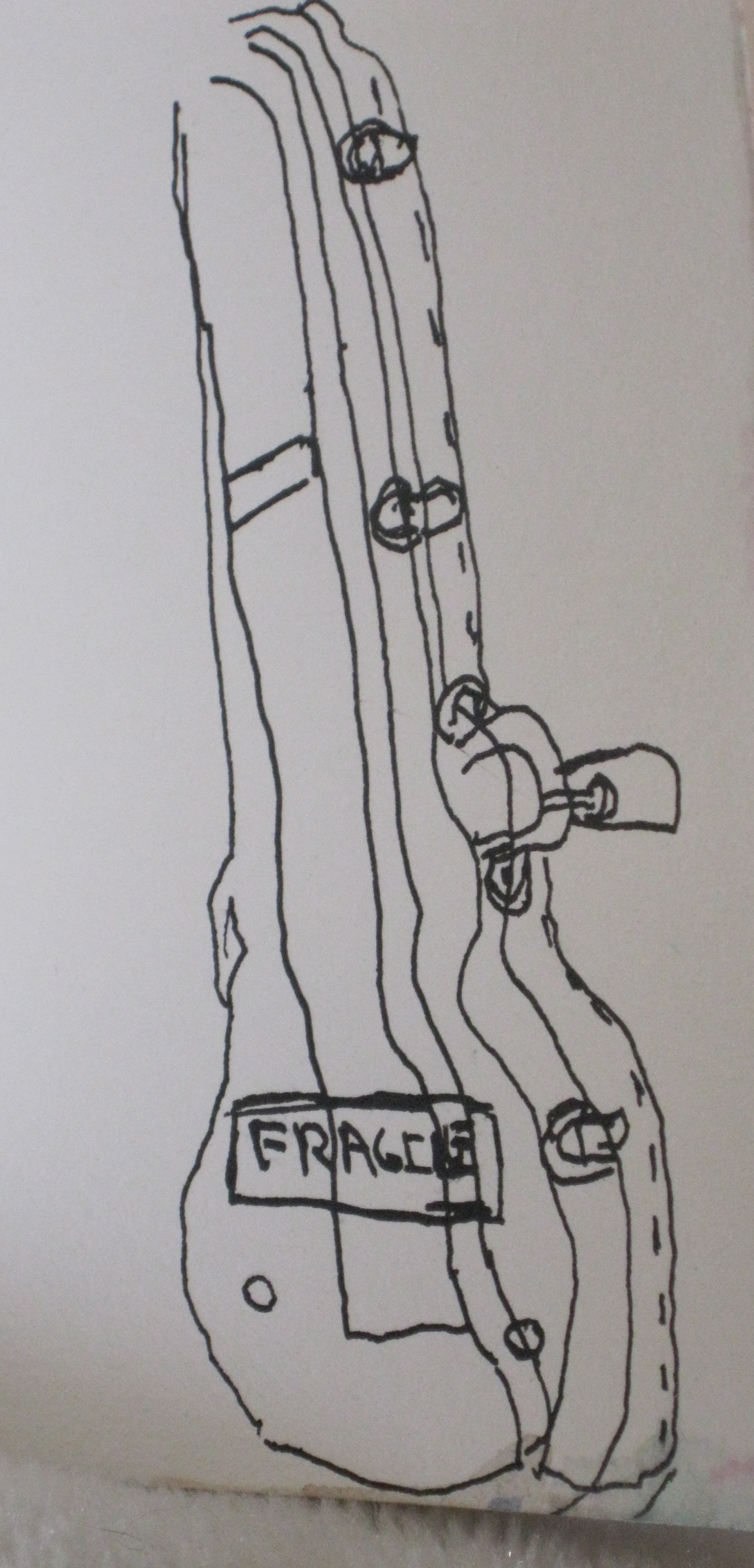
Guitar Case. 5"x 7" Pen and Ink drawing. Sharyn Dimmick

Guitar Case. 5″x 7″ Pen and Ink drawing. Sharyn Dimmick

For three and a half months I have been singing and playing guitar in public places, earning whatever passers-by choose to pay me. I do not recommend this as a way of making your living — if I did not live at my mother’s house I would certainly be on the street for more than a few hours a day. I play for two or two and a half hours a shift, seldom repeating a song, and only taking breaks to drink water, answer questions or sell CDs. I arrive promptly for my shifts, thank everyone who throws so much as a penny in my case, sing my songs in a different order everyday so that no one gets bored with hearing the same one as he or she hurries to catch their train or buy their potatoes.

I am not the greatest guitar-player in the world, but I am competent: I can accompany the types of songs I sing. I have found that daily performing takes me back to songs I learned early in my life when I spent hours listening to Joan Baez and Joni Mitchell records. I play the fingerpicked standards that all guitar students learned to play: “Make Me a Pallet on Your Floor,” which I first heard the year I lived in Ireland, and “Railroad Bill.” I play Bob Coltman’s “Before They Close the Minstrel Show” which I first heard when I was a graduate student in folklore in North Carolina. I play James Taylor’s “You Can Close Your Eyes,” which I learned in high school from some other women who played the guitar. While I have a deep repertoire of traditional folk songs I find that many songs I love are too slow for public playing: people will tolerate Joni’s “That Song About the Midway” and Sandy Denny’s “Who Knows Where the Time Goes” occasionally, but they seem to like a steady diet of acoustic blues and Bob Dylan songs.

Most musicians will tell you, to quote my friend Carol Denney, “Practicing doesn’t usually make you worse” (It can if you practice your mistakes so many times that you learn them by heart: then you have to unlearn them). It is unlikely that I have gotten worse from the daily practice of my craft in public — I now know I can play and sing for two and a half hours standing up by myself. I might get tired. My guitar might go out of tune and require retuning, but I now have the stamina to play for two and a half hours without stopping.

Back in a former life, I used to wish I was “a real musician.” I defined “a real musician” as one who plays everyday. I am perilously close to achieving that status now that I play six days a week in public — if I practice at home on the seventh day I have become “real” for that week.

Harmony 3. 5" x 7" pen, ink and watercolor pencil. Sharyn Dimmick.

Harmony 3. 5″ x 7″ pen, ink and watercolor pencil. Sharyn Dimmick.

Does it make me happy? Yes and no. I am itching for new repertory and must make the time to develop it when I am at home. I am hungry for new guitar skills (Fortunately, I am paired up with a man who can teach me licks and tricks in our spare time). I have fallen in love with the guitar style of Dave Van Ronk, plus some old guys from the 1920s whose records he learned from. At the same time, it is dispiriting to play for two hours and receive two dollars and a quarter on a day when I debuted two new songs and I gave it my all. January has not been kind to me as a busker.

The lack of fresh food means that I have few recipes to write about: every now and then I cobble together a delicious green fish curry or a curried apple, carrot and romanesco soup, but I eat a lot of pinto beans and spoon bread, scrambled eggs, peanut butter and jelly. My Farmers’ Market purchases last week were limited to two bunches of carrots, one of which I ate, Sawsan-style, grated into my morning oatmeal. The other bunch serves as crunchy food at lunch. I cook breakfast for Johnny when he’s here, make soups and bake bread, but I miss the variety of greens and citrus and roots that I complained of seeing too much of another January: now I see it as a wonderful and challenging abundance from which to work. I do sometimes look in on the wonderful blogs of others, but I don’t have the amount of free time I used to have.

I have acquired a writing student, who will start working with me in February for four weeks. I am excited about teaching Natalie Goldberg’s writing practice again.

I appreciate anyone who stops by to keep up with my story here, any subscribers or casual readers who have wondered at my long absence. It took me most of January to locate my camera battery recharger, without which I had no hope of illustrating anything. I leave you with some drawings of my old Harmony guitar, my constant companion in this latest phase of my life.

Photo of Sharyn Dimmick's illustrated cookbook (aka The Kale Chronicles cookbook)

Photo shows cover of Sharyn Dimmick’s cookbook, Seasonal Recipes with Paintings, developed before the beginning of The Kale Chronicles blog.

Long before The Kale Chronicles blog began I frequently wrote about what I was cooking each week. In 2010 I assembled a limited edition cookbook called “Seasonal Recipes with Paintings,” featuring a recipe for each month of the year with an original painting. I gave these for holiday gifts. For half of 2010 and half of 2011 I lurked about on the A-List Blogging Club, learning about blogging and what I did and did not want to do with my maiden blog.

Then one night I was talking to my friend Neola on the phone and she said, “Why don’t you write about food? Everyone always likes it when you write about food — I even like it and I don’t eat vegetables.” It’s true: whenever I wrote about food my writing friends said things like “You should do a cookbook” and “I can’t read your writing when I am hungry.” Neola suggested that I write about what I got in my produce box each week and what I did with it. Then I happened upon a post called “The Kale Chronicles” on the net and I knew I had my blog title because I frequently struggled with making kale edible, despite the  fact that it had been showing up in my box regularly for the past several years. I painted a “cover painting” for the blog, now in a private collection in Florida and chose an image of it for my gravatar — that little signature picture box you will see in the Comments section. And I decided I would paint for the blog, rather than take photos because I enjoy painting more. The lurking, the phone call, the writing, the produce box, the inspiration for the title, all came together to create The Kale Chronicles, which is a year old today. I thank Neola, the A-List Blogging Club, the practice of writing as taught by Natalie Goldberg and every single one of the 106 subscribers and 15,699 visitors who have taken the time to read the essays, cook the recipes, look at the paintings, buy the music, wish me well when I was ill, encourage me to go on and be or become my friends online and in the real world. I am deeply grateful for your company and support.

One of the things that I am most grateful for in my adult life on a daily basis is that I can eat whatever I like. When I was a child I had to eat everything on every dinner plate no matter how I felt about it — I don’t mean I had to try things or taste them: I had to eat “a reasonable portion.” If I served myself a portion that my father did not deem reasonable, he would serve me twice as much. When I grew up I vowed that I would never eat a long list of foods again: mayonnaise, avocado, English peas, asparagus, tuna, liver, etc. I learned to eat some formerly despised foods, including cauliflower and eggplant by preparing them differently than my mother did. But the big deal is that I get to decide what I eat now.

Some people do not get to decide what they will eat. Some people are poor enough to eat whatever they can get. Others have restrictions due to illness or sensitivities. My friend Lauren, one of my writing pals who studies with Natalie Goldberg and was with me in France, follows a restricted diet due to a poorly understood autoimmune disease. She was happy in France, eating a wide variety of non-chemical, non-genetically modified foods, but then she came back to the United States and was finding it hard to get quick, tasty healthy meals on her table.

And then I had an idea: I had seen her food list in France and my blogging anniversary was coming up. What if I let the food blogging community see her lists of what she could and could not eat and then let bloggers send in recipes for Lauren? So, today, on The Kale Chronicles’ first anniversary I am pleased to announce The Lauren Project, a recipe contest that keeps to the foods Lauren can eat. Below you will find 1) a list of foods Lauren can eat and 2) a list of foods Lauren cannot eat. It is important that you look at both lists when designing your recipes for her because using a restricted food will mean that she cannot try your recipe.

Lauren's chile potholder prototype.

Lauren’s chile pepper pot holder in process — the real thing is way cuter.

Prizes. Yes, there will be prizes. Lauren and I conferred on this. Lauren will award a homemade chili pepper potholder for a winning recipe. I will award 1) a signed Kale Chronicles’ cookbook (made before I started the blog, featuring fourteen recipes and thirteen prints of my watercolor paintings) 2) an original painting (winners’ choice) 3) a “Paris” CD (full-length folk music CD, featuring songs by Joni Mitchell, Leonard Cohen, Richard Thompson, Shelley Posen and yours truly, which includes a booklet of original paintings and all of the lyrics to all of the songs). Also, anyone within the U.S. or Canada who enters a recipe in The Lauren Project will be eligible for free shipping for any painting he or she purchases from me in 2012.

Here are the ingredient lists. Please read them carefully.

1)”Yes” Foods:  Grains: White rice, brown rice, red rice, black rice, wild rice, quinoa, cornmeal, millet, gluten-free oats

Vegetables: broccoli, cauliflower, Brussels sprouts, spinach, lettuce, kale, collards, chard, mustard greens, sorrel, summer squash, winter squash, beans (except pinto and lima beans), peas, corn, asparagus, artichoke, fennel bulb, leek, garlic, shallot, turnip

Fruit: apples (tart varieties only), blackberries, raspberries, boysenberries, currants, lemon, lime

Dairy: eggs, cows’ milk yogurt

Meat and fish: Buffalo, lamb, game meats, beef and chicken in moderation, some fish (see exceptions on other list)

Nuts and legumes: cashews, macadamia nuts, pecans, almonds (in moderation), pumpkin seeds, sunflower seeds, garbanzo beans, black beans, mung beans, cannellini beans, lentils, adzuki beans, red beans, black-eyed peas, white beans

Seasonings: salt, ginger, cumin, coriander, turmeric, cardamom, anise, rosemary, sage, cloves, vanilla.

Other: olive oil, coconut (including coconut milk), organic non-genetically-modified sugar (must use sparingly). Maple syrup (also use sparingly — Lauren needs to limit her intake of all sugars).

2) “No” Foods: Must avoid — DO NOT USE IN YOUR RECIPES — : grains containing gluten — no wheat, rye, or products made of them. No mushrooms or fungus of any kind. Nothing containing mold — no blue cheeses, moldy cheese rinds, etc. No goat cheese or goat’s milk. No cheddar cheese. No yeast, vinegar, mayonnaise, alcohol, caffeine, honey, agave, cocoa, chocolate or artificial sweeteners. Nothing fermented. No soy or soy products. No basil, oregano, paprika, chili, sesame, cinnamon or mint. No beets, cucumber, eggplant, bell pepper, chili peppers, potato, tomato, cabbage, onion, avocado or tomatillo. No blueberries, strawberries, melon or peaches. No pork, turkey, ostrich, tilapia, shellfish or mollusks (mussels, clams, etc.). No hazelnuts, walnuts, Brazil nuts, pinto beans or lima beans.

A few words from Lauren:

i am so excited! 

one of my biggest issues is breakfast. i just can’t seem to manage cooking that early in the morning which means i usually just skip breakfast and go straight to lunch (or eat breakfast at 11:30). my favorite breakfast is beef and butternut stew – i do best with heavy protein and very few grains – but i can’t eat it every day. i’m also hungry for one-pot meals that i can cook in bulk and freeze. my last request is for a simple way to get more veggies into my diet. I don’t do well with raw, so things that i can cook quickly with minimal prep (maybe also some good pre-prep tricks for processing veggies when i buy them so they are ready to cook at a moment’s notice). oh, and one more thing… eggs are best cooked in things or scrambled really well. i don’t always do very well with whites. if anyone has questions regarding items not on the lists i’m happy to answer inquiries (mostly they are borderline foods that are okay sometimes or when prepared in certain ways.
thank you so much for doing this and for even thinking of me. it means a lot.

Because we are being kind to Lauren, we ask that you get your grains and organic sugar from reputable gluten-free and non-GMO sources. Organically grown things are less likely to cause less trouble than conventionally grown products. But you can experiment with what you have in your cupboards and then write the recipe for organic, gluten-free products.

Photo of cover of Paris CD by Sharyn Dimmick.

Photo shows front cover of Sharyn Dimmick’s music CD, “Paris.”

Deadline: You must submit your recipe(s) to The Kale Chronicles by midnight Pacific time on August 31st, 2012. You may submit them in the Comments field here, or post them in the Comments field of The Lauren Project page. (Look above and click on it). We will announce the prize winners in a September blog post. You may also post your recipes on your own blogs with the tag “The Lauren Project” and a link to this contest post, but if you don’t send them to me here as well I might miss them (and we wouldn’t want that).

I was working on a recipe for Lauren this week, but then I felt the irresistible urge to go to another music festival in Sonoma County, stay up till 2 AM, flirt with some men, sing some songs. To do that, I had to bake a Gravenstein apple pie, make a Greek salad, cough up twenty bucks, wash my hair and spiff up. I came back tired and happy with my hair full of campfire smoke. I will keep working on the recipe and post it by the deadline, hoping to inspire you to create recipes for Lauren as well, but I might inspire you to run off to folk festivals and flirt with guitar-players. Oops. C’est la vie.

Love,

Sharyn (aka The Kale Chronicler)

List update. We have just added “coriander” to the Yes list as of 8/23/12.

Original painting of many-leaved tree with roots.

The Lovely Blog Award. 6″ x 6″ watercolor pencil on paper. Sharyn Dimmick.

Last week Shira of In Pursuit of More tagged me in a relay, charging me with writing about hope and John Clinock of artratcafe generously bestowed on me the one lovely blog award. I am honored by the kind intentions of my fellow bloggers and will do my best to live up to their trust.

A major tenet of the two forms of Buddhism I have practiced is the practice of letting go, letting go of outcomes, letting go of expectations, letting go of desires. This does not immediately sound like fun, does it? That’s because we want what we want, even if wanting it is causing our suffering. I am personally undertaking a course of consciously letting go these days because I find myself falling in love. First I fell in love with a city, a country, a way of life, when I went to France. Then I fell in love with my guitar again, starting to play daily after a hiatus of a year.  I fell in love with my room, starting to see ways that it could be improved. Every summer I fall in love with open water swimming when the days get warm enough to swim at the cove down in the Berkeley Marina. And, as you might have expected, I am somewhere on the continuum of falling in love with another person with all of that continuum’s abundant symptoms: sleeplessness, excitement, fear of the unknown. There is pleasure in falling in love and there is pain. There is fantasy and reality, hope and dread. I find that the easiest approach, although it is hard to put into practice, is to treat the entire experience as a practice, to work with whatever it brings to me in any given moment: if I am sleepless, get up and read or write. If I am inspired to write a love song, write a love song. If I am scared, feel the fear.

One aspect of treating life as a continuous practice is that there is no room for hope. Hope causes us to leap into the future, into some better world that is different from what we are experiencing right here, right now. When I am right here, I can respond to my fear or excitement as it occurs; when I am jumping into hope, I lose my opportunity in the present moment. My teacher is fond of saying “The love you want is no other place.” And, I, of course, am hoping that she is wrong, that there will be glorious love in a field of flowers some other day. But I know what she means: our only chance is this moment, what we find there now, where we find ourselves now. We can’t count on having another moment, better or worse.

What we can count on is that things will change: if I am sleepless for three weeks running, during week four I will fall into a deep sleep when the body needs it. The foods of the changing seasons that I highlight on The Kale Chronicles reveal this in a beautiful way: now there are Gravenstein apples and gypsy peppers, summer squash and tomatoes, cucumbers, green figs, the first grapes, blackberries, melons. Soon eggplants will come in and peaches will begin to fade away until next summer brings the new crop. I stir a couple of spoonfuls of apple crisp into my morning oatmeal and plan another round of zucchini-feta pancakes for lunch, topped with Sun Gold cherry tomatoes. Next month, perhaps next week, I will be eating something different. Food becomes more satisfying when you are not reaching for raspberries in December and tomatoes in February, when you eat what there is now, choosing your favorites, perhaps, but working with what you’ve got.

Love cannot resist reaching into the future, imagining scenarios, conjuring kisses out of the air. So let it. Just know that the fantasies, the daydreaming are a current and temporary state: mine them for their images and ideas, laugh at them and at yourself, an ingenue in a fifty-four year-old body. Watch as your mind tosses up Loggins and Messina songs (Where did they come from?). Sing them if you want — no one needs to know.

What do I hope for? I hope for the courage to face my life, the courage to be in whatever state I find myself in until that state changes. I hope for the courage to respond authentically to whatever I need to respond to. Today I thank Shira (who is in La Belle France) for encouraging me to meditate on hope and John who says lovely things about The Kale Chronicles. With my one-year blogging anniversary coming up fast (next Sunday) I tell you that I had some hopes for the blog: I hoped a few people would like my recipes. I hoped my writing would acquire a wider platform. I hoped a few people would buy my paintings and maybe even my music CDs. I hoped that I would find some writing students who want to do writing practice. Some of that has happened. But writing The Kale Chronicles has become much bigger than that because I have discovered an entire community of like-minded souls, people who care passionately about what they eat and where it comes from, but, beyond that, care about how they live their lives, treating each other with kindness and humor. I started a blog and found myself in a whole new community. I am made welcome here as I am made welcome in my communities of writers and singers and artists. And I will be calling on you soon with a special anniversary challenge, The Lauren Project — I know you will step up to the plate. There will be prizes and glory and the opportunity to help a lovely young woman find more joy in the kitchen.

Original watercolor painting shows ingredients for cucumber raita.

Cucumber Raita. 6″ x 6″ watercolor pencil on paper. Sharyn Dimmick.

In the meantime — back to the present — a simple raita recipe for cucumber season, courtesy of Padma, my Indian roommate in college, who taught me how to make it. The secret to good raita is no shortcuts — you must cut the cucumber into spears and de-seed it with a knife and then you must slice each spear into small bits with the knife — if you grate it, the cucumber turns watery. Raita is all about texture. So set aside an hour to make raita — you won’t be sorry.

Cucumber Raita

Peel 2 cucumbers (or use an Armenian cucumber, which requires no peeling). Slice each cucumber lengthwise into quarters, sixths or eighths, depending on its circumference. Remove all of the seeds. Slice the now seedless cucumber into small pieces and put in a steel or Pyrex bowl. Grate 1/2 of a fresh coconut into cucumbers. Add one bunch chopped cilantro.

Heat a small amount of peanut oil in a small skillet. When oil shimmers, add 1 tsp of mustard seeds and 1 dry red chile. Fry for a few seconds until mustard seeds pop and add chile, mustard seeds and oil to cucumber mixture to season it. Add plain yogurt and salt to taste, making it as creamy or as light as you like.

Food notes: You can, of course, make this with dessicated coconut — it’s just not as good as when you use fresh. Make sure your coconut is unsweetened — sugar in raita is gross. You can eat the raita as a salad, as a side dish with an Indian meal, or simply mixed with rice.

One Lovely Blog Award: I’m supposed to give you seven random facts about me. Here goes:

1) I’ve written two new songs in the last week, “Ingenue” and “The Werewolf.”

2) I like to eat pie for breakfast, although I usually eat oatmeal or polenta cooked with milk and sweetened with seasonal fruit.

3) My favorite color is kelly green. I also like lavender and blue, crimson, claret, raspberry, all balanced with plenty of black.

4) I am a Pisces, Sagittarius rising, Gemini moon, Venus in Aquarius.

5) Although I am a folk musician and will always be one, I have always (always?) had a fantasy of singing with a rock band.

6) If I could only eat one type of food for the rest of my life, it would be Indian food.

7) This bull needs a big meadow: don’t put me in a pigeonhole — I won’t fit.

Now I need to pass the award to fifteen of you. In no particular order

1) Celi at The Kitchen’s Garden — Celi writes about sustainable farming, a subject dear to my heart. Beyond that she is fun and knows how to tell a story.

2) Shira at In Pursuit of More has endeared herself to me by her generosity and her commitment to simplicity.

3) The Caerus blog, a brand new blog, showcases the artful thoughts of Suzanne Edminster, Karina Nishi Marcus and a growing cadre of guest artists. Look for it on Thursday mornings and go back to read the back archives.

4) The Literary Jukebox. I found this one this morning. Maria Popova posts a literary quote and a song everyday. Great for literate music junkies.

5) Debra at Breathe Lighter. Debra shares all aspects of her life in San Gabriel — recipes, photographs, pet stories, field trips, music, all accompanied by her enthusiasm for life.

6) John at artratcafe provides an art education by featuring the work of many diverse artists. He writes poems, too. Foodies will like his brilliant posts on food that combine illustrations, literary quotes and recipes with a certain je ne sais quoi.

7) John at From the Bartolini Kitchens writes an ongoing love letter to his Italian family and the foods of his culture. Want to make cheese or fresh pasta? See John.

8) Eva Taylor of Kitchen Inspirations  knows how to put it all together: the dress, the shoes, the place settings. Lately she has been experimenting with healthier, lighter versions of favorite foods, keeping to a low-carb diet.

9) Betsy of Bits and Breadcrumbs cooks food I want to eat — I’ve said it before and I’ll say it again.

10) My writing pal Bob Chrisman has branched out and now writes a memoir-type blog called swqm60. Check it out.

11) Jane Robinson at Art Epicurean posts abstract paintings and encouragement for creative types.

12) My old friend Maura writes theonceandfutureemptynest about her life with husband, children, grandchildren, parents, dogs, running shoes, kayaks and literary ambition. A graceful writer, her thoughts will resonate with the sandwich generation.

13) I’ve already sent you to look at Deby Dixon’s photos on Deby Dixon Photography.  Have another look, please.

14) Can’t leave out my pal, Movita Beaucoup! This chick is funny. And an incredible baker when she leaves off the Crisco frosting. And someday she is going to buy a painting (but you could beat her to it and buy up all of the best ones first. Just saying…)

15) Your nominee. Please use the comments to tell us all about the blogs you love the most, the ones you open first everyday, among other things. We have free speech here.

Original watercolor painting of Shakespeare and Company, a Paris Bookstore.

Shakespeare and Company (Upstairs). 5″ x 7″ Ink and Acquarelle on Paper. Sharyn Dimmick.

Fourth of July has come and gone, but there will be many more grilling opportunities (I’ve heard some of you even grill in the snow — you know who you are). I spent the glorious Fourth where I usually do, at a backyard barbecue and singing party in Martinez, CA. My friends there have a small swimming pool, a gas grill and heaps of hospitality. Like-minded souls gather there year after year to play tunes on fiddle, guitar and concertina, to sing chorus songs and solos and, of course, to eat.

Every year I bring something different to grill. One year it was marinated steak. Another year it was my Mom’s traditional chicken recipe. Another time it was lamb shish kebab. One year I made homemade hamburger buns.

This year Mom happened to notice that Smart and Final had a Fourth of July special on pork ribs for $1.79 a pound. We went and looked at them. They were huge slabs of ribs, nine pounds or more. The butcher’s assistant mentioned that they also had baby back ribs, although they had none out. He encouraged us to shop for awhile and come back to get them. We strolled around the store, looking for inexpensive pumpkin (We found it in number ten cans) and molasses, which we bought by the gallon for $17.00. When we came back to the meat department the ribs were in the case: the only problem was that they were three times the price per pound of the regular spare ribs.

Original watercolor painting shows platter of barbecued spare ribs.

Spare Ribs. 8″ x 8″ ink, acquarelle and gouache on paper. Sharyn Dimmick.

We discussed this briefly and bought a nine-pound slab of regular ribs. Once home, Mom hacked it apart and stashed some in the freezer while I went to work mixing up my favorite dry rub, cadged from a Ray Lampe recipe in a newspaper article and modified to include fresh garlic, to skip the allspice and to eliminate horrendous amounts of salt (it is still plenty salty). While I mixed up my spices, salt and sugar, she put the ribs in a Dutch oven, covered them with water and simmered them on the stove. Since she forgot about them, they parboiled for two hours, but she says you can do it in forty-five minutes. The long cooking makes them exceptionally tender though and softens the bones themselves so that you can actually chew on them like little foxes if you are so inclined.

Dry Rub for Spare Ribs (which also works on chicken)

1/4 cup raw sugar

1/4 cup brown sugar

1/4 cup white sugar

1/4 cup kosher salt

1/4 cup paprika (I use some hot and some sweet)

1 Tbsp each black pepper, dried onions, cumin and chili powder

3 cloves minced or pressed garlic

1 tsp each dry mustard and coriander

1/2 tsp cayenne.

Combine all ingredients in a bowl and mix well. Place spare ribs in shallow container. pat rub generously onto ribs, both sides. please. Let sit in refrigerator. Mine marinated for eight or nine hours before grilling, all told. Four is probably adequate. You will have more dry rub than you need, most likely. You can save it in a glass container for another use, or you can put a pot of pinto beans to soak and use the excess rub to season the beans after you cook them.

While the meat sits, absorbing flavor from the dry rub, you can make a simple barbecue sauce. This sauce is not especially sweet, not especially vinegary, not especially tomato-y, not particularly strong of molasses — it is a good middle-of-the-road sauce that seasons without calling attention to itself, infinitely modifiable to suit your tastes. It is based on a recipe from our beloved Betty Crocker Picture Cookbook (They call it Texas Barbecue). While the original sauce calls for tomato juice, we started from a partial can of whole tomatoes that we had in the freezer and I used 1/4 tsp cayenne because we don’t have a 1/8 tsp measure and our cayenne is kind of old. I also used a bit of a “secret ingredient” — a few teaspoons of Prego left in the saucepan from a prior pasta meal. We nuked the tomatoes to defrost them and then did our best to squeeze the juice from them and break up the pulp, using a potato masher.

“Texas” Barbecue Sauce

Combine in saucepan:

A few tsp of Prego marinara (not essential)

1 cup juice squeezed from canned whole tomatoes

2 Tbsp brown sugar

1 Tbsp paprika

1 tsp dry mustard

1/4 tsp chili powder

1/4 tsp cayenne

2 Tbsp Worcestershire sauce

1/4 cup cider vinegar

1/4 cup ketchup

1/2 cup water

Simmer on stove for 15 minutes until slightly thickened. Puree in blender to remove any hard bits of tomato pulp.

I grilled the ribs for about ten minutes a side at the party — just enough to develop a little color and grill flavor. I put the barbecue sauce on the table so that people could help themselves. Mom and I were eating leftover ribs two days later and she commented that they were flavorful with no sauce at all — that’s the dry rub.

The dinner table held tortilla chips with salsa and guacamole, fresh corn, platters of fresh tomatoes with basil, feta and olives, bowls of mixed berries and cherries, fruit crisp and three different potato salads. The chief discussion before the singing got going was about books and reading. Some of us still prefer to read paper books that we can hold in our hands, like those on the shelves at Shakespeare and Company in Paris, while others pointed out the convenience of storing large libraries on their Kindles while traveling. Someone mentioned the ecological cost of paper and I countered with the ecological cost of toxic e-waste. Paper can be made of hemp or bamboo: bamboo, in particular, is a fast-growing grass — making books does not have to involve cutting down trees, but making Kindles currently involves manufacturing plastics with their unknown additives (industry secrets) and incomplete disposal: most hard plastic just breaks into smaller and smaller pieces and presents a hazard for wildlife. Just saying. Everyone at the table still reads, which gives me hope for the future (but nobody’s children were there this year). At any rate, I hope you enjoy some time this summer with a good meal, friends and a good book. And if you get to Paris, have a look at the upper room at Shakespeare and Company, a reader’s and writer’s paradise.

Things to Eat Right Now ( at least if you live near me in Northern California):

Breakfast polenta with peaches

Zucchini-feta pancakes

“Spring green” is a common phrase and color name. The spring in California is rich with greens: before we get to the reds, blues and yellows of summer we have pea green, asparagus green, artichoke green. And in the farm box we have beet greens, Swiss chard, kale, green garlic, spring onions, lettuce,  bok choy and peas. It is little wonder I was drinking my greens recently, shoving some spinach into a smoothie to make way for new rounds of greens.

Painting shows calzones on pizza pan and ingredients.

Green Calzones. 8″ x 8″ Gouache on paper. Sharyn Dimmick.

I have made pizza for many years and somehow never made the leap to calzones. The dough is the same, the famous Cheese Bread sourdough recipe made with a cupful of whole wheat flour. The technique for shaping calzones is the same: you begin with eight small disks instead of three larger ones and go through the dimpling and pulling process.

I might have gone another few years without making calzones, except that Betsy’s recipe for calzones caught my eye and lingered in my imagination. Betsy made hers with fresh kale. I made mine with leftover cooked chard. I followed Betsy’s guidelines for the cup of feta and the 1/4 cup of dry cheese, but I used pecorino Romano where she used Parmesan.

Most of you know the drill for sourdough by now: if you want sourdough pizza, bread, waffles or biscuits you have to make up a sourdough starter. You need to feed it occasionally, but if you use it once a week or more it doesn’t take much care and feeding. I fed my starter yesterday morning with a half cup of water and a half cup of unbleached flour, shook it a few times and left it out on the counter. Come afternoon I came back and made pizza dough with a half cup of starter, 2 and 1/4 cups flour, 1 cup whole wheat flour and a generous teaspoon of kosher salt. Read the gory details here.

This morning I took my pizza dough out of the fridge at eight. At 10:22 I removed its dish towel, formed the dough into eight small rounds, floured the damp towel and let the dough sit while I made filling. I also put my pizza stone in the oven and cranked the heat up to 450, deploying three racks: one for the pizza stone, two for the trays of calzones.

First step: dump cooked chard from frying pan into pizza dough bowl (Why do more dishes than you have to?). Heat same frying pan over medium heat while you slice the white of a small leek and the shoots of some green garlic, wipe 3/4 of a pound of mushrooms with a clean damp cloth and slice them. Add olive oil to the skillet and saute your leeks and garlic while you continue to slice mushrooms. Add leeks and garlic to chard. Saute mushrooms in two batches, adding oil as necessary. While you have the oil out, lightly oil two pizza pans. Add sauteed mushrooms to chard, leeks and garlic. Crumble 1 cup of feta into the vegetables. Use microplane to grate 1/4 cup dry cheese over top. Grate some nutmeg to taste and add a sprinkle of red pepper flakes.

At this point, the faint-hearted or fanatically germ-phobic might give this mixture a stir, but I like to work with my hands, so I plunged my hands into the bowl and mixed. Then I washed and dried my hands before turning to the dough.

Using the dimpling and stretching techniques detailed in the pizza post I made my eight disks into eight five-inch circles, one at a time, so that I could fill and fold each calzone before making the next one. Again, I used my hands to scoop filling onto half of each calzone, but the fastidious may use a spoon and the precise may use a scoop or measuring cup, but you will need to use your hands to fold the crust over the filling and seal the edges.

Once your calzones are filled, folded and sealed, give each one slash with a sharp knife to allow steam to escape. I use a stainless steel steak knife. If you keep a clean razor in your kitchen that will work, too.

I put one tray of calzones in while I filled the others. When the second batch was filled and folded I switched the first tray to a higher rack and started the second one on the middle rack. In ten minutes, I switched them again. We like things toasty and brown so the first tray was probably in the oven about thirty minutes. When I took the first tray out I turned off the oven and let the second tray finish cooking from the residual heat of the oven and the pizza stone.

By the way, I did not make the dough green. It is not St. Patrick’s Day. If you eat your spring greens you will see plenty of that color.

Food Notes: Betsy serves her calzones with marinara, which I’m sure is good. We ate ours plain to get maximum crust effects. Variations are legion: you can use any cheese you like, although the combination of a creamy one and a dry one produces a nice texture and flavor without a grease factor. If I could only have two cheeses for cooking they would be feta and Parmesan so Betsy’s choice worked for me, but you could use goat cheese and dry Jack or ricotta and Asiago. If you won’t eat or drink your greens, stick to mushrooms or pile in some meat. I badly wanted to add some roasted red peppers, but I didn’t want the mixture to be too wet, and I would have added sun-dried tomatoes if I hadn’t eaten them all by March. The same dough that makes crisp thin crust pizza transforms into a breadier dough you can hold in your hand when stuffed in this manner. Enjoy.

Blog Notes: Twice in the last week kind persons have nominated me for the Liebster Blog Award, an award for blogs with under 200 subscribers. While “The Kale Chronicles” fits that size, it has been previously nominated more than once. Because it can be difficult to establish how large or small a blog is, I will merely encourage you to visit the folks who nominated me, Peri’s Spice Ladle (Indian specialties) and artratcafe. (original art and occasional wonderfully illustrated posts of food descriptions from literature). I will further encourage you to visit Susartandfood. (I go for the stories).

When I got home Sunday afternoon from a weekend getaway with a bunch of singers and musicians I found my mother putting polyurethane on the kitchen cabinets. Oh dear. I do not like to be around chemicals of any description, particularly in food environments (What my mother does is up to her, and pretty much always has been). I knew she planned to work on the cabinets while I was away: what I didn’t know was what we could possibly eat for dinner since I wasn’t going to spend any time I didn’t have to in the kitchen.

Fortunately, Mom reminded me, she had put some chicken in a marinade on Friday morning. We could have that with baked potatoes and a quick spinach salad. I nuked a couple of red potatoes in the microwave for four minutes and then set them and a pan of chicken in a 325 degree oven. Forty-five minutes later dinner was ready and I was only in the kitchen for about ten minutes.

Painting of main ingredients for chicken marinade.

Fleeing Chicken. 8″ x 8″ gouache and watercolor pencil. Sharyn Dimmick

Mom has made this marinade since I was a child. It has just five ingredients: soy sauce, fresh garlic, fresh ginger, canned crushed pineapple and a little vegetable oil. Because it uses canned, bottled, dried and frozen ingredients you can make this any time of the year. Warning: Even if you live in the tropics, please do not attempt to make this marinade with fresh pineapple. Why? Because the enzymes in fresh pineapple will eat into the meat protein — if you leave it in a few hours the meat will look shrunken and chewed. If you leave it in overnight your chicken will turn into an unsightly mush. How do I know this? Because I used fresh pineapple once and only once in this recipe.

Nowadays we use skinless chicken — either it comes that way from the store or we skin it ourselves — but in my youth we used to leave the skin on. You can prepare it either way. This time we used boneless, skinless chicken breasts. but we have made it with thighs, drumsticks, bone-in half breasts. We like to leave the chicken in the marinade for three days so that the meat absorbs plenty of moisture and flavor. You can cook it after a day or two if you want.

If you can get fresh chicken, it will taste better and have a softer texture than chicken that has been frozen, but frozen chicken will work fine as long as it has a chance to thaw and absorb marinade.

When we make this, we open a 20-ounce can of crushed pineapple. We use half of it (10 ounces) for the marinade and freeze the other half to use in a future batch. Mom says it’s important to taste the pineapple for sweetness — if it isn’t sweet, she recommends adding a little brown sugar. Place the pineapple in a stainless steel, glass or ceramic bowl. Add 1/4 cup soy sauce  (I like tamari; Madge uses regular soy). You can use lite or low-sodium soy if you need to. Add crushed or minced fresh garlic — we used six small cloves in the last batch — but you can pretty much add garlic to taste. Ditto with ginger: we keep ginger root in the freezer and either grate it with a microplane or slice it into coins — we probably used about 1 Tbsp. Add 2-3 Tbsp neutral-tasting vegetable oil — I like peanut oil with Asian flavors. Mom uses corn oil. You can skimp on oil if you want to — the oil helps skinless cuts brown and keeps the chicken from sticking to the pan when you cook it. Add the chicken pieces to the marinade. Cover the bowl and refrigerate the chicken for at least eight hours and up to three days. If you think of it, turn the chicken a few times. Cook chicken in a preheated 325 oven for forty-five minutes or until done. We cook ours on foil on a broiler pan.

One batch of marinade is enough for about two pounds of chicken. If you need to double it, use the whole can of pineapple and double each of the other ingredients. You can also use this to marinate tofu. I would recommend pressing the liquid out of the tofu first before putting it in the marinade.

Once you have cooked this flavorful chicken (or tofu) it is delicious hot or cold. It can be sliced into salads or used in sandwiches. You could even use it in a cold noodle salad with peanut dressing.

Versatile Blogger Award: I would like to mention that three bloggers have kindly nominated The Kale Chronicles for the Versatile Blog Award. To learn more about the award and the women who have awarded it to me, please go visit them at eatinglocalinthelou.blogspot.com/ , gobakeyourself.wordpress.com/2012/03/23/a-monstrous-post/and susartandfood.wordpress.com/2012/03/31/versatile-blogger-award/. Elizabeth at Eating Local in the Lou shares my passion for eating local, seasonal foods and Susie tells wonderful stories before she presents each recipe.It is always a thrill to receive a blogging award and I thank these ladies kindly for reading The Kale Chronicles and for thinking of me. Because I previously received this award, here is a link to the award post where you may read seven things about me.