Original ink and acquarelle sketch shows peach on plate with knife and fork.

Peach with Knife and Fork. 5″ x 7″ Ink and Acquarelle. Sharyn Dimmick. Detail of larger work.

Actually, I’m not going to talk about cake in this post, despite the title. I am going to talk about eating like a French person and how I lost weight and built muscle mass on a diet which included croissants, hot chocolate, espresso, wine and plenty of bread and cheese.

Some of you may remember when I came back from an earlier meditation retreat suggesting that you try to chew each bite thirty times to help you slow down and pay attention to the tastes and textures of what you were eating, to be present for your meal and to improve your digestion. Well, the French have another method for making meals slower and more enjoyable: some of it is in the meal service and much of it resides in the use of the knife and fork.

I am an American. I grew up in a culture where we eat with our fingers and turn even pieces of meat into unrecognizable finger foods (Chicken McNuggets, anyone?). Fourth of July aka Independence Day just passed: how many of you ate fried chicken, barbecued ribs, corn on the cob with your fingers? Raise those sticky hands and now wipe them on your napkins. But the list goes on. Who eats fruit by picking it up and taking a bite, perhaps over the sink, if it is juicy? How do you eat pizza, French fries, hamburgers?

Original watercolor painting shows old wooden door in stone wall, with green plant.

The Farm at Villefavard. 5″ x 7″ Acquarelle on Paper. Sharyn Dimmick.

At Villefavard, the first thing that appeared at dinner was a cold soup in a narrow glass (My favorite incorporated bacon, melon and cream). Sometimes there was a platter of prosciutto. Lunches began with plates of roasted vegetables, sliced tomatoes or salads and we had food shortages for a few days when the first twenty people through the line thought that that was all they were going to get and filled their plates while those of us further back in the line watched the last roasted peppers, the last tiny green beans, disappear, and saw that we would be eating shredded carrots again. We wrote notes to our teacher and to the administrative team, asking that people be more mindful and moderate in their consumption so that others could eat. I wrote notes.

The problem was a cultural one. Les Américains, not used to eating in courses, assumed that the first food out was all they were going to get and they needed to store up calories for the winter. Our hostess, Justine, spoke to us by the third night. She told us that the French eat in courses, that the chef would put out starters and salads and that later he would bring out the main course, then a cheese course and, finally, dessert. Natalie encouraged us all to try eating the French way — to serve ourselves limited amounts of the first course, go back to our tables, eat that, and then bring our plates back for meat or fish, paella or French lasagna. Meals began to look less like eminent food shortages once everyone realized that there would be more food, but there would not be more salad or crudites after the first service.

I conducted a further experiment beyond eating in courses: I decided that I would carve my food with my knife and fork the way the French did. This led to amusing incidents when we were served roast chicken and I was presented with a piece including a bit of breast, a leg portion and a wing. Only my kitchen skills at disjointing chickens saved me — I knew there was a joint and that I could cut through it to tease the bones apart. Even so, that meal took me a long time to eat, using a knife to remove meat from bones. Because the French method caused me to eat more slowly I had time to fully taste the food I loosed from the carcass and time to notice when I was full. As I cut pears and peaches with a knife and fork, cutting small pieces of goat cheese to eat in between slices of fruit, I remembered that my Irish grandmother always cut apples into slices for me and that apples tasted better that way (We ate the slices with our fingers though in my Grandmother’s kitchen).

St. Paul Pizza: tomatoes, mozzarella, oregano, chorizo, egg.

St. Paul Pizza. Photo by Sharyn Dimmick.

A week of eating this way was enough to convince me that it was beneficial. I still ate clafouti, cheese, fruit tart, but I no longer picked them up and absentmindedly stuffed them into my mouth. When I moved on to Paris the next week, I felt more comfortable with my knife skills and did not feel self-conscious eating pommes frites with a knife and fork. I ate pizza with a knife and fork in the Marais and I enjoyed it more than I would have had I picked it up. Many times, after making my way through an apertif and salad I had no room for further food. Other times I ate three courses and coffee. I did revert to outdoor picnics of bread, cheese, fruit and olives sans knife and fork, but only because airline regulations prohibit travel with a handy Swiss Army knife (I do not like to buy things I already own one of).

Eating French-style allowed me to eat a croissant and a hot chocolate for breakfast each morning. I stayed a few blocks away from the Eric Kayser bakery on the Rue de Bac. Each morning I put on my only pair of pretty shoes, walked to the boulangerie after it opened at seven, sat at a small square table facing a window and ordered my chocolate chaud and un croissant. Un croissant, not deux or trois. Eric Kayser’s croissants are light with an airy interior, stretched strands of yeast dough with the freshest, sweetest butter flavor. The crust shatters slightly, but does not produce a plate full of crumbs. The chocolate is rich and dark, served with optional sugar, which I never added or missed. I looked forward to my petite dejeuner and was sorry to leave Eric Kayser behind when I moved to the Bastille for my last two nights, but I found one other bakery with fabulous croissants by noticing a man carrying a small sack of bakery goods on a Sunday when many boulangeries are closed.

I came back from Paris trimmer and more fit, despite all of the wine, cheese and patisserie. Of course, I walked everywhere, often several hours a day, but that is another story.

P.S. Writing Practice Classes in the San Francisco Bay Area: I am contemplating teaching one of my rare writing practice classes this summer. If you would like to learn writing practice as developed by Natalie Goldberg (set forth in Writing Down the Bones, Wild Mind and many other books), please contact me.
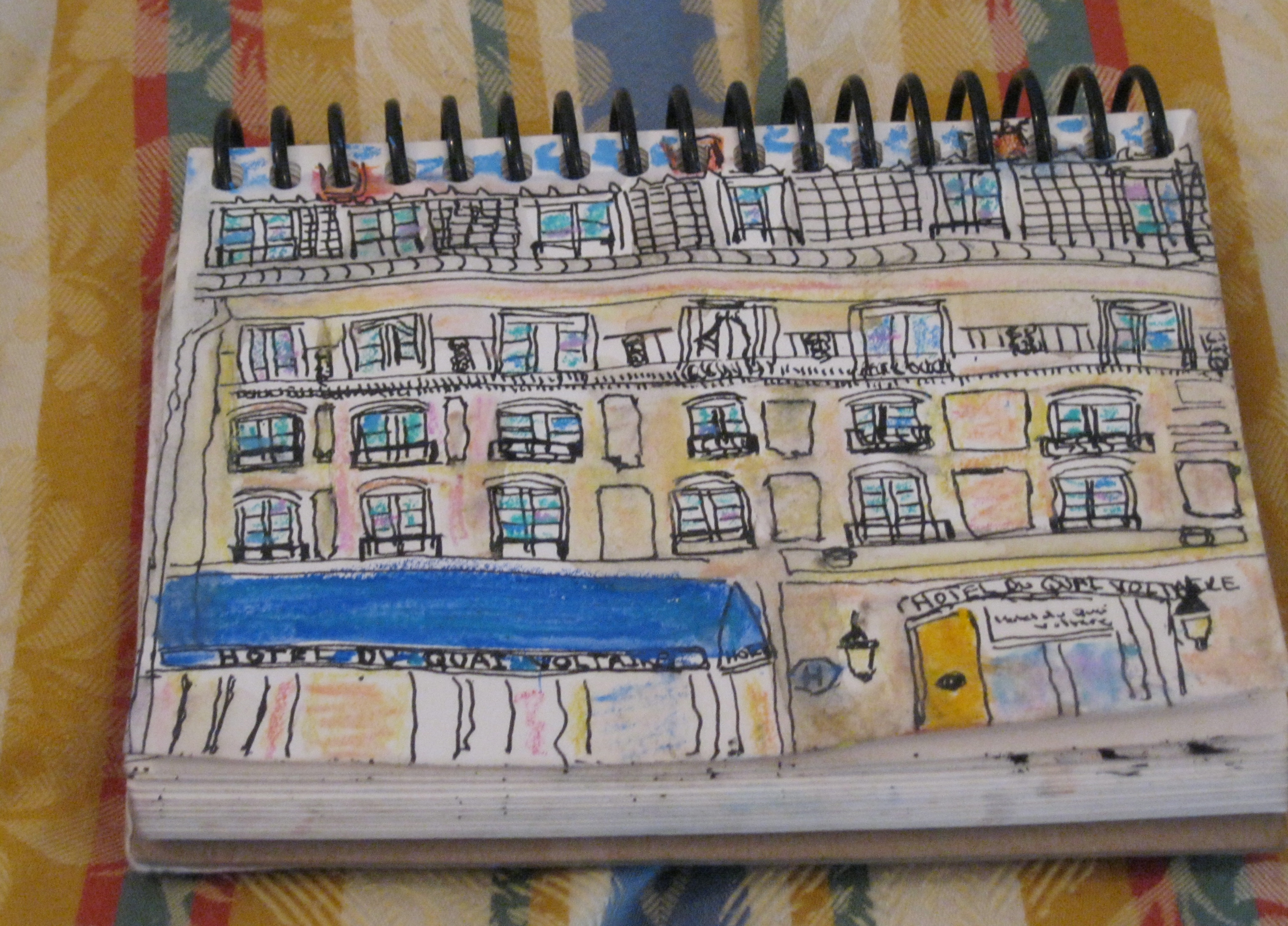
Ink and watercolor sketch of Paris hotel.

L’Hotel du Quai Voltaire, Paris, France. Ink and watercolor. 5″ x 7″ Sharyn Dimmick.

Dear Readers,

I know I promised you a second cake post from France. Sometimes things don’t work out as planned (and I will tell that story later). For now, I offer you a few images from my trip, with captions. Don’t worry — I have plenty to show and tell. I will be back on my regular schedule soon, once I can get to a farmers’ market, pick up my CSA box and get back into the swing of summer in the Bay Area. Today I went to my favorite annual party, a Fourth of July bash where we grill food, swim, chat, sing and have a giant potluck all afternoon. I’ll report on that, too (Mom parboiled a huge slab of pork ribs yesterday afternoon).

In the meantime, La Belle France in images from my camera and sketchbook.

Villefavard Roses. Photo by Sharyn Dimmick.

Photo shows vase of roses, apricots, basket.

In the kitchen at Villefavard. Photo by Sharyn Dimmick.

“My” room at Villefavard.

Striped Cups. Photo by Sharyn Dimmick.

Librairie. Limoges, France. Photo by Sharyn Dimmick.

Picnic lunch displayed on a graffitied park bench in Limoges.

Dejeuner impromptu. Photo by Sharyn Dimmick.

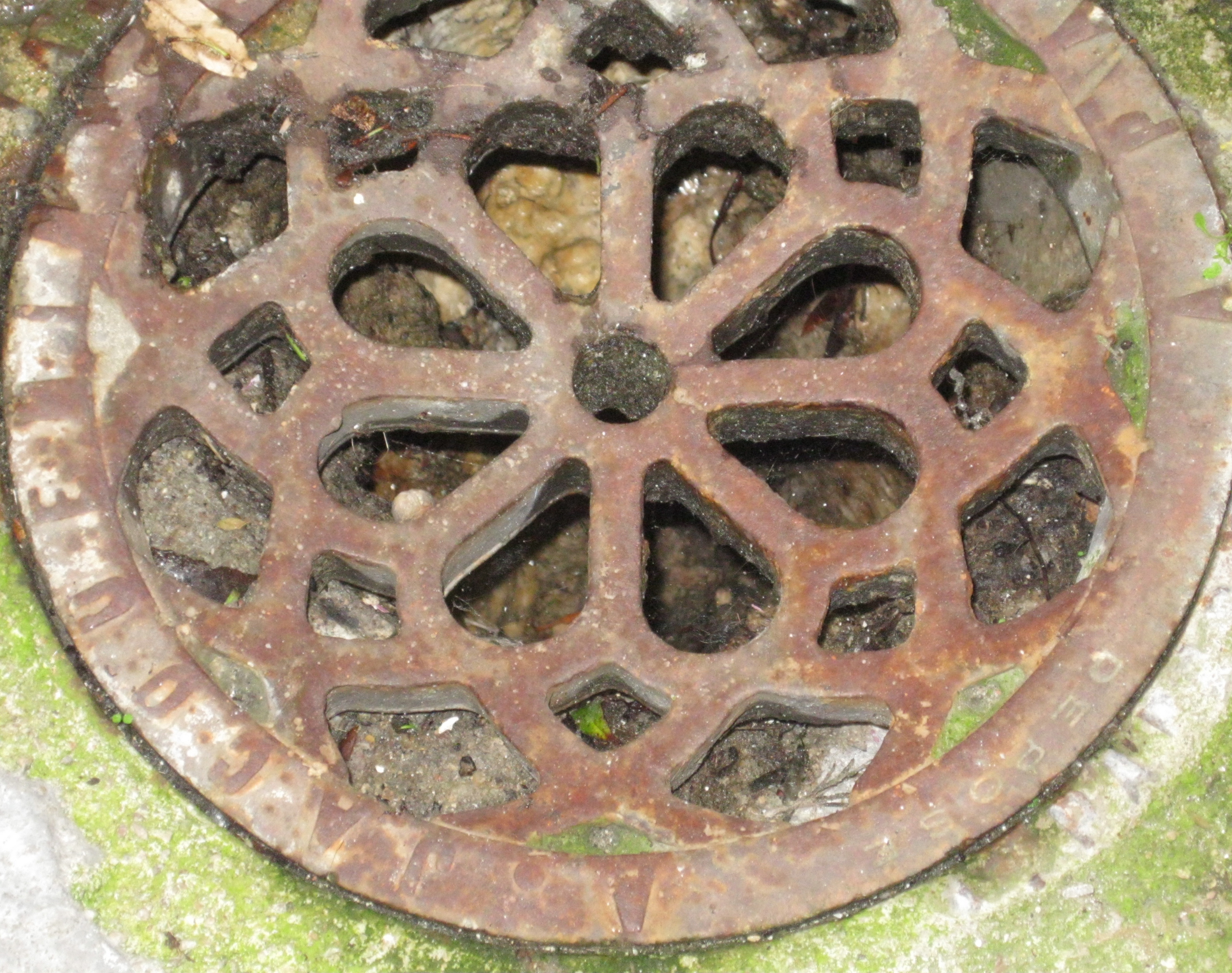
Ornamental drain cover, France.

French drain. Photo by Sharyn Dimmick

Portrait of impromptu band, La Souterraine, France.

Band photo by Lisa X.

Photo shows window display of hand-painted shoes in the Marais.

Painted Shoes. Photo by Sharyn Dimmick

Photo shows display of silver tableware from a Paris antique shop.

Antique shop, Rue de St. Paul, Paris. Photo by Sharyn Dimmick.


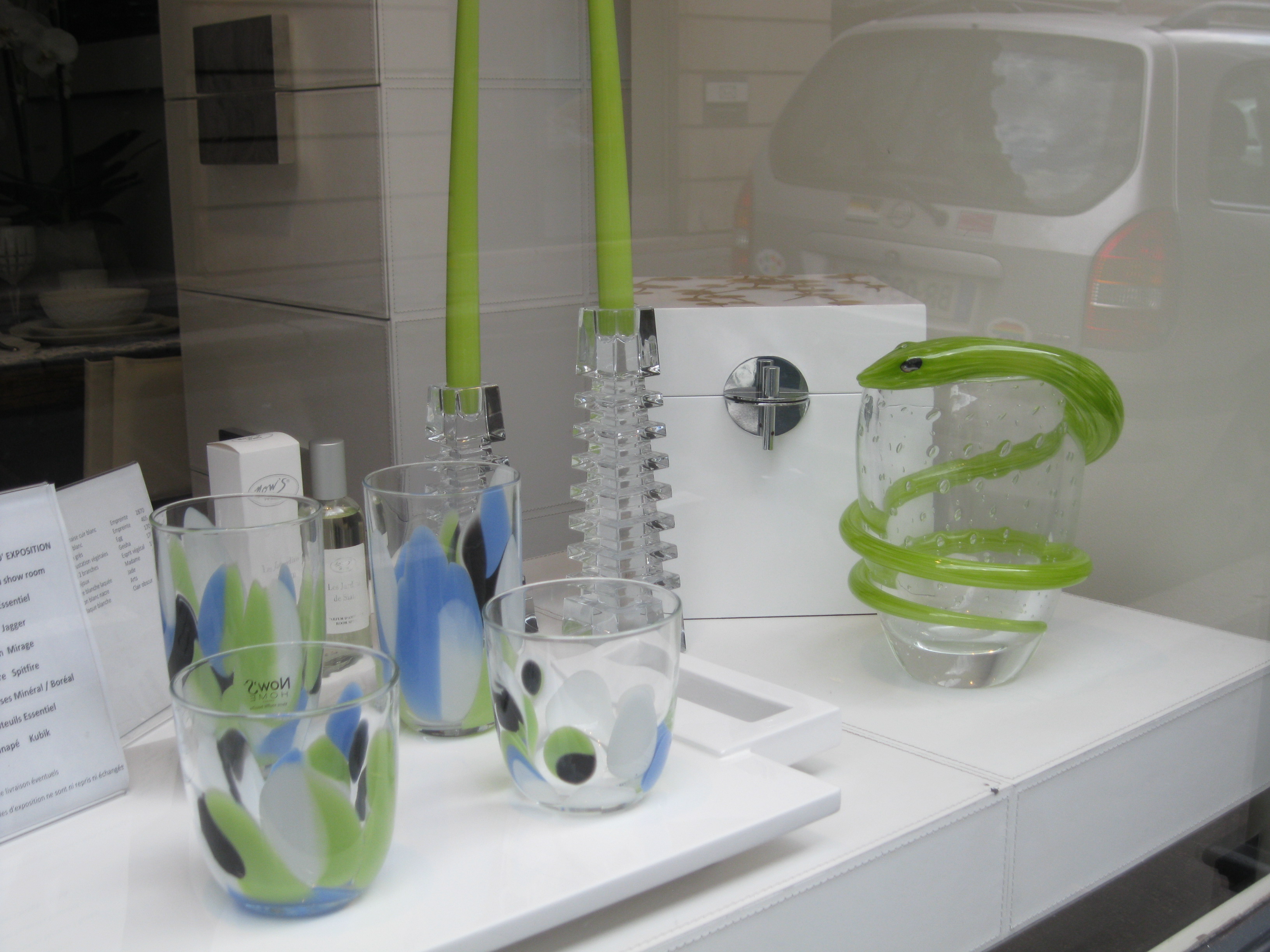
Glassware and candles in Paris shop window.

Shop window, Rue de Bac, Paris. Photo by Sharyn Dimmick.


Pen and ink sketch of window and view from Room 409, Hotel Baudelaire Bastille, Paris, France. 5″ x 7″ Sharyn Dimmick


This is a hard time to leave the Bay Area: I took my first swim of 2012 in the Berkeley Marina two days ago. Cherries and apricots are here, with peaches coming soon. I’m going on vacation at the end of the week, traveling to France for a writing retreat with Natalie Goldberg and a few days in Paris. 
Meanwhile, it’s time for another guest post on The Kale Chronicles. Lisa Knighton, who taught us how to make Shrimp and Grits back in April, is back with one of her favorite cakes for you. Enjoy.
Original watercolor painting shows vanilla cake with caramel icing.

Caramel Cake. 8″ x 8″ Gouache on paper. Sharyn Dimmick.

Cake making stirs my earliest memories. My mother and my grandmother often allowed me to help, sat me up on the counter-top, wedged the large mixing bowl tight between my skinned knees, then said in a soft voice: “Here, hold the mixer steady.”

They instructed me to keep a close eye, watch as the beaters turned the softened butter and white sugar to a creamy, fluffy mixture.
“Listen, now,” Granny said. “This is the secret to a good cake: cream the butter and the sugar for a long time.”
“How long?” I would later ask, once I was living on my own and trying to make the perfect birthday cake.
“Oh, I don’t know how long,” Granny said. “When it looks light and fluffy, give it a taste. It’s ready for the next step when the sugar crystals aren’t crunchy anymore.”
I worry that cake baking is a dead art. I ask around to see if this is true.
Cindy, a cousin who teaches elementary school in Georgia, writes me to say: “Lisa, cake baking here is not a dead art.”  Her family’s favorite is a Cream Cheese Pound Cake. She tells me that she likes to try new recipes.

Glenda, another cousin, tells me that her favorite cake is: “A toss up between old fashioned Lemon Cheese Cake and Caramel Cake with really thin layers.”

Glenda’s mother, Aunt Anna often made freshly grated coconut cake for her daughter’s birthday. “I loved watching her crack that coconut and shred it,” Glenda says.
Pat, a friend from Birmingham, Alabama, bakes Toll House cakes, “Like the cookie, but a cake!” And Rita, who lives and works in Germany, tells me about a raspberry cake her son and husband enjoy.

Isaac, my twenty-one year old nephew, asks: “Will you to teach me to make a cake?”
I have him set up the stand mixer, take out all the ingredients. When we reach the first step, I lean in and say: “The secret to a good cake is in this step.” Isaac turns to me, and smiles. He’s heard this before. I’m glad to be passing along this cake making tradition.
When I bake a cake, I begin with white layers, sometimes called vanilla layers. For this recipe, I turn to Bevelyn Blair’s Everyday Cakes. My favorite is Layer Cake No. 1. As a matter of fact, when I open the cookbook, the pages automatically fall open to this recipe on page 97.
Hill Street Press, of Athens, Georgia, reissued this baker’s-necessity-of-a-book back in 1999. I do have many favorites from Blair’s book, including the German Chocolate Cake and the Brown Sugar Pound Cake. Forget the box mixes and get to work on a masterpiece from this book. You will not be disappointed. And hey, let me know how your cake turns out.
Layer Cake No. 1
2 sticks butter
2 cups sugar
5 eggs
3 1/2 cups sifted cake flour
3 teaspoons baking powder
1/2 teaspoon salt
1 teaspoon vanilla extract
1 cup milk (2% or whole)
Bring all refrigerated ingredients to room temperature.
Preheat oven to 350 degrees F. Cream butter and sugar until light and fluffy, 6 to 8 or more minutes (remember, this is the secret to a good cake: creaming the butter and sugar until the crystals of sugar are nearly dissolved). Add eggs one at a time and beat well after each egg. Mix together your sifted flour and other dry ingredients. Alternate adding small amounts of the flour mixture and the milk to make your batter. Add the vanilla. Mix well.
Pour batter into three or four greased and lightly floured cake pans. Bake 20 to 25 minutes or until tests done. Cool, then assemble layers, covering each with caramel icing.
Betty Kea’s Caramel Icing
1 1/2 sticks butter
1 cup light brown sugar (packed)
6 tablespoons half & half (or one small can of milk)
2 cups sifted powdered sugar (4x)
Bring butter and brown sugar to boil. Boil four minutes, stirring constantly. Add 6 tablespoons half & half, stirring; boil for two more minutes, stirring. Remove from heat and allow to cool for ten minutes. Add the powdered sugar and beat until smooth.
Blog Notes: Watch for another cake post on June 27th, “Let Them Eat Cake, Part II.” Thanks to the magic of WordPress I can post something while I am gone, without lifting a finger or breaking silence. I haven’t lost my seasonal focus, but I will not be cooking for the next couple of weeks. I will be eating and I will tell you all about that when I return in early July. I’ll just remind you that I own no mobile devices and will not be able to respond to comments while I am away, but I love reading your comments and I will answer you when I get home. Lisa may chime in on the cake comments, too.

I was excited to see rhubarb at the Berkeley Farmers’ market last Saturday — I think it is the first time I have seen it there. I had seen a delicious-looking recipe for a rhubarb-cherry crumble with fresh ginger on local kitchen, one of the blogs I always enjoy reading. Kaela preserves a wonderful variety of jams, pickles and marmalades. Here was a crisp that I could tackle easily with cherries in season.

I have had few encounters with rhubarb in my life. My mother never cooked it at home, although she ate it as a child in Illinois. Neither of us like cooked strawberries, preferring to eat them raw, so strawberry-rhubarb pie is not in our pie arsenal. I once ate some rhubarb pie at a doll class potluck — the baker thought its pink color was particularly appropriate for a group of women artists. While I didn’t have to choke it down, I didn’t jump for joy and ask for the recipe either.

Now, if rhubarb grew abundantly in our yard or if a neighbor left baskets of it on our porch I would figure out how to make it palatable or resort to ferreting out all of my rhubarb-loving acquaintances and foisting it on them. Riverdog Farm has not included it in a box in the last five years either. But a couple of years ago I had had my best encounter to date with rhubarb: Toni, who grows it in her Oakland yard, smothered it with brown sugar, dried fruit, nuts and sweet spices, popped it into the oven and roasted it. The result was brown and syrupy and sweet. But when I asked her for the recipe this year she could not remember ever making it that way, a brilliant improvised recipe lost to the world.

When I bought the rhubarb last week, I tasted it cautiously at the bus stop, breaking a small piece off the end of a raw stalk. How sour would it be? I am happy to report that it didn’t lock my jaw. The taste reminded me of chewing sour grass when I was a kid, faintly reminiscent of lemon and green plants. But rhubarb is one of those things like quince — most people do not eat it raw. Cooking transforms it, but tasting it raw does not help you plan how to cook it.

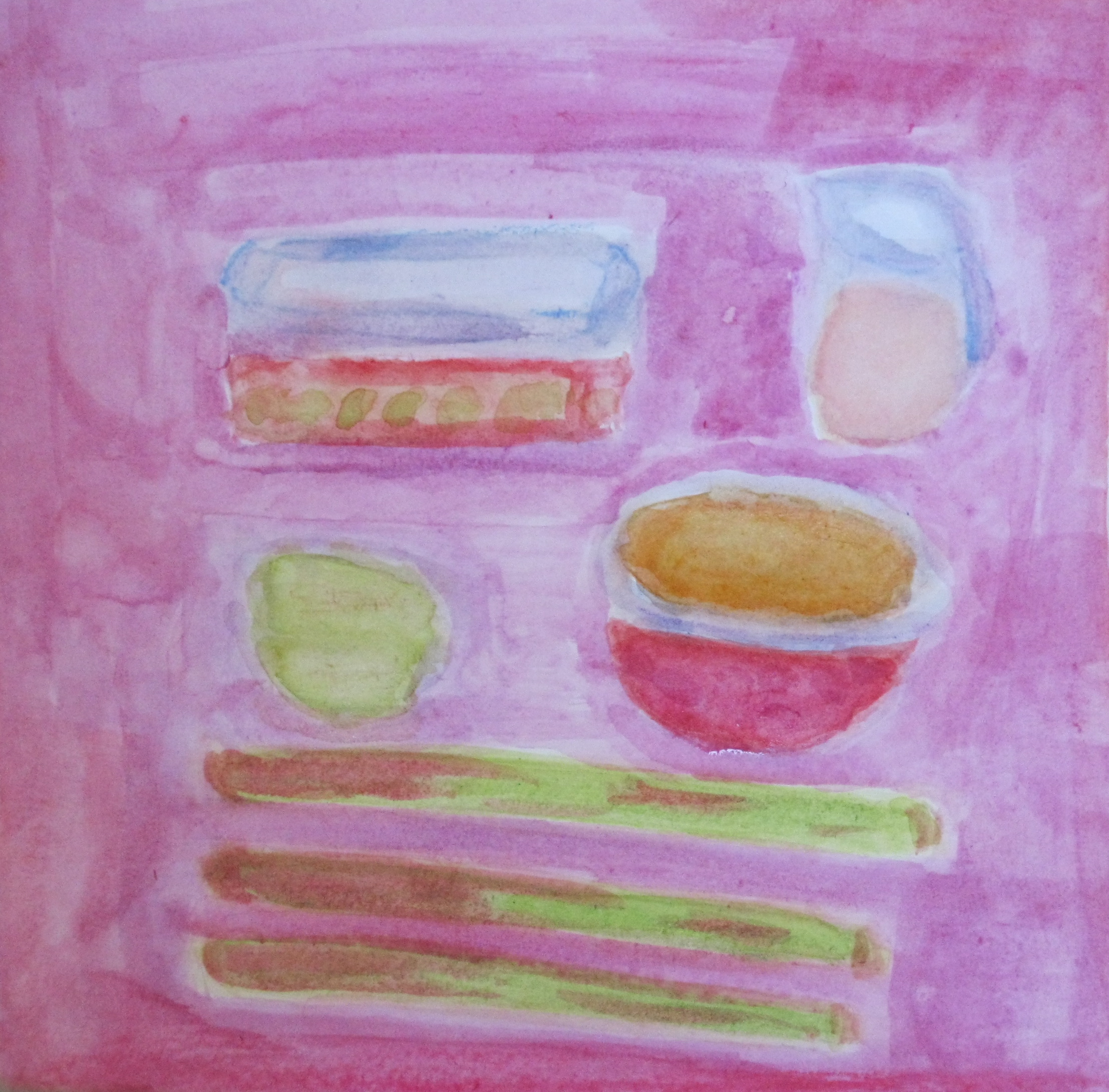
painting shows rhubarb in various preparations.

Rhubarb Experiments. 8″ x 8″ Gouache and Watercolor Pencil. Sharyn Dimmick.

This morning I turned to the guidelines of other cooks: what have they done with it? Well, they boil it with sugar, raw or white or brown. They stew it with prunes and apricots. They combine it with strawberries in pies and compotes and jam. Enterprising cooks use it in sauces for roast pork. I hunted through some cookbooks for awhile. Then I cut and measured my remaining rhubarb: I had three cups left.

Fine. Enough for three small experiments. Experiment #1, rhubarb roasted with vanilla bean and Creme de Cassis, suggested by The San Francisco Ferry Plaza Farmers’ Market Cookbook. Experiment #2, rhubarb cooked down to a syrup, a variation on Heidi Swanson’s Rhubarb and Rosewater Syrup recipe. Experiment #3, rhubarb cooked in a compote with dried fruit, adapted from the Eat Fresh, Stay Healthy cookbook, an offering from the used book sale at the Kensington Library.

Experiment #1, the roasted rhubarb, smelled wonderful, both before and after baking, from the perfume of the vanilla bean and the Creme de Cassis. This rhubarb, mostly pale green with red ends remained green after roasting. The syrup has a slight dark red tinge. I tasted the result cautiously, one piece on a small spoon. It is delicious. The white sugar, vanilla and black currant liquor have mellowed the rhubarb into something tasty: I could eat it straight from a bowl, topped with cream, milk, half and half or yogurt, or I could mix it into cereal.

Experiment #2, rhubarb syrup, essentially rhubarb simmered in a simple syrup to which I added a vanilla bean, tasted good, with just a hint of rhubarb flavor. I used 1 cup of rhubarb, 1 cup of sugar, 1 cup of water and 1/2 of a vanilla bean. I let the rhubarb marinate in the sugar for a couple of hours before I added the water and brought it to a simmer. I strained the syrup from the cooked rhubarb. It came out blush pink. I tried an ounce of it in about four ounces of sparkling water with lime. I also tried an ounce of it in some cold tea. I’ll eat the leftover sweetened rhubarb puree with some light cream for dessert some night this week, or stir it into my morning cereal. It is too early in the day to put some of the syrup in a glass of sparkling wine, but I may get to that.

Experiment #3, the compote, may be the least successful. I simmered 3/4 cup dried prunes and 1/4 cup dried apricots in a cup of water with some nutmeg, fresh ginger and 1/3 cup of sugar before adding the rhubarb for five or six minutes. The problem with this is that the rhubarb has not absorbed the flavors before it begins to break down. But it may taste better tomorrow after sitting — compotes often do. I tasted it warm.

I brought the rhubarb-cherry crumble to a singing session on Friday. Some people liked it. I was disappointed. The color was lovely: the rhubarb and cherries melded into a deep red. The fruit proved to be too sweet for my tastes (I was afraid to scant the sugar due to my inexperience with rhubarb preparations) and there was an off-putting flavor, which I believe was the taste of the rhubarb. I made a crumb topping with butter, homemade granola (not very sweet), brown sugar and a few tablespoons of flaked coconut. I thought the topping was also too sweet and will go back to using plain rolled oats in crisp topping (Local Kitchen’s recipe calls for a gluten-free topping with  brown rice flour, oats, butter, and flax seed).

Food notes: If you are a confirmed rhubarb lover and have no fear of canning, you might want to try Local Kitchen’s rhubarb prosecco jelly. It’s the sort of thing I would love to have a taste of, but would not want to commit to making it unless I had tasted it first. Disclaimer: I have been exercising a lot lately, which might be why the sweet rhubarb syrup, roasted rhubarb and puree suddenly tasted great…

P.S. I mixed rhubarb compote into my blue corn cereal this morning and it was just fine: with the heat of the cereal, the cooked rhubarb melts into the compote and what you get is a spicy syrup. And rhubarb syrup in water is nice on a hot day.

Warning: this post may contain an embedded rant or two.

In the kitchen this morning, I have two large dry crusts of French bread, three eggs and several heads of baby romaine lettuce from the farm box. This late spring day appears to be one of the warm variety. I don’t know if these ingredients suggest anything to you: to me they suggest Caesar Salad.

My mama told me that Caesar Salad contains anchovies in the dressing. Cursory internet research suggests that Cesare Cardini used Worchestershire sauce rather than anchovies. I don’t even like anchovies, but I was taught to chop them finely and put them in the dressing for a Caesar Salad, so I do. I would not eat them on pizza. I would not snack on them out of the tin. I have never dared to make a pasta puttanesca because of the anchovies in it, but I keep anchovies in a jar of olive oil just so that I can make this salad when the mood strikes or when the ingredients are sitting around in the kitchen.

Furthermore, I do not care for any egg preparation that involves soft egg yolks — or hard egg yolks, for that matter. That leaves out poached eggs, fried eggs, eggs sunny side up, deviled eggs, hard-boiled eggs and Easter eggs. But I make an exception for Caesar Salad dressing, which calls for a coddled egg, cooked for one minute before you mix it with the other dressing ingredients.

Painting shows Caesar Salad and ingredients.

Caesar Salad. 8″ x 8″ Gouache and Watercolor Pencil. Sharyn Dimmick.

The salad that makes me set aside my food aversions is truly magical. You put in anchovies and barely cooked egg yolk, garlic, olive oil and lemon juice, black pepper. You toss the dressing with croutons, Romaine leaves and freshly grated Parmesan cheese and you have a crunchy, green refreshing salad with adequate protein from fish, egg and cheese. There is no need to add shrimp or grilled chicken to this salad as many American restaurants do.

First, make garlic-infused olive oil. Heat some garlic cloves in olive oil and allow the garlic and oil to sit while you do other things. While you are at it, halve a raw clove of garlic and rub it onto your wooden salad bowl. If you like raw garlic, set aside a couple of cloves to squeeze into the salad, or pound them in a mortar or mince them with a knife. I actually like minced or pressed raw garlic better than the more subtle garlic oil.

Then make croutons. Chop your leftover French bread into cubes. We like to use stale sourdough. You can saute them in a little of your garlic oil, or you can toss them with some of it and bake them in your oven for a few minutes at 300 degrees. I usually bake my croutons. Sometimes I just bake sourdough bread without any oil: the croutons will absorb dressing from the salad anyway.

Then wash your romaine lettuce and dry it thoroughly in a dish towel or a salad spinner.Tear into bite-sized pieces unless you particularly enjoy the exercise of cutting lettuce with your fork. Place lettuce in your garlic-rubbed salad bowl.

Take two or three anchovies from a tin and mince them finely — no one wants a big bite of anchovy in this salad — we just want the flavor. Set them aside for now.

Grate some Parmesan cheese. 1/4 cup will do in a pinch, but you might want to use more to get the snow drift effect.

Halve one lemon and get ready to squeeze it.

Dress your lettuce with a small amount of garlic olive oil. Add minced garlic if using.

Now coddle an egg: boil it for one minute only. Remove it from the pot. Crack it right into your salad bowl and toss with the lettuce.

Add the minced anchovies and toss again.

Squeeze lemon directly onto the salad. Toss again.

Add croutons and grated Parmesan. Toss again.

Grind some fresh black pepper over the salad. Toss again.

Taste and adjust seasonings.

Food notes: If you can’t stand handling anchovies, you could try using anchovy paste in a tube. I have never used it. Please do coddle the egg and use it in the dressing: the slightly-cooked egg, anchovies and lemon are what creates the distinctive Caesar dressing. You cannot get the proper effect without the egg. You cannot get the proper effect without some form of anchovies — if you are afraid of them, try using a little less — start with one anchovy if you are squeamish and work your way up. You cannot skip the cheese either, or the croutons — if you do, you have not made a Caesar salad, but some other kind of romaine salad. You cannot make a vegan Caesar — don’t even try. If you are a vegan, find some other way to eat your romaine. You cannot make a kale Caesar either: by definition, Caesar salad is made of romaine lettuce. Got it? You have latitude with the garlic, the oil, and the croutons and the amount of anchovy you use. For the Parmesan, you need to get the good stuff and grate it yourself: this is not the time to use stale, pre-grated cheese or the stuff in the green can: when you are only using a few ingredients, they need to be the freshest and finest you can get. That chicken and shrimp? Save them for another entree or cook and serve them on the side, please. Once you try the real Caesar salad, you will love it or hate it, but at least you will know what it is, that you have tried Caesar salad and not one of the many abominations that blacken and borrow its name.

If you’ve made it through the rant, you may notice that I put no salt in the dressing: both anchovies and cheese pack a lot of salt and I don’t miss it. But I did say you could adjust seasonings: that is code for add lemon, salt, pepper, garlic or cheese to taste. Enjoy. And if you experience any revelations after making proper Caesar salad, please come back to testify in the Comments section.

It is cherry season in California. For a few short weeks in May or June fresh cherries appear at the Farmers’ Market in Berkeley. First there are Brooks, then Burlats. Later there are Bing cherries. I eat them all. Mostly, I eat them fresh, for a snack. Lately I have been sneaking them into my morning cereal: my current favorite concoction involves 1/3 cup blue cornmeal cooked in 1 cup of milk with a bit of salt, a small handful of raw almonds pounded in a mortar, a handful of stoned cherries and a couple teaspoons of shredded coconut. This is also good with rolled oats — if you use oats, use 1/2 cup.

Do any of you have binders full of recipes that you have clipped from the food sections of local newspapers? Do you have a lot of recipes you haven’t actually cooked? Me, too. Sometimes I try one and toss it out with a “What were they thinking?” gesture. Sometimes I learn something. Sometimes I just store them, loosely organized by main ingredient, in a huge binder that takes two hands to lift off the shelf, but I know they are there waiting for “someday” when I’ll cook them.

Cherry Focaccia with Chocolate.

One such recipe was Ed Murrieta’s recipe for cherry focaccia. A Google search for the original publication date in the Contra Costa Times informed me that I have been saving this recipe since June 7, 2004. I saved it because it has an irresistible photo of a golden brown round focaccia, dimpled with cherries, cut into wedges, with a pile of fresh cherries in the center. It looks so pretty that I wanted to make it “someday.”

Well, folks, today was someday. I made a trip on the bus to the Farmers’ Market yesterday to buy more basil for more pesto and to buy cherries for this bread. Insert disclaimers here. One, I don’t generally like focaccia — it is too thick, too bland, with the wrong ratio of toppings to crust: I think of it as failed pizza. Two, I think chocolate-covered cherries are revolting. My Grandmother liked them: nasty, sickly cherries in too sweet milk chocolate. And cherry cordials, worse, if possible: bad chocolate filled with wet cherry filling that squirts you when you bite into it. Yuck. Three, my favorite cherry recipes involve sour cherries, either canned or dried, since fresh sour cherries are hard to come by in this part of the world. Four, I can’t stand anything cherry-flavored: cherry flavor reminds me of medicine. This includes cherry Starbursts (why, oh why?). The only exception I can think of is Royal Crown Sour Cherry candy — do they still make it anymore?

But this cherry focaccia was calling my name. First of all, it is a filled focaccia: you make two circles of dough. You put fresh, pitted cherries on top of the first circle, sprinkle it with chopped bittersweet chocolate, and put the second circle on top. Then you push more cherries into the top layer and sprinkle it with raw sugar before it goes into the oven. Plus, you need a starter to make this and I keep a jar of sourdough starter in my refrigerator at all times. I fed the starter yesterday and let it sit out on the counter while I went to the market and bought cherries.

I wanted to send you to Ed Murrieta for the original recipe, but when I Googled him the first thing I found was an article about how his entrepreneurial business had failed, leaving him to live on food stamps. Then I found some recipes including marijuana. Wherever he is now and whatever he is doing I wish him well and thank him for this gorgeous focaccia recipe. I could send you to the newspaper site, but they seem to want you to activate a free trial subscription to let you read the recipe. What can I do? I can rewrite the recipe — I did make a couple of changes.

Here’s the bad kitty confession. Murrieta’s recipe calls for bread flour. In my heyday when I had a regular job and regular paychecks I would have gone out and bought bread flour. I would have insisted on bread flour. Now I am not so proud or so picky: I use what we have on hand. I am an experienced baker and can handle sticky doughs and doughs behaving badly. So I will tell you that Ed Murrieta called for 2 and 3/4 cups of bread flour, plus additional flour on the board during the kneading and shaping phases. I winged it with unbleached flour and some whole wheat flour to give it a more rustic quality. I’ll show you.

Murrieta called for a starter made  of 1/2 tsp dry yeast, 2/3 cup of water and 1 cup of bread flour. You mix this up in a glass jar with a wooden spoon, cover it with cloth and let it ferment on the counter for at least twelve hours (and up to 36). I skipped this, and just added 2/3 cup of my sourdough starter to the dough. If you already have a starter, you are good to go. If you want an official sourdough starter recipe, go here.

Focaccia stuffed with fresh cherries and chocolate.

Cherry Focacccia. 8″ x 8″ gouache on paper. Sharyn DImmick.

Fresh Cherry Focaccia with Chocolate

Make the dough first. You can pit cherries and chop chocolate while the dough rises. You can even go to the store for cherries and chocolate while the dough rises if you don’t go on the once-every-forty-five-minutes bus.

Dissolve 1 and 1/2 tsp yeast in 1 cup warm water.

While the yeast proofs, stir together in a large bowl 2 and 3/4 cups bread flour, 3 Tbsp sugar and 1 tsp kosher salt. If you do not have bread flour and are intrepid, start with 1/2 cup whole wheat flour and 3 and 1/4 cups unbleached flour (You will have to add more).

Make a well in the center of your dry ingredients. Add proofed yeast, 2/3 cup sourdough starter (or Ed’s starter, above), 1 cup lukewarm water and 3 Tbsp olive oil. Mix with wooden spoon until a light dough forms. If your dough is more of a batter than a dough, add flour 1/4 cup at a time.

Flour a bread board or other work surface and keep the flour handy! You might want to make sure your flour bin is at least half-full. Turn out the dough onto the board and attempt to knead it. If it sticks to the board badly, knead in more flour, dust more flour on the board, pry it up and try again. Eventually, you will work enough flour into the dough that it resembles roll dough and is smooth and uniform in appearance. If you are smart, you will oil the bowl before you put the dough back in it to rise. Cover the dough with a damp tea towel and let it rise until double — 1 and 1/2 to two hours.

Now, go away and amuse yourself or clean your counters and put away your ingredients except the flour — you are not done with that. Before the dough is risen you will need to pit 2 cups (one pound) of cherries and chop four ounces of chocolate. I used a 70% Lindt bar that had cherries and chili in it.

When your dough is risen, put it on your floured board and let it rest for five minutes. You can use this time to oil a pizza pan or baking sheet.

Divide dough into two equal portions. Ignore one while you flatten, dimple and pull the other into a ten inch circle. See pizza-pulling instructions here. (Murrieta rolls out his). Transfer first portion to oiled pan. Spread 3/4 of your cherries on it and top with chopped chocolate. Flatten, dimple and pull the second circle into shape and place it on top of cherry-chocolate filling. Pinch the edges to seal the dough. Then decorate the top with the rest of the cherries, pushing them cut-side down into the dough at attractive intervals. Let the dough rest for thirty minutes while you preheat your oven to 400 and do a round of clean-up. Just before you put the focaccia in the oven sprinkle it with raw sugar.

Close-up photo of Cherry Focaccia.

Cherry Focaccia Close-up. Photo by Sharyn Dimmick.

Bake for forty-five minutes or until top and bottom are browned to your liking. Murrieta says to let the focaccia cool and then cut it into wedges. Ha, ha, ha, ha, ha. I let it cool for approximately five minutes and then cut a small wedge, which I ate standing at the cutting board. Then I reached for the knife again, which was smeared with melted chocolate. I ate the second piece standing in front of the board. Then I cut a much smaller wedge. Then I stepped away from the cutting board, drank a glass of milk and made tea, which I took upstairs so that I did not stay in the kitchen eating focaccia.

It was that good. It was sort of like someone had taken my two favorite things, crusty bread and pie, and magicked them into a single entity. Crusty, gooey, chocolatey, not too sweet, with a fresh cherry taste on top.

Cherry season is short. If you like bread and pie, make this now. Now. And invite some friends over if you don’t want to stay in your kitchen eating the whole thing. You could just call it cherry Kryptonite.

Food notes. This recipe is perfect as is, once you get the flour right. But it is ripe for variations. Try other kinds of chocolate and other kinds of fruit: fresh figs? And then branch out and use almond paste or ricotta filling with cherries or peaches or blueberries. Yum.

On Saturday my friend Margit and I walked through the Berkeley Farmers’ Market. I had been the week before and bought my first Brooks cherries of the year, walnuts in the shell, brown mushrooms. Stone fruit is beginning to come in: I saw apricots and bought a couple of baskets of cherries from Kaki Farms. Strawberries continue strong. Blueberries are here. Some vendors had bins of summer squash and the first beautiful broccoli was beginning to peep its heads out of baskets. But the thing that made me happiest was the bunch of basil I bought for two dollars.

Ah, basil. I didn’t even like the stuff when I was a child: it was just another mysterious seasoning in a Spice Island jar, dried and weird. It didn’t remind you of turkey stuffing like sage or pizza like oregano. Fresh basil was not seen or smelt at my house.

painting shows mortal and pestle, basil, basket of walnuts.

Making Pesto. 8″ x 8″ Gouache and Watercolor Pencil, Sharyn Dimmick.

All that has changed now. All late spring, summer and early fall, I buy basil by the bunch and set it like a bouquet in a glass of water on the kitchen counter next to the olive oil. I chiffonade it over green beans and steam them, tuck it into ears of corn before roasting them, add it to Greek salads, put it in turkey meatloaf or burgers. It is probably the herb I use most during the summer. Today and many other days will find me sitting at the breakfast room table, pounding torn basil leaves, salt, garlic, walnuts and grated cheese in my large Vietnamese mortar with a little olive oil.

Did I say walnuts? I did. Classic pesto is made with pine nuts. I have nothing against pine nuts except the cost. If I lived in New Mexico or Italy I might make pesto with pine nuts. Since I live in California I make it with walnuts and have come to love the combination of bitter and sweet freshly cracked nuts with pounded basil leaves and garlic (I also use walnuts to make a cilantro pesto, flavored with lime).

The first pesto I tasted was served in a restaurant (I no longer remember which one). When I lived in San Francisco I used to buy little plastic tubs of Armanino pesto. Then for awhile I made my own in a blender, until my friend Leila mentioned that pounded pesto had a superior texture. Because our blender is old and cranky I was spending lots of time mincing basil and garlic before feeding its maw and I decided to get a mortar and pestle.

My friend Elaine and I went mortar hunting in Oakland Chinatown and I brought back not one mortar, but two: I have a small marble mortar that I use to crush spices and small amounts of nuts and I have my big wooden Vietnamese mortar for pesto duty each summer.

I start in the kitchen, smashing garlic cloves with the side of a knife and peeling the skins away. The garlic goes directly into the mortar and gets a sprinkle of kosher salt, which helps the pestle break down the garlic fibers. Then I take a utility bowl, my basil bouquet and the big mortar and pestle into the breakfast room. I inhale the spicy green scent of the basil as I pick leaves, discard stems, and tear each leaf into smaller pieces. I pick and tear for awhile, then I pound for awhile, then pick and tear another layer of leaves. The aroma gets richer. When I have torn and pounded every last leaf I take the basket of walnuts and nutcracker from the sideboard and start cracking and shelling. There is no measuring involved: the pesto comes together and is done when its taste and texture suits me — the size of the bunch of basil is the determining factor: I will add enough other ingredients to blend with it, to complement it, but the basil is the star, so I start with garlic and salt, add all the basil, then add walnuts. The last step is grating Parmesan or pecorino with my microplane and stirring in a little olive oil.

If I need a break while I am pounding basil I will pour a little olive oil over the top. This helps keep the color bright. I do not care for oily pesto and have a light hand with the oil: I am not too fussy about whether the final product is bright green: I know it will be delicious and we are going to eat every spoonful and scrape the jar besides.

I never get tired of pesto. When the basil really gets going in mid-summer I try to make enough of it to freeze to last all year. I am never successful because if I have fresh pesto on hand I want to eat it on pasta, on sandwiches, in salad dressing, on green beans, on broccoli, on broiled portobello mushrooms, dolloped on the top of a pizza just out of the oven, or added to a winter vegetable soup. Every year I manage to freeze a few small jars or a bag of pesto cubes made in an ice cube tray, but I am dipping into my stash practically as soon as basil disappears from the Farmer’s Market. At the same time, I have days when I wonder why I have bought yet another bunch (or two, if they are on sale), condemning myself to a few more hours of sitting at the table, pounding away when I could be walking or swimming or reading or whatever else it is that people do on long summer days, instead of inhaling basil fumes and oil of walnut rising from warm wood.

We ate our pesto with whole wheat rotini, fresh sugar snap peas and some roasted red peppers from a jar.

Food notes: You can, of course, make pesto with any fresh  leafy herb and any nut. Some people use seeds instead — pumpkin seeds, sunflower seeds. Margit is allergic to walnuts and pecans so she can make hers with almonds. Elaine has used Brazil nuts successfully. Pine nuts are delicious. You can make pesto from arugula or from soaked sundried tomatoes. Some people make it with spinach or kale. You can mix herbs, too: basil, cilantro and mint is nice, or arugula and mint. You can make it in a blender or a food processor if you have one.

Blogging notes: Susie of SusArtandFood very kindly nominated me for another blogging award, the illuminating blogger award. I love it when people read The Kale Chronicles and I love it when they like it and I really like it when they find something useful here for themselves. What I don’t like is posting blog award patches on my site — I don’t think they look nice. And while I’m happy to let you know what blogs I enjoy reading I am not much good at making lists of them on the spot: I do have lists of links, although I probably should update them — perhaps at my one-year anniversary. You will find more details about me and my life in the posts than you perhaps want so I don’t think you need to know that my favorite color is green or that my favorite ice cream is coffee ice cream. My emphasis is seasonal home-cooked food. I’m quite happy when you read and comment on The Kale Chronicles and I do my best to respond to every comment I receive. Thank you all.

May’s Daring Bakers’ Challenge was pretty twisted – Ruth from The Crafts of Mommyhood challenged us to make challah! Using recipes from all over, and tips from “A Taste of Challah,” by Tamar Ansh, she encouraged us to bake beautifully braided breads. Although I have made pretty challah many times, I was tired this morning. I have recently undertaken a vigorous exercise program, involving walking up hills at the crack of dawn. Yesterday I followed that walk and subsequent breakfast with a walk through the Berkeley Farmers’ Market, and Andronico’s grocery store, came home to put away the groceries and construct a Caesar salad with kale (note to self: leave the kale out of Caesar salads — remember those tests asking “Which one does not belong?” Can you spell k-a-l-e? It was a noble effort).

Despite taking a day off of hill-walking, I dragged myself to the grocery store (on foot) because I needed milk to make challah, Mom had grossly underestimated our milk supply and I didn’t want to use canned milk or buttermilk sweetened with soda. When I got back to the kitchen the dishwasher was on the dry cycle and I unloaded that.

photo of misshapen loaf of Challah bread

Trolls’ Challah.

Only then could I begin the business of making challah: scalding milk and beating eggs, sifting flour, proofing yeast. I briefly considered embellishments: candied orange peel sounded good, but I have not yet candied my annual supply of citrus peel — the peels are sitting in the freezer, awaiting the day when I feel like doing it. I thought of making some kind of cinnamon glaze, but then I considered how tired I was and the kind of day I was having and decided to make plain old challah, the eggy, braided bread. I would use the recipe from our old Betty Crocker Picture Cookbook because I have used it before and was in no mood to mess around. Plain challah is the most versatile flavor: it can become French toast or bread pudding or croutons and will work for both sweet and savory sandwiches.

Rather than tell you what I did or what the cookbook says to do I will tell you a better way.

Film a saucepan with water.

Add 1 and 1/2 cups milk.

Set on medium heat until scalded (You’ll see small bubbles at the edges and a faint wrinkled skin on top of the milk).

Remove from heat.

In the measuring cup the milk has recently vacated mix 1/2 cup warm water and 4 and 1/2 tsp active dry yeast (2 packets). Whisk together with a fork.

Now measure 3 cups sifted unbleached flour into a large mixing bowl.

Add 1/2 cup whole wheat flour.

Add to cooling milk 1/4 cup butter (half a stick), 1/4 cup sugar and a teaspoon of kosher salt.

When the milk mixture is lukewarm, pour it into your bowl of flour and stir. Add the proofed yeast.

Beat 3 eggs until smooth in your much-used liquid measuring cup. Add to dough mixture.

Now begin adding more sifted flour, most likely about 3 cups plus.

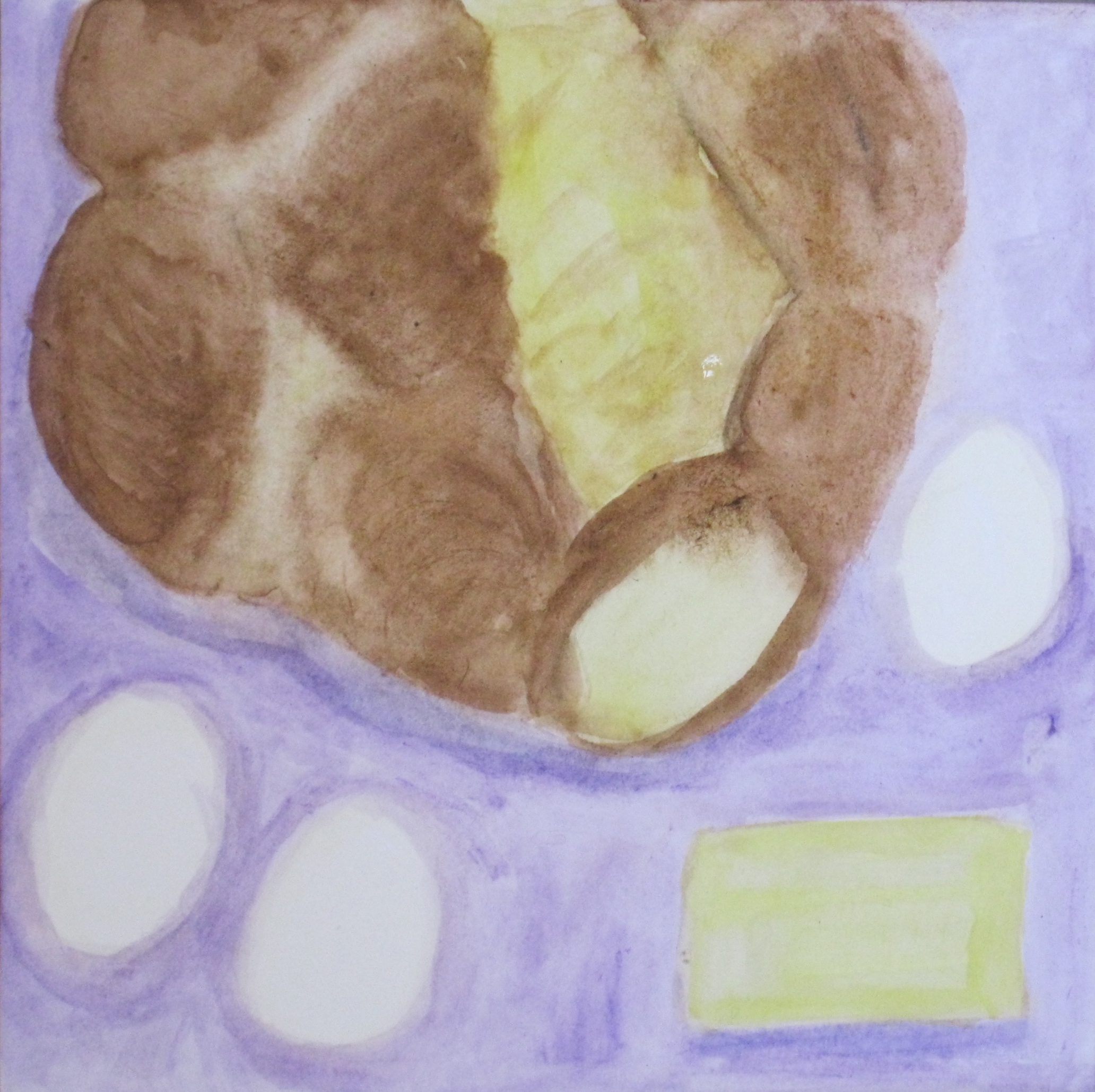
painting shows misshapen loaf of Challah, eggs and butter.

Troll Challah. 8″ x 8″ Gouache on Paper. Sharyn Dimmick.

The Betty Crocker recipe calls for 7 to 7 and 1/2 cups total sifted flour. You have now used half of that. When I got to this stage I sifted the additional flour 1 cup at a time, adding it to the dough in quarter cup increments. Today, cold and overcast, the dough took a total of 6 and 3/4 cups flour, including the half cup of whole wheat. Although I sometimes knead light doughs by hand, I used my Kitchen Aid for the mixing and basic kneading because challah calls for a large amount of flour. When the dough was smooth and elastic and pulled away from the sides of the bowl I transferred it briefly to a lightly-floured board to rest while I buttered the mixing bowl, preheated the oven to warm and heated a damp linen towel for twenty seconds in the microwave. I gave the dough a couple of quick turns and deposited it in the buttered bowl, covered the dough, turned off the oven and set the bread to rise.

Then I gratefully escaped upstairs for an hour and lay on my bed reading my copy of The Sun, the only magazine I subscribe to. After an hour I rose reluctantly to check the dough which had risen enthusiastically and begun gluing itself to the tea towel.

Prying the dough strands away with my fingernails, I deflated the challah dough and set it for its second rise. I glanced at the clock to determine that it would probably be ready for braiding just as I was ready to eat lunch.

The thing about being tired when you are a scratch cook and stock mostly raw ingredients is that there are no quick and easy lunches unless you have previously made the components. We swing from fresh-prepared meals to meals from leftovers in a regular rotation. I grabbed the nearest carrot and a handful of fresh cherries and put on a kettle for tea. The quickest sandwich I could come up with was cashew butter on store-bought raisin bread toast. True to form the tea was steeping, the toast was toasted and I had just spread the cashew butter on the warm bread when the challah once again threatened to overflow its mixing bowl.

Mom had come down for tea.”I have to braid the challah right now,” I told her and watched as she proceeded to cover the bread board I needed with lettuce and mayo for a cottage cheese salad. She finished, wiped the board cursorily and shoved it back in. I no sooner dried it and gave it a light dusting of flour when she came back and said, “I just need to get in here one more time.”

“What do you need?” I asked.

“Paprika” she answered, reaching for it.

While my toast cooled, although I shoved it back in the toaster oven, I braided the challah into three strands, tucking the ends under. I thought the braid was too long, so I double the loaf back on itself, giving it a double-braided look in the center, re-tucking the ends. I slathered a baking sheet with butter and cranked up the oven to 425 while I rummaged in the freezer for sesame seeds. I found white poppy seeds first. Fine. That would do. As an afterthought, the freezer spit four or five packages onto the floor.

I beat my last egg in the same old measuring cup, brushed it on the challah, dropped some poppy seeds on top and put it in the waiting oven, escaping upstairs with my toast and cherries. Mom turned on a program about the Buddha while I drank my tea (irony of ironies) and thought about how un-Buddha-like it is to snap at my mother. As she poured tea for herself, the lid came off the tea pot and tea fell on her robe. She was not hurt.

I carried the tea tray back to the kitchen to check the challah, In its fervor the yeast had risen magnificently but unevenly, bursting out in bulges, stretching the dough at the braid seams. In short, this was challah fashioned by trolls — it wouldn’t win any beauty contests. (No disrespect to any trolls lurking about).

photo shows cut end of Challah loaf to show crumb and color.

Troll Challah — crumb shot.

After letting it cool, I cut the end from the monster challah. I brought my Mom the coveted end slice and took a slice for myself. The bread showed its trademark yellow crumb and brown shiny crust, releasing its lightly sweet flavor in the teeth and jaws of the local troll population.

Food notes: the half cup of whole wheat flour improves the nutritive value of the bread without altering the characteristic pale yellow interior. I could see the wheat specks like tiny freckles in the raw dough, but all trace of brown disappears in the baked bread. You can, of course, make whole wheat challah, instead, but you will have to adjust the amount of flour used and knead it for at least twenty minutes to achieve any lightness. If you want pretty challah, strive to make your dough strands relatively short and entirely even, braiding with care and symmetry, just as you would braid your prettiest daughter’s hair.

In other news, even trolls, churls and snapping daughters sometimes receive blogging award nominations. More on this on Wednesday…

“Spring green” is a common phrase and color name. The spring in California is rich with greens: before we get to the reds, blues and yellows of summer we have pea green, asparagus green, artichoke green. And in the farm box we have beet greens, Swiss chard, kale, green garlic, spring onions, lettuce,  bok choy and peas. It is little wonder I was drinking my greens recently, shoving some spinach into a smoothie to make way for new rounds of greens.

Painting shows calzones on pizza pan and ingredients.

Green Calzones. 8″ x 8″ Gouache on paper. Sharyn Dimmick.

I have made pizza for many years and somehow never made the leap to calzones. The dough is the same, the famous Cheese Bread sourdough recipe made with a cupful of whole wheat flour. The technique for shaping calzones is the same: you begin with eight small disks instead of three larger ones and go through the dimpling and pulling process.

I might have gone another few years without making calzones, except that Betsy’s recipe for calzones caught my eye and lingered in my imagination. Betsy made hers with fresh kale. I made mine with leftover cooked chard. I followed Betsy’s guidelines for the cup of feta and the 1/4 cup of dry cheese, but I used pecorino Romano where she used Parmesan.

Most of you know the drill for sourdough by now: if you want sourdough pizza, bread, waffles or biscuits you have to make up a sourdough starter. You need to feed it occasionally, but if you use it once a week or more it doesn’t take much care and feeding. I fed my starter yesterday morning with a half cup of water and a half cup of unbleached flour, shook it a few times and left it out on the counter. Come afternoon I came back and made pizza dough with a half cup of starter, 2 and 1/4 cups flour, 1 cup whole wheat flour and a generous teaspoon of kosher salt. Read the gory details here.

This morning I took my pizza dough out of the fridge at eight. At 10:22 I removed its dish towel, formed the dough into eight small rounds, floured the damp towel and let the dough sit while I made filling. I also put my pizza stone in the oven and cranked the heat up to 450, deploying three racks: one for the pizza stone, two for the trays of calzones.

First step: dump cooked chard from frying pan into pizza dough bowl (Why do more dishes than you have to?). Heat same frying pan over medium heat while you slice the white of a small leek and the shoots of some green garlic, wipe 3/4 of a pound of mushrooms with a clean damp cloth and slice them. Add olive oil to the skillet and saute your leeks and garlic while you continue to slice mushrooms. Add leeks and garlic to chard. Saute mushrooms in two batches, adding oil as necessary. While you have the oil out, lightly oil two pizza pans. Add sauteed mushrooms to chard, leeks and garlic. Crumble 1 cup of feta into the vegetables. Use microplane to grate 1/4 cup dry cheese over top. Grate some nutmeg to taste and add a sprinkle of red pepper flakes.

At this point, the faint-hearted or fanatically germ-phobic might give this mixture a stir, but I like to work with my hands, so I plunged my hands into the bowl and mixed. Then I washed and dried my hands before turning to the dough.

Using the dimpling and stretching techniques detailed in the pizza post I made my eight disks into eight five-inch circles, one at a time, so that I could fill and fold each calzone before making the next one. Again, I used my hands to scoop filling onto half of each calzone, but the fastidious may use a spoon and the precise may use a scoop or measuring cup, but you will need to use your hands to fold the crust over the filling and seal the edges.

Once your calzones are filled, folded and sealed, give each one slash with a sharp knife to allow steam to escape. I use a stainless steel steak knife. If you keep a clean razor in your kitchen that will work, too.

I put one tray of calzones in while I filled the others. When the second batch was filled and folded I switched the first tray to a higher rack and started the second one on the middle rack. In ten minutes, I switched them again. We like things toasty and brown so the first tray was probably in the oven about thirty minutes. When I took the first tray out I turned off the oven and let the second tray finish cooking from the residual heat of the oven and the pizza stone.

By the way, I did not make the dough green. It is not St. Patrick’s Day. If you eat your spring greens you will see plenty of that color.

Food Notes: Betsy serves her calzones with marinara, which I’m sure is good. We ate ours plain to get maximum crust effects. Variations are legion: you can use any cheese you like, although the combination of a creamy one and a dry one produces a nice texture and flavor without a grease factor. If I could only have two cheeses for cooking they would be feta and Parmesan so Betsy’s choice worked for me, but you could use goat cheese and dry Jack or ricotta and Asiago. If you won’t eat or drink your greens, stick to mushrooms or pile in some meat. I badly wanted to add some roasted red peppers, but I didn’t want the mixture to be too wet, and I would have added sun-dried tomatoes if I hadn’t eaten them all by March. The same dough that makes crisp thin crust pizza transforms into a breadier dough you can hold in your hand when stuffed in this manner. Enjoy.

Blog Notes: Twice in the last week kind persons have nominated me for the Liebster Blog Award, an award for blogs with under 200 subscribers. While “The Kale Chronicles” fits that size, it has been previously nominated more than once. Because it can be difficult to establish how large or small a blog is, I will merely encourage you to visit the folks who nominated me, Peri’s Spice Ladle (Indian specialties) and artratcafe. (original art and occasional wonderfully illustrated posts of food descriptions from literature). I will further encourage you to visit Susartandfood. (I go for the stories).

Maybe it was walking up hills for three days, which rendered me tired and lowered my resistance. Maybe it was reading the second installment of Jackie’s “What I Ate Last Week” at Marin Mama Cooks (It is fun to know the details of another person’s life and table). Maybe it was this hilarious account of food aversions called “Ten Gastric Ways of Making Me Talk.

It was lunch time. I was hungry. And on the way downstairs I decided to make my first green smoothie.

Some of you are saying “Oh no!” and thinking about cancelling your subscriptions. “She isn’t…” She’s gone too far.” “This is not going to make me love local, seasonal food.” “Run for the barf bag.” “Shh. You can’t say that on a food blog.”

painting of blender, fruit, spinach and the resulting green smoothie in a glass.

Green Smoothie. Sharyn Dimmick. 8″ x 8″ Gouache and Watercolor Pencil.

I had read about green smoothies. I had promised myself I would try one once when I had some strong-flavored ingredients on hand to offset the spinach.

In the refrigerator was a small bowl of fruit salad, that bowl that sits for days while you each wait for the other person to eat it: “Maybe she’ll eat it tomorrow….” And that fruit salad was made of fresh pineapple, organic strawberries rescued from the bargain bin and a few tangerines. Plus, I had a mango on the counter from our last visit to Grocery Outlet and I had a quarter of a bag of the fresh spinach that came last week. Green smoothie time.

I chucked the bowl of fruit salad into the blender with all of its juices. I cut open the mango, sliced and scored it, turning it inside out to release the mango cubes from the skin.

How much spinach? You didn’t think I was going to use a recipe, did you, or consult one? My guideline was not so much that it would be disgusting or overpower all of the other ingredients. Stripping off any thick stems I put in a small handful of leaves, maybe half a cup.

The blender whirred. When it was no longer chopping anything I got out a glass and poured a test taste.

First of all, it wasn’t green. It was orange- yellow with a green undertone and it was too thick to drink easily. But it didn’t taste bad at all.

Okay. Thinning. What was I going to use? I don’t like super cold drinks so ice was out. I have some indifferent raspberry sorbet in the freezer. Don’t need the sugar. Ah, yogurt — plain yogurt and more spinach.

I added two dollops of plain yogurt and another small handful of spinach, concentrating on the smallest leaves. The blender whirred it around again.

This time it was the color of an avocado face mask, the color of split pea soup. It was green. I poured it into the glass and tasted cautiously.

It did not taste like spinach. It still tasted faintly of mango and strawberries, more sweet than vegetal, with a tang from the yogurt. If I had had them, I would have added more strawberries, frozen raspberries or blueberries, or more pineapple. It was fine without them.

Since I don’t usually drink my lunch I wanted something to chew on (Where are the bar snacks?). I toasted a piece of sourdough bread to satisfy my teeth and jaws.

Should you make a green smoothie? I don’t know. Do you like wheat grass and other green things? Do you have a juicer, which will widen the ingredients you can put in it? Is it hot where you live and too late to cook lunch? Do you need to use a mango, some fresh spinach and some berries today? Do you have an appetite for all things new? Are you willing to try to drink your veggies because you refuse to eat them? Answering yes to any of those questions may predispose you to make a green smoothie at least once. I did it and lived to tell the tale.